Understanding Your Target Market: A Snapshot
Success in the Dominican Republic real estate market begins with a clear understanding of your audience. Here is a quick-reference guide to the three primary buyer and renter segments, their core preferences, and the key marketing angles that resonate with each.
| Segment | Age Range | Budget (USD) | Preferred Locations | Key Motivations | Marketing Focus |
|---|---|---|---|---|---|
| North American Retirees & Snowbirds | 55-75 | $200k - $600k | Punta Cana, Puerto Plata, Sosua | Security, healthcare, turnkey convenience, direct flights | Gated communities, HOA services, on-site security, community amenities |
| European Lifestyle Investors | 40-65 | $150k - $500k | Las Terrenas, Cabarete, Samana | Design, sustainability, cultural authenticity, rental potential | Modern architecture, eco-friendly features, professional photography, local experience |
| Yield-Driven Investors | 25-55 | Varies | Punta Cana, Santo Domingo (Piantini) | Gross yields above 7%, historical occupancy rates, passive income | Financial projections, property management options, turnkey status, P&L statements |
For developers and corporate investors, the focus shifts to large-scale opportunities. They evaluate land and portfolios based on zoning potential, infrastructure access, and long-term appreciation. Marketing to this group requires detailed feasibility studies and compliance documentation, not just property features.
By aligning your property's unique selling points with the specific priorities of each segment, you can attract more qualified buyer leads and justify your asking price. This targeted approach is the foundation of effective lead generation.
The CONFOTUR Advantage: Tax Incentives
The CONFOTUR law (Law 158-01) is a powerful tool for property owners and developers in the Dominican Republic, offering tax exemptions of up to 15 years for IPI (property tax) and 10 years for ISR (corporate income tax) on approved projects in designated tourism zones. Understanding CONFOTUR is essential, as it directly impacts both your selling proposition and your tax obligations.
What is CONFOTUR? The law promotes tourism infrastructure by granting significant tax incentives to approved projects in zones like Punta Cana, Cap Cana, Samana, Miches, Puerto Plata, and Las Terrenas.
Key Benefits:
- For Buyers/Sellers: Full exemption from the 3% property transfer tax and annual IPI (property tax) during the exemption period.
- For Developers: Exemption from corporate income tax (ISR) for 10 years, VAT (ITBIS) on materials, and import duties on equipment.
Why This Matters for Your Sale: A buyer of a $400,000 property saves $12,000 immediately on transfer taxes alone, with further savings over the exemption period. Properties with active CONFOTUR status often sell faster and at a premium because these tax savings are quantifiable and transferable to the new owner.
Requirements for Qualification: Projects must be located in approved zones and submit a feasibility study to the Ministry of Tourism (MITUR), demonstrating environmental compliance and a construction timeline within three years. For individual owners in existing CONFOTUR projects, verify your property's status with your developer or MITUR to accurately communicate the benefits to potential buyers.
How to Price Your Property for Maximum Returns
Correct pricing is the single most critical factor in a profitable and timely sale. Here is a strategic approach to pricing your property based on current market data.
Comparative Market Analysis (CMA) Review recent sales of comparable properties (similar size, condition, and location) within the last 6-12 months. Current per-square-meter benchmarks in key areas provide a solid foundation:
| Area | Price per sqm (USD) | Buyer Profile |
|---|---|---|
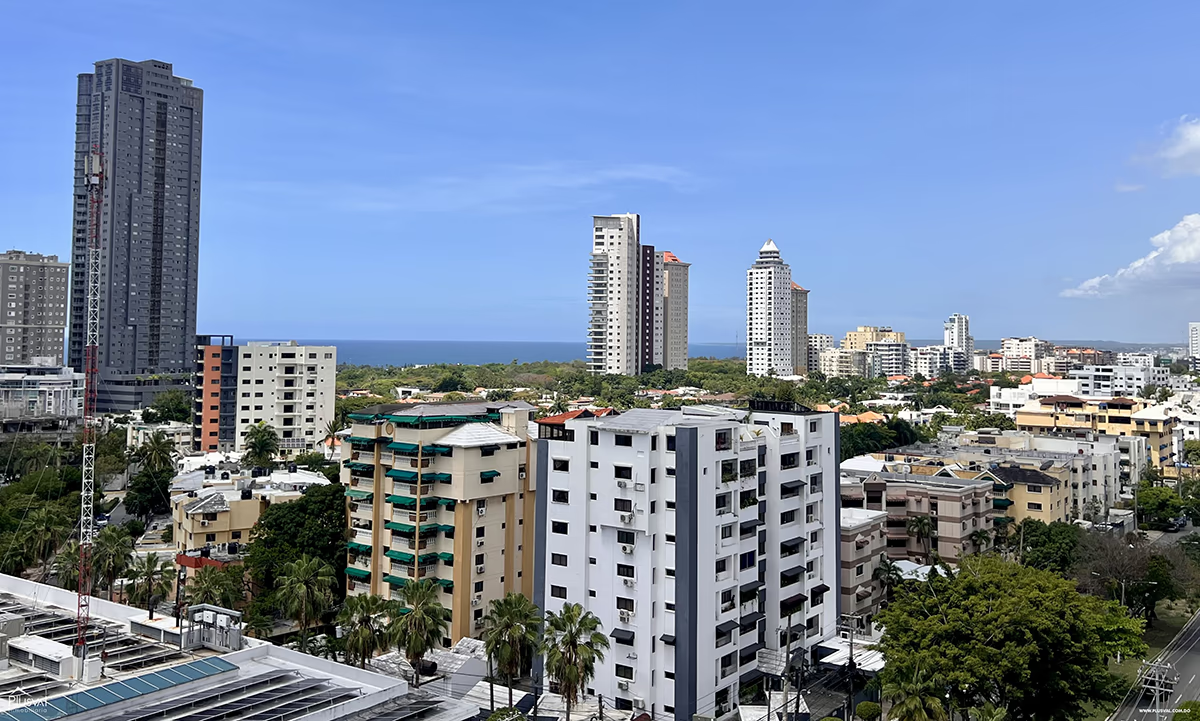
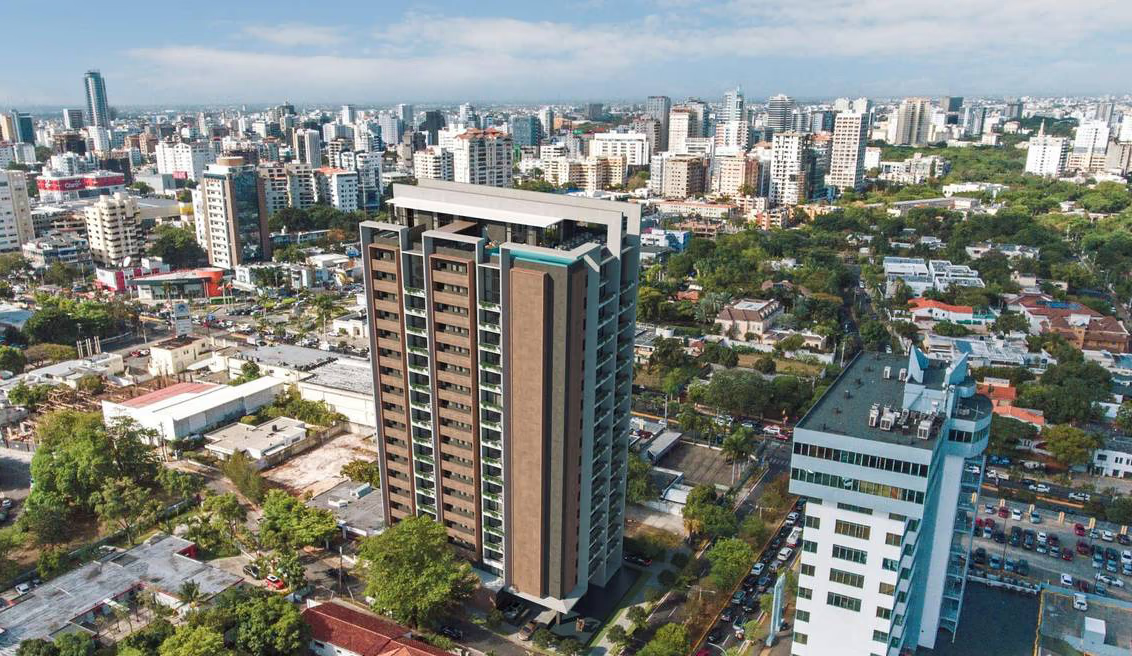
| Piantini | $3,500 - $4,500 | Business district, luxury condos, expats |
| Naco | $3,000 - $4,000 | Secure high-rises, close to malls |
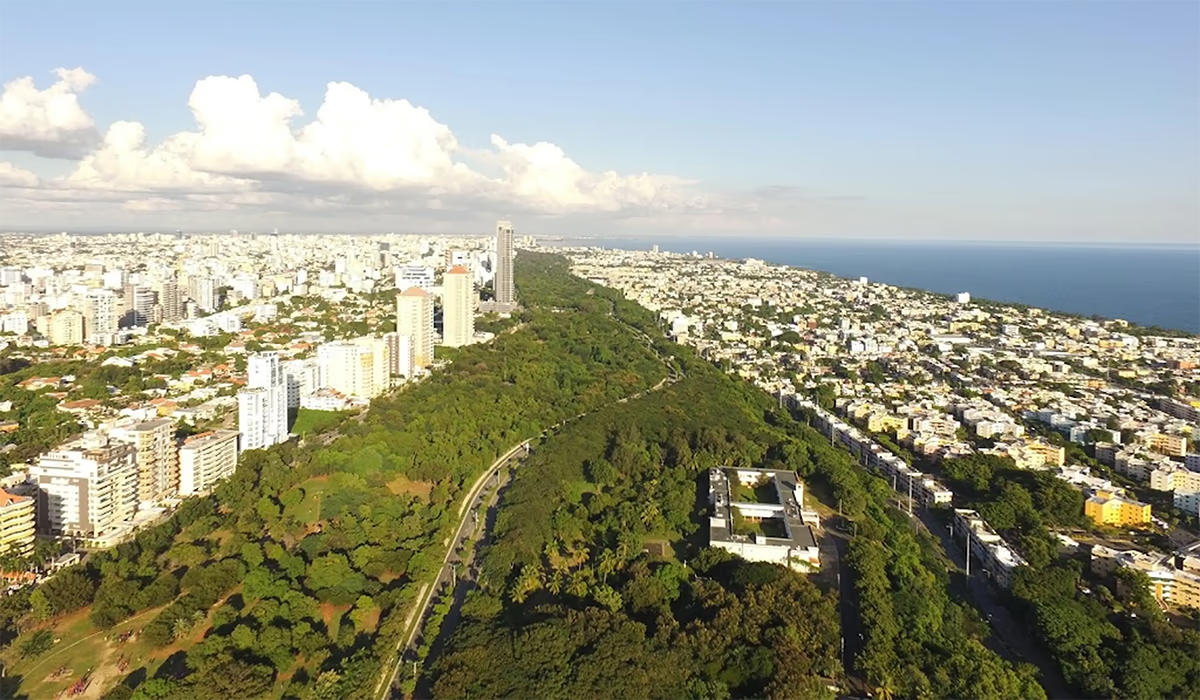
| Los Cacicazgos | $2,200 - $3,200 | Quiet family homes, embassy area |
| Ciudad Colonial | $1,800 - $2,800 | Historic charm, short-term rental focus |
| Punta Cana/Bavaro | $1,500 - $2,800 | Beachfront condos, vacation rentals |
| Cap Cana | $2,500 - $4,500 | Ultra-luxury, marina, golf courses |
| Miches (Emerging) | $900 - $1,500 | Eco-tourism, luxury villas |
Premium Factors That Justify Higher Pricing:
- Beachfront or ocean view (25-35% premium over inland properties)
- Proximity to tourism infrastructure (restaurants, golf, marinas)
- Furnished and move-in ready condition (reduces buyer effort)
- CONFOTUR tax exemption status (adds quantifiable value)
- Smart home features and modern finishes (appeals to tech-savvy buyers)
- On-site property management services (attracts investors)
- Gated community with 24/7 security (essential for safety-conscious buyers)
Professional Appraisal: For properties over $300,000, hire a certified Dominican appraiser ($300-800) to provide an objective valuation that supports your asking price during negotiations.
Rental Yield as a Pricing Anchor: For investment buyers, frame your price in terms of yield. If a property can generate $24,000 annually and is listed for $300,000, that's an 8% gross yield. Present a simple projection of occupancy, nightly rates, and management costs to shift the conversation from price to return on investment.
The Selling Process: From Listing to Closing
Selling property in the Dominican Republic as a foreign owner follows a structured process. Understanding each step helps you prepare and avoid common pitfalls.
Step 1: Prepare Your Property and Documentation Address any maintenance issues and consider professional staging. Gather all required documents:
- Title deed (Certificado de Titulo)
- Property tax receipts (IPI)
- Survey plan (Deslinde)
- Utility bills
- HOA compliance certificate (if applicable)
- Passport or ID
- For corporate-owned properties: certificate of good standing for the SRL
Step 2: Set Your Price and Choose Representation Use your CMA or appraisal to set a competitive price. Work with an agent experienced in international transactions. Typical commissions range from 5% to 10% of the sale price.
Step 3: Marketing and Showings Your strategy should include professional photography, virtual tours, listings on international portals, social media targeting, and bilingual materials.
Step 4: Receive and Negotiate Offers Evaluate price, terms (cash vs. financing), contingencies, and closing timeline. Cash offers from foreign buyers often close faster.
Step 5: Promise of Sale (Contrato de Promesa) Both parties sign a Promise of Sale before a Notary Public, specifying the price, payment schedule, deposit (typically 10%), due diligence timeline, and closing date. Ensure the deposit is held in a formal escrow account managed by a recognized Dominican law firm.
Step 6: Due Diligence The buyer's attorney conducts title verification, lien checks, and confirms property taxes and utility bills are current. Having your documentation ready expedites this phase.
Step 7: Closing and Transfer On the closing date, the buyer pays the balance, both parties sign the Deed of Sale before a Notary, the transfer tax is paid, and the deed is filed with the Title Registry. A new Certificate of Title is issued in the buyer's name.
Step 8: Post-Closing Settle any outstanding utility bills, transfer service accounts, hand over keys and documents, and confirm the new title has been issued. The entire process typically takes 30-90 days.
2026 Rental Yield Optimization
The 2026 rental market in the Dominican Republic offers distinct opportunities for property owners. The key is to choose the right strategy for your property's location.
Short-Term vs. Long-Term Rentals
- Short-Term Rentals (Airbnb, VRBO): Offer higher top-line revenue but require active daily management. Ideal for tourist hubs like Punta Cana and Cap Cana.
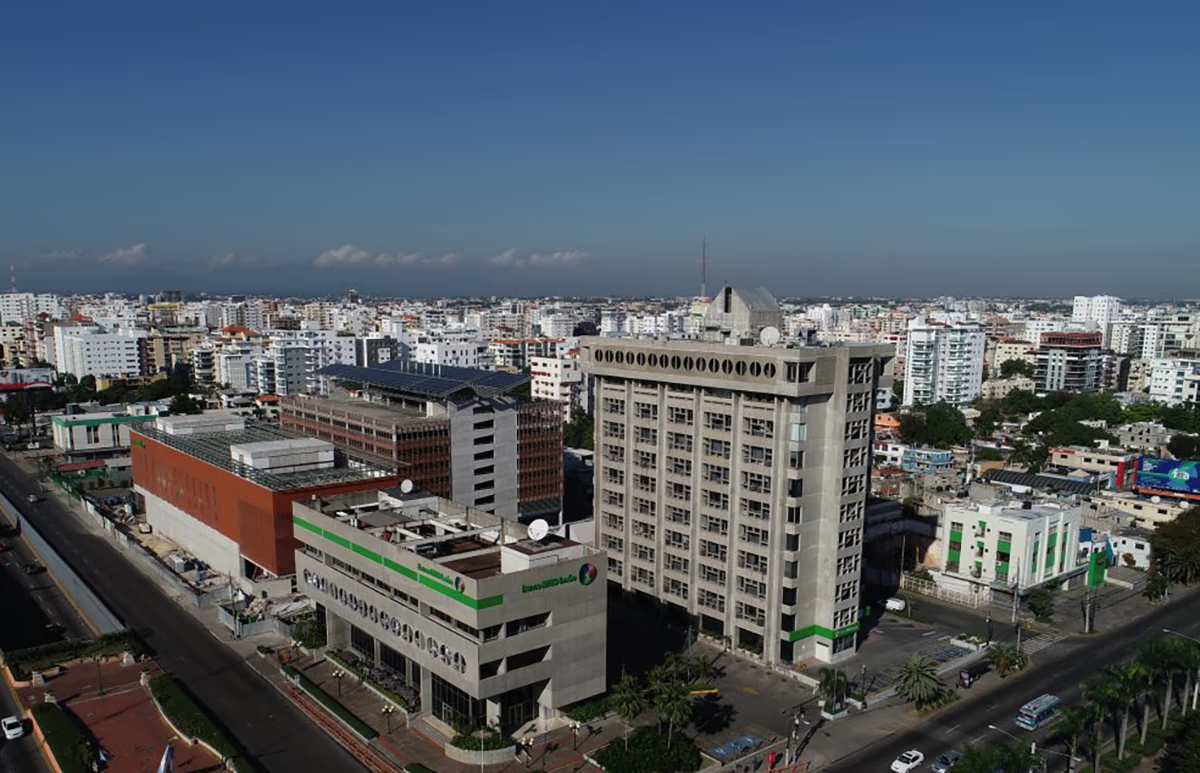
- Long-Term Corporate Leases: Provide predictable, stable cash flow with minimal operational overhead. The preferred model in Santo Domingo's corporate neighborhoods (Piantini, Naco).
2026 Rental Yield & Cost Comparison
| Location | Optimal Strategy | Avg. Gross ROI | Est. Management Cost |
|---|---|---|---|
| Punta Cana / Bavaro | Short-Term | 6.0% - 8.0% | 20% - 25% |
| Punta Cana / Bavaro | Long-Term | 6.0% - 7.5% | 8% - 10% |
| Santo Domingo (Piantini) | Long-Term | 8.5% - 10.5% | 8% - 10% |
| Santo Domingo (Zona Col.) | Short-Term | 8.0% - 11.0% | 20% - 22% |
| Miches (Emerging) | Short-Term | 11.0% - 14.5% | 25% - 30% |
📌 Strategic Highlight: Utilize dynamic pricing algorithms that adjust for local holidays, weather, and flight influxes to increase short-term rental revenue by up to 18% annually.
Key Considerations for Landlords:
- Legal Framework: Rental contracts are governed by Law 85-25 on Urban Leases (2025). For long-term leases, you are responsible for declaring rental income and paying income tax. Security deposits are capped at two months' rent for residential leases, and annual rent increases are limited to 10%. For non-resident owners, the withholding tax rate is 27% on gross rental income. Contracts may need to be registered with the DGII if they exceed certain monthly thresholds.
- Professional Property Management (PM): A good PM is essential, especially for absentee owners. For short-term rentals, PM fees typically range from 20-25% of gross revenue; for long-term leases, 8-10% of monthly rent. Evaluate PM companies based on references, tenant placement processes, and transparent fee structures.
- Furnishing and Staging: Professionally staged properties command premium rates. For long-term corporate rentals, ensure modern kitchens, high-speed internet, and comfortable workspaces.
Navigating the Sale: Taxes and CONFOTUR Transfers
A successful sale requires a clear understanding of the 2026 tax framework to protect your equity.
Capital Gains Tax (Impuesto sobre Ganancia de Capital) The DGII mandates a capital gains tax of 27% for corporations (SRL) and 10% for individuals under Law 30-26 (June 2026). This is applied only to the net profit, not the total sale price. You can legally reduce your taxable gain by using DGII inflation multipliers to adjust your acquisition cost upwards and by deducting all legitimate selling expenses (legal fees, notary fees, agent commissions).
Pre-Sale Compliance: Before listing, ensure your 'Certificado de Titulo' is free of liens or encumbrances. Your IPI (annual 1% property tax on values exceeding the 2026 threshold of RD$10,695,494, approximately $182,000 USD) must be fully paid up to the current year. Properties with outstanding tax debts cannot be legally transferred.
The CONFOTUR Advantage in Selling: If your property was purchased with CONFOTUR incentives, the remaining years of the exemption period (up to 15 years for IPI and 10 years for ISR) are fully transferable to the new buyer. This is a major competitive advantage that can increase your property's desirability and price.
Essential Step-by-Step Selling Procedure in 2026:
- Title and Tax Clearance: Obtain a certification of legal status (Estado Juridico) and a DGII tax clearance certificate.
- Professional Appraisal: Hire a certified appraiser to establish a realistic market value.
- Promise of Sale: Work with a real estate attorney to draft the 'Contrato de Promesa de Venta', legally binding the buyer to a non-refundable 10% deposit.
- Execution of the Final Deed: The 'Acto de Venta Definitivo' is signed before a Notary Public once the final balance is wired.
📌 Legal Highlight: Always use a formalized escrow account managed by a recognized Dominican law firm for the initial deposit. This protects both parties and legitimizes the transaction for international buyers.
Additional Tax Considerations:
- ITBI (Transfer Tax): A 3% tax on the transaction value, traditionally paid by the buyer but often negotiable.
- Deductible Expenses: Capital gains can be offset by deducting legal fees, notary fees, and agent commissions.
- Law 30-26 Update: Individual sellers now benefit from a reduced 10% capital gains rate, while corporate structures (SRL) remain at 27%. Always consult a certified Dominican tax attorney to optimize your specific structure.
The Role of the Notary Public: The transfer of real estate must be executed through a public deed (Escritura Pública) before a Notary Public. The Notary verifies the legality of the transaction, ensures a clear title, and supervises the signing process. Choose a Notary with a strong reputation and experience in international transactions.
International Marketing Strategies for Maximum Valuation
To achieve the highest possible valuation, you need an aggressive, internationally focused marketing strategy. The primary buyer demographics in 2026 are high-net-worth individuals, retirees, and retail investors concentrated in the US, Canada, and Western Europe. These buyers expect seamless, transparent, and digitally optimized experiences.
Essential Marketing Tactics:
- Immersive Visuals: Since over 65% of foreign buyers initiate purchases sight-unseen, invest in Matterport 3D virtual tours, professional drone videography, and HDR photography.
- Market as an Investment: If selling an active rental, market it as a 'turnkey income-producing business'. Provide verified Profit and Loss (P&L) statements for the past 12-24 months to justify a premium price.
- Financial Logistics: Price and market your property in US Dollars (USD), the de facto currency for DR real estate transactions. Ensure you have clear, verified banking channels for SWIFT wire transfers to avoid delays.
- High-Impact Tactics: Create a one-page digital PDF detailing historical ROI, average daily rates (ADR), and property management costs. Use geo-targeted advertising to reach buyers in specific zip codes (e.g., Miami, Toronto, New York).
- Digital Lead Generation: The most effective channel for generating real estate leads is a combination of SEO-optimized content and targeted ads. Create dedicated landing pages for each property with high-quality visuals and clear calls-to-action. Run geo-targeted campaigns on platforms like Facebook and Google Ads to reach potential buyers in specific regions. To maximize conversions, offer a free valuation or market report in exchange for contact information.
- Navigating the Closing Process: For international buyers, the due diligence period is often longer. Be responsive and provide all requested documentation promptly. Work with a bilingual real estate attorney to ensure smooth communication and funds transfer.
📌 Marketing Highlight: Highlight any active structural warranties. Foreign buyers are highly risk-averse regarding construction quality. A documented history of scheduled maintenance dramatically increases buyer confidence and closing speed.
Legal Structure for Foreign Owners: Personal vs. Corporate
Deciding how to legally hold title is one of the most important decisions a foreign property owner will make.
Personal Ownership
- Pros: Simple and straightforward.
- Cons: Subject to Dominican inheritance laws and probate upon your passing, which can be costly for heirs. Transferring the property requires a full legal sale with associated fees and taxes.
Corporate Ownership (Dominican SRL)
- Pros: Offers enhanced asset protection, separates personal assets from business liabilities, simplifies ownership transfer (by selling shares rather than the property itself), and provides simpler succession planning without probate.
- Costs: Initial setup is approximately $1,500-$2,000, with annual maintenance costs of around $500-$800.
- Key Considerations: When setting up an SRL, work with a reputable local attorney and accountant. The corporation will need its own bank account to manage rental income and property expenses. Ensure the bylaws align with your investment objectives, including shareholder agreements and profit distribution.
For developers and agencies managing multiple properties or joint ventures, the SRL structure is almost mandatory.
Exit Strategy Planning: Timing and Market Analysis
Planning your exit is as important as the initial purchase. In the Dominican Republic, the timing of your sale significantly impacts net returns, primarily due to the capital gains tax structure which rewards long-term ownership.
Key Factors to Consider:
- Liquidity: Properties in prime locations like Punta Cana and Piantini can sell within a few months. In less established areas, the time-on-market can extend significantly.
- Market Conditions: Consult with local real estate experts to assess current market conditions and buyer demand for your property type. Monitor macroeconomic indicators such as interest rates, inflation, and tourism arrival figures for strategic windows to maximize your sale price.
Long-Term Outlook: With the Dominican Republic's economy projected to grow at 4-5% annually and tourism numbers breaking records, the long-term outlook for real estate remains exceptionally positive. However, localized nuances must be considered. For example, up-and-coming areas like Miches present opportunities for significant early-stage gains but with higher execution risk.