Market target
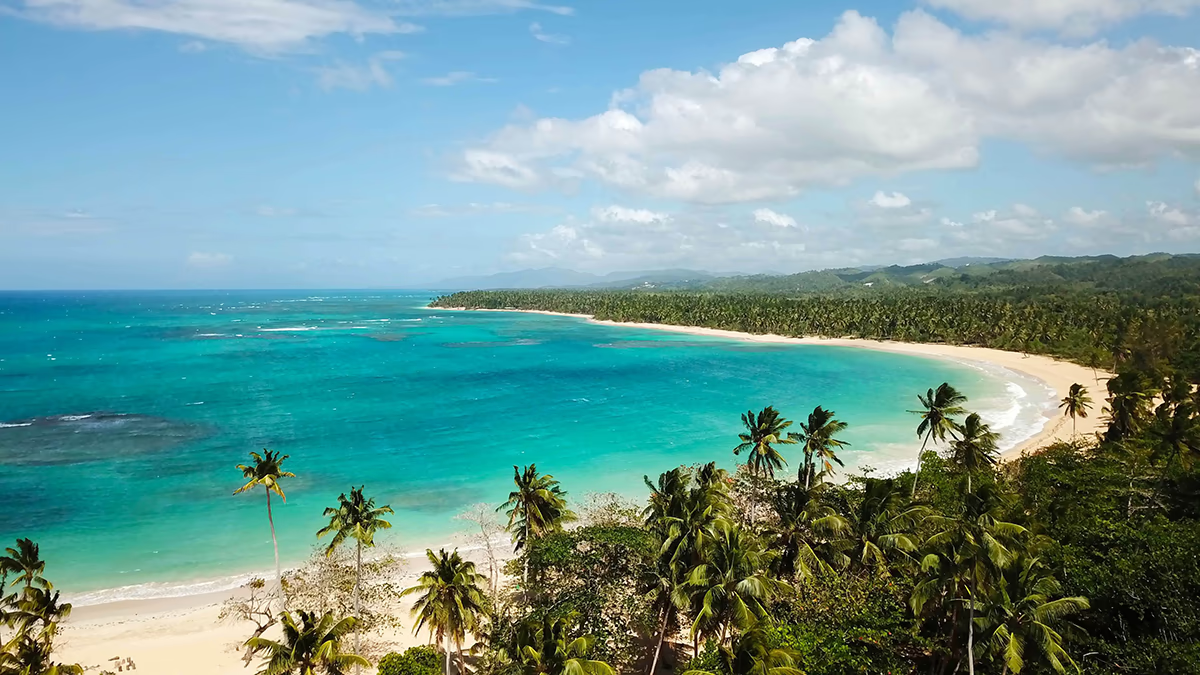
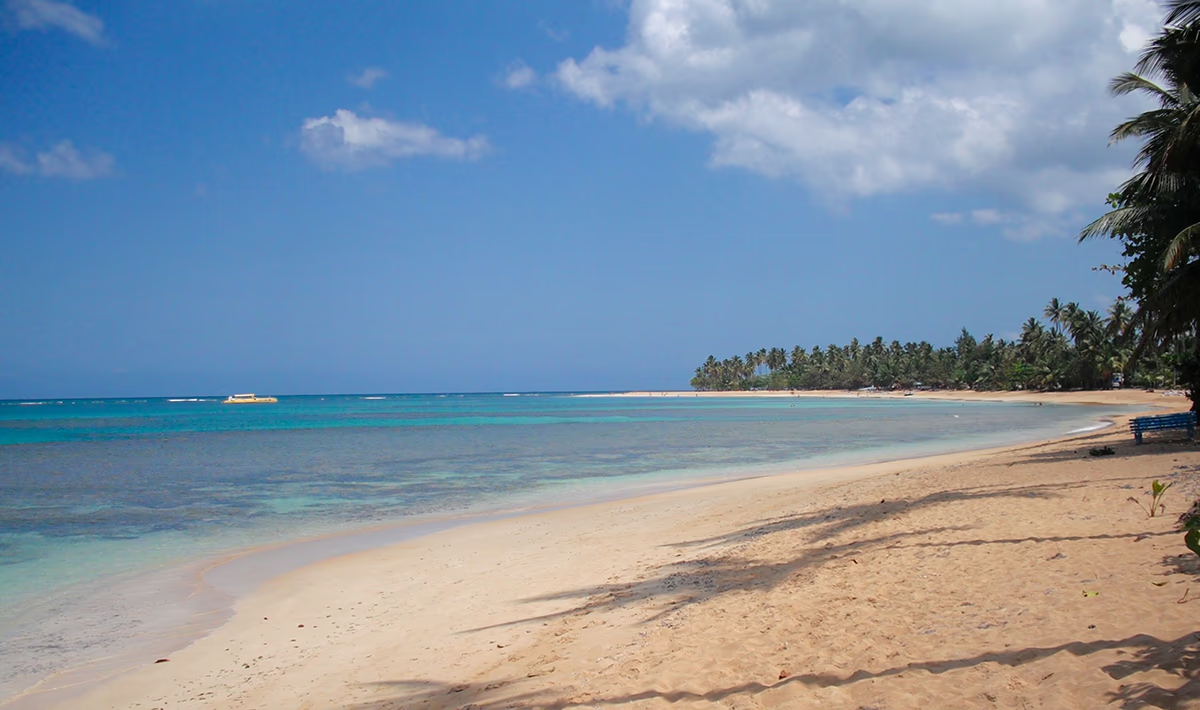
Punta Popy attracts a diverse range of buyers, each with distinct motivations. Understanding these segments allows you to tailor your property's presentation, marketing, and negotiation strategy effectively. The table below outlines the primary buyer profiles for this beachfront location.
| Segment | Age | Budget | Preferred Locations | Key Motivations | Marketing Focus |
|---|---|---|---|---|---|
| Short-Term Rental Investor | 35–60 | $150k–$350k | Punta Popy | High tourism demand, rental income, personal use potential | Lead with verified purchase costs, realistic gross-vs-net yield scenarios, and property-management assumptions. |
| International Second-Home Buyer | 45–70 | $180k–$500k | Punta Popy, Playa Bonita, El Portillo | Beach lifestyle, walkability, foreign ownership, capital preservation | Emphasize beachfront access, title due diligence, condominium governance, and local infrastructure. |
| Luxury Villa Buyer | 40–70 | $400k–$1M+ | Punta Popy, Playa Bonita, El Portillo | Privacy, ocean views, premium rental potential, legacy ownership | Use lifestyle-led creative, supported by operating-cost transparency and resale comparables. |
| CONFOTUR-Oriented Developer | 40–65 | $500k–$5M+ | Punta Popy, El Portillo, Playa Bonita | Tourism incentives, tax relief, national market growth | Focus on project eligibility, approval status, delivery risk, and infrastructure capacity. |
Local Developer Profiles
The Punta Popy market features a mix of local Dominican developers and international firms specializing in boutique beachfront condos and villas. These developers are key players in the pre-construction market and are often open to joint ventures or bulk purchases. Understanding their project pipelines and financing strategies can be a significant advantage when positioning a premium property.
Targeting developers who have successfully navigated the CONFOTUR incentives can add substantial value to your property's investment proposition.
Tax Framework
The Dominican Republic offers a favorable tax environment for foreign property investors, particularly through its tourism development incentives. This framework can significantly enhance the net returns from a Punta Popy property. This section breaks down the key tax benefits, provides a clear example of tax savings, and outlines the requirements for eligibility.
Definition
The Dominican tax system provides a specific incentive for qualifying tourism projects through the CONFOTUR law. This is not a general property tax break but a targeted benefit for properties that meet specific criteria and are officially approved as a tourism development. For qualifying projects, this translates to a 15-year exemption on certain taxes related to the construction, operation, and transfer of the property, a major advantage for both developers and end-buyers.
Benefits
- 15-Year Tax Exemption: The primary benefit is a 15-year exemption from the property transfer tax (3%) and property tax (IPI) for qualifying projects.
- Capital Gains Deferral: In some cases, the framework can provide advantages for capital gains, especially when reinvested in similar qualifying projects.
- Operational Savings: Operational tax burdens can be lower, increasing the net yield on rental income for the duration of the exemption.
Concrete Financial Example
To illustrate the financial impact, consider a qualifying Punta Popy condominium valued at USD 350,000. Purchasing this property within a CONFOTUR-approved project provides significant savings compared to a standard purchase.
-
Standard Purchase Tax:
- Transfer Tax (3%): USD 350,000 * 0.03 = USD 10,500
- Property Tax (IPI) (1% on excess above threshold, simplified): The exemption saves on this annual cost.
-
CONFOTUR Purchase Tax Savings:
- Transfer Tax (0%): USD 0
- Immediate saving of USD 10,500 on closing costs.
-
Annual Savings:
- The property tax is calculated on the assessed value. For the sake of this example, let's assume the assessed value is the purchase price. The IPI exemption saves the annual IPI payment. Without the exemption, a property valued at USD 350,000 would face an annual IPI tax of approximately $1,000. Over 15 years, this exemption represents a total saving of around USD 15,000.
-
Total 15-Year Tax Savings: The combined benefit of the transfer tax exemption and the 15-year IPI exemption would result in a total estimated saving of approximately USD 25,500 over a 15-year hold period (USD 10,500 closing costs + USD 15,000 in annual tax savings), a direct boost to the property's net return.
Requirements
- Property Approval: The property must be part of a project that has received official CONFOTUR approval from the Ministry of Tourism (MITUR). This is not an automatic benefit for all properties.
- Project Registration: The developer must have registered the project and received the official certificate of approval.
- Compliance: The property must remain in compliance with the project's approved plan and tourism use requirements.
- Legal Verification: It is essential to verify with a local attorney that the specific property and its associated project are eligible before assuming the exemption applies.
Pricing Definition
Setting the right price for your Punta Popy property is crucial for a successful sale. This section provides a market-anchored framework based on comparable areas, the key factors that command a premium, and a professional estimation method that combines market data with the property's income potential.
Average Market Comparable (AMC) Table
The following table provides an anchor for pricing by showing the average price per square meter (USD/sqm) in Punta Popy and its most comparable adjacent neighborhoods.
| Area | Status | Average Price (USD/sqm) | Profile |
|---|---|---|---|
| Punta Popy | Established | $2,242 | Your direct market. Walkable beach area with high rental demand and established buyer interest. |
| Las Terrenas Town Centre | Established | $2,100 | Closest urban comparable with similar walkability and rental characteristics. |
| Playa Bonita | Luxury | $1,900 | A more resort-like, beachfront setting with a strong villa component. |
| El Portillo | Emerging | $1,800 | Eastern beachfront area with a mix of resorts and homes. |
| Playa Cosón | Luxury | $1,400 | High-end beachfront area offering spectacular beaches and exclusive villas. |
7 Premium Factors that Influence Your Price
- Proximity to the Beach: Direct beachfront or immediate beach access properties command a significant premium over those further inland.
- View Quality: Unobstructed ocean views are the strongest value driver, significantly outpricing properties with partial or no views.
- Condition & Upgrades: Modern, fully renovated properties with high-end finishes and updated systems (electricity, water, air conditioning) sell at a premium.
- CONFOTUR Status: If your property is part of a CONFOTUR-approved project, this is a major value driver as it provides substantial tax benefits to the buyer.
- Property Size & Layout: Larger units with efficient, luxurious layouts, especially those with outdoor living spaces (terraces, private pools), are highly valued.
- Community Amenities: Access to premium amenities like a swimming pool, gym, security, and maintained common areas adds value.
- Rental Income Potential: A proven rental income history with strong, documented returns is a powerful pricing anchor. Buyers will pay a premium for a 'turnkey' income-generating property.
Professional Estimate & Yield Anchor
A robust pricing strategy involves comparing your property against these AMCs, applying premiums for its specific attributes (view, condition, etc.). The final price should be further validated by its income potential. A property yielding a gross rental return of 8.5% (the current market average for Punta Popy) can serve as a strong value anchor, justifying a higher asking price to an investor-buyer. This yield is based on the proxy midpoint of the 7-10% range reported by Evalúa for this location.
Selling Process
Selling a property in Punta Popy involves a structured process. Understanding each step helps you prepare effectively and ensures a smooth transaction. This guide outlines the 8 key stages, what you'll need to do, and the documents to prepare.
1. Market Assessment & Pricing Strategy
A successful sale starts with a clear understanding of your property's value. This step is about more than just picking a number; it's about positioning your property competitively against current listings and recent sales. A strategic price, supported by data, will attract the right buyers and minimize time on the market.
Documents to prepare at this step:
- Property Title Certificate: To prove ownership and identify the legal boundaries of the property.
- Recent Utility Bills (Electricity, Water): To provide potential buyers with an idea of operational costs.
- Tax Receipts (IPI): To show that property taxes are up to date.
2. Select a Qualified Real Estate Agent
Choosing the right agent is critical. An agent with local expertise and a strong international network will be invaluable. Look for someone who understands the Punta Popy market, has experience with foreign buyers, and can effectively market your property's unique selling points.
Documents to prepare at this step:
- Exclusive Listing Agreement: A contract that formalizes your relationship with the agent, outlining their commission and responsibilities.
3. Property Preparation & Staging
First impressions matter. Professionally preparing your property—including deep cleaning, decluttering, and staging—can significantly increase its appeal and perceived value. High-quality photography and videography are essential for creating compelling marketing materials.
Documents to prepare at this step:
- Property Floor Plans: A detailed diagram of the property's layout, which is crucial for buyers and their agents.
- Professional Photos & Video: A high-quality visual portfolio to showcase the property online.
4. Marketing & Buyer Outreach
This is where you attract buyers. A multi-channel strategy is most effective. This involves listing on local and international real estate portals, targeted social media advertising, and potential outreach through global real estate networks, all coordinated by your agent.
Documents to prepare at this step:
- Marketing Brochure: A well-designed document highlighting key features, location benefits, and investment potential.
5. Viewings & Negotiations
Once the marketing is live, you will host viewings for interested buyers. Be prepared to answer questions about the property, the local area, and the buying process. Your agent will handle the negotiation of offers, guiding you through the terms and conditions to secure the best possible price and terms.
Documents to prepare at this step:
- List of Property Upgrades & Maintenance Records: A log of recent improvements, major repairs, or routine maintenance (e.g., painting, AC servicing) to build buyer confidence.
6. Accept an Offer & Sign a Preliminary Agreement
Once you accept an offer, you'll sign a preliminary agreement (often called an 'Oferta de Compra'). This document secures the buyer's commitment and outlines the key terms of the sale, including the price, timeline, and any contingencies.
Documents to prepare at this step:
- Draft Purchase Agreement: A document outlining the terms of the sale, which is typically prepared by the buyer's attorney. Title Certificate: To be attached to the agreement.
7. Due Diligence & Escrow
This is the buyer's period to conduct their investigations. They will hire a local attorney to verify the title, check for liens, and ensure all property taxes are paid. The buyer will typically pay a deposit into an escrow account (often a 'fideicomiso') during this period.
Documents to prepare at this step:
- Proof of Paid Property Taxes (IPI): To demonstrate that the property is free from tax liens.
- Property Title Certificate (Updated): To provide the most up-to-date title document.
8. Final Sale & Transfer
At the closing, the remaining balance is paid, the title is officially transferred to the buyer, and the deed is registered with the local property registry. Your attorney will ensure all funds are disbursed and the transfer is legally completed.
Documents to prepare at this step:
- Final Deed of Sale (Escritura de Compraventa): The final legal document that transfers ownership, signed before a notary public.
- Payment of Transfer Tax: A receipt showing the 3% transfer tax has been paid to the DGII.
- Proceeds Statement: A final breakdown of the sale proceeds after all costs and commissions are deducted.
Typical timeline: 30–90 days. Standard agent commission: 5-10%.
Taxes and Transfers
📌 Legal Highlight: Before marketing your property, verify the CONFOTUR status of its project. If active, this provides a powerful 15-year tax exemption that can be a decisive buying incentive and justify a premium price.
Navigating the tax implications of selling your Punta Popy property is key to maximizing your net proceeds. Understanding the different tax rates for individuals and corporations, ensuring pre-sale compliance, and leveraging any special regimes are all critical steps in the process.
Capital Gains & Key Rates
- Individual Capital Gains: For individuals, capital gains from the sale of real estate are subject to a final 10% rate, which is based on the difference between the purchase price and the sale price (after deducting eligible costs).
- Corporate Capital Gains: If the property is owned by a corporate entity (e.g., an SRL), the capital gains tax is significantly higher at 27%. This is a critical distinction for sellers who have structured their ownership through a corporation.
- Pre-Sale Compliance: Before the transfer can be finalized, the seller must present a certificate showing that all property taxes (IPI) are up to date. This is a mandatory step and will be verified during the buyer's due diligence.
- CONFOTUR Advantage: If your property is part of a CONFOTUR-approved project, the buyer may be exempt from the 3% transfer tax. This is a major selling point that can significantly reduce the buyer's acquisition cost, often justifying a higher asking price.
4-Step Seller's Checklist
- Verify CONFOTUR Status: Confirm with the project developer or your attorney whether the property is officially part of a CONFOTUR-approved project. If so, you have a powerful value proposition.
- Review Individual vs. Corporate Ownership: If you own the property through a corporation, understand the implications of the 27% corporate capital gains rate and structure your sale accordingly.
- Gather Tax Compliance Documents: Ensure you have up-to-date records of all property tax (IPI) payments and can provide a clean title. This is a non-negotiable step in the due diligence process.
- Engage a Local Attorney: Retain a Dominican real estate attorney well in advance of the sale. They will handle the legal and tax aspects of the transfer, ensuring all paperwork is correctly filed with the DGII and the property registry.
Rental Yields
📌 Strategic Highlight: The 'emerging' areas in the Samaná region, such as El Portillo, are seeing rapid growth. Investing there could secure lower entry prices and higher future appreciation, while Punta Popy offers the security of established, high-occupancy yields.
The rental market in Punta Popy is a strong driver of investment value. The table below provides a comparative look at gross yields and management costs across key areas in the region, illustrating how your property's location and strategy can impact its financial performance.
Comparative Rental Yields
| Location | Strategy | Gross ROI (%) | Management Cost (%) |
|---|---|---|---|
| Punta Popy | Short-Term (Airbnb/VRBO) | 8.5% | 20-25% |
| Las Terrenas Town Centre | Short-Term | 7.5-8.5% | 20-25% |
| Playa Bonita | Short-Term / Villa | 7.5-8.0% | 20-25% |
| El Portillo | Short-Term | 7.0-8.0% | 20-25% |
| Playa Cosón | Long-Term / Villa | 5.0-6.0% | 10-15% |
Note: Gross ROI is the annual rental income divided by the property's purchase price. Management costs include property management fees, cleaning, and maintenance. The 'emerging' nature of El Portillo presents an interesting investment dynamic: yields are strong, and the potential for capital appreciation as the area develops is significant.
Strategic Pricing with Dynamic Algorithms
To maximize your rental income, adopting a dynamic pricing strategy is essential. Use algorithms from platforms like PriceLabs or Beyond to automatically adjust your nightly rates based on seasonality, local events, and occupancy data. This ensures you are capturing the maximum possible revenue during peak periods and maintaining competitiveness during low seasons.
Focus your marketing on the property's 'walkability' and its proximity to the beach, restaurants, and services—this is a primary driver for short-term rental demand in Punta Popy.
International Marketing
📌 Marketing Highlight: Provide a detailed structural and maintenance history. Property condition is a key concern for international buyers. A documented history of maintenance, upgrades, and certifications (e.g., electrical, seismic) builds trust and reduces buyer anxiety.
To attract international buyers to Punta Popy, your marketing strategy must be sophisticated and targeted. Buyers from the US, Canada, and Europe need to see their investment clearly, understand its potential, and have confidence in the purchase. The following 6+ tactics are essential for a successful international campaign.
6+ International Marketing Tactics
- Matterport 3D Tours: Offer immersive, self-guided tours. This is the next best thing to an in-person viewing and is crucial for remote buyers.
- Professional Profit & Loss (P&L) Statements: Provide clear, realistic financial projections for the property. This includes projected rental income, operational costs, and net returns.
- USD Pricing & Financing Options: List all prices and financial information in US Dollars (USD). For transparency, also reference the exchange rate (RD$58.8141 per USD as of August 14, 2026).
- Interactive ROI PDF: Create a downloadable, scannable document that summarizes the investment case, including the key financial metrics from your P&L.
- Geo-Targeted SEO & Ads: Run digital advertising campaigns targeting high-net-worth individuals in specific regions (e.g., Florida, NYC, Toronto, London).
- Bilingual Legal Support: Provide clear information and contacts for English and Spanish-speaking lawyers.
- Local Infrastructure Guide: Create a guide for potential buyers that details local amenities, such as electricity, water, internet services, and healthcare access. This demonstrates transparency and helps them plan their move.
- Lifestyle Videography: Produce a cinematic video showcasing the property and the Punta Popy lifestyle—the beach, restaurants, and daily life. This sells the dream as much as the investment.
Legal Structure
Choosing the correct legal structure for your Dominican Republic property is a fundamental decision. Your choice impacts your tax liability, liability protection, and the ease of transfer. This section compares the two primary options: individual and corporate ownership.
Comparative Legal Structures
| Structure | Pros | Cons |
|---|---|---|
| Individual Ownership | Simpler setup; lower cost; easier and cheaper to transfer; 10% capital gains rate. | Full personal liability; exposure to personal creditors; no anonymity. |
| Corporate (SRL/LLC) | Limited liability; asset protection; potential operational tax advantages; easier to transfer ownership via share sale. | Higher setup and maintenance costs; 27% corporate capital gains rate; more complex compliance. |
| Fideicomiso (Trust) | Strong asset protection; succession planning; often used for financing; can help with CONFOTUR structuring. | Setup fees; ongoing maintenance fees; more complex structure. |
Costs & Recommendation
- Setup Costs: Corporate and Fideicomiso structures involve significant initial legal and administrative costs.
- Maintenance: Corporate structures require annual tax filings and legal fees, adding to the yearly expense.
- Developer Note: For developers, an SRL is often preferred for liability protection and to facilitate the corporate ownership requirements of some financing structures. For an individual buyer, a simple personal purchase is usually the most tax-efficient and straightforward method.
Exit Planning
Having a clear exit strategy helps you time your sale for maximum return. This section analyzes current and projected market conditions, including macro indicators, to provide a framework for making an informed decision about when to sell.
Market Conditions & Strategy
- Current Liquidity: The Dominican real estate market is experiencing high liquidity, driven by strong tourism and foreign investment. Properties in established areas like Punta Popy, especially those with strong rental histories, are in high demand.
- Market Conditions: The national economy is projected to grow at 4.0% in 2026, according to the Banco Central. This growth is supported by record-breaking tourism, with over 6.6 million visitors arriving in the first half of 2026 alone. These figures suggest a strong, growing market. However, the inflation rate of 5.47% (July 2026) should be factored into your pricing to ensure real returns.
- Indicators to Watch: Keep an eye on interest rates and tourism arrivals, as these are primary drivers of property demand in the region. An increase in interest rates could cool buyer demand, while a continued record-breaking tourist season would sustain high occupancy rates and strong rental income potential.
Long-Term Perspective
While established areas like Punta Popy offer stability and proven returns, the emerging areas in the Samaná region provide a different proposition. They may offer lower entry points and higher potential for appreciation as infrastructure develops, making them an attractive option for a longer-term 'growth' investment strategy.
The average days on market for a property in Las Terrenas is just 41 days, indicating a fast-moving, highly desirable market. This suggests that while the market is healthy, sellers should be prepared to act quickly when a qualified buyer emerges.