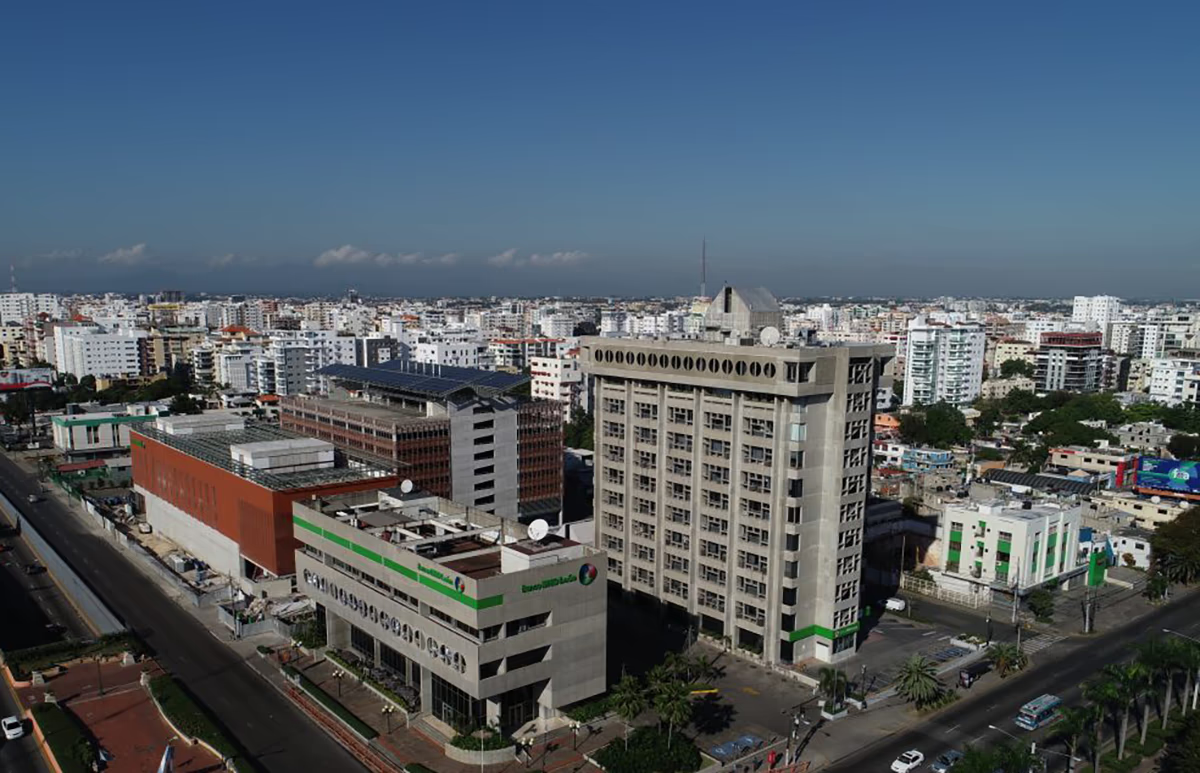
Market target
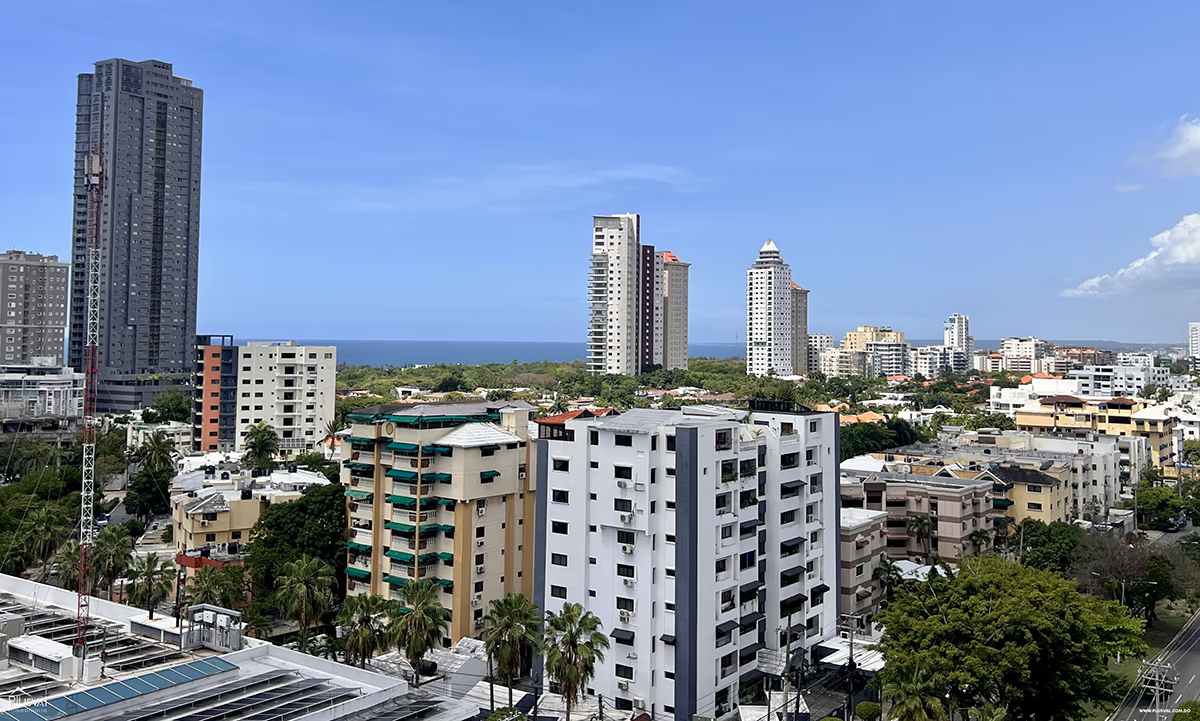
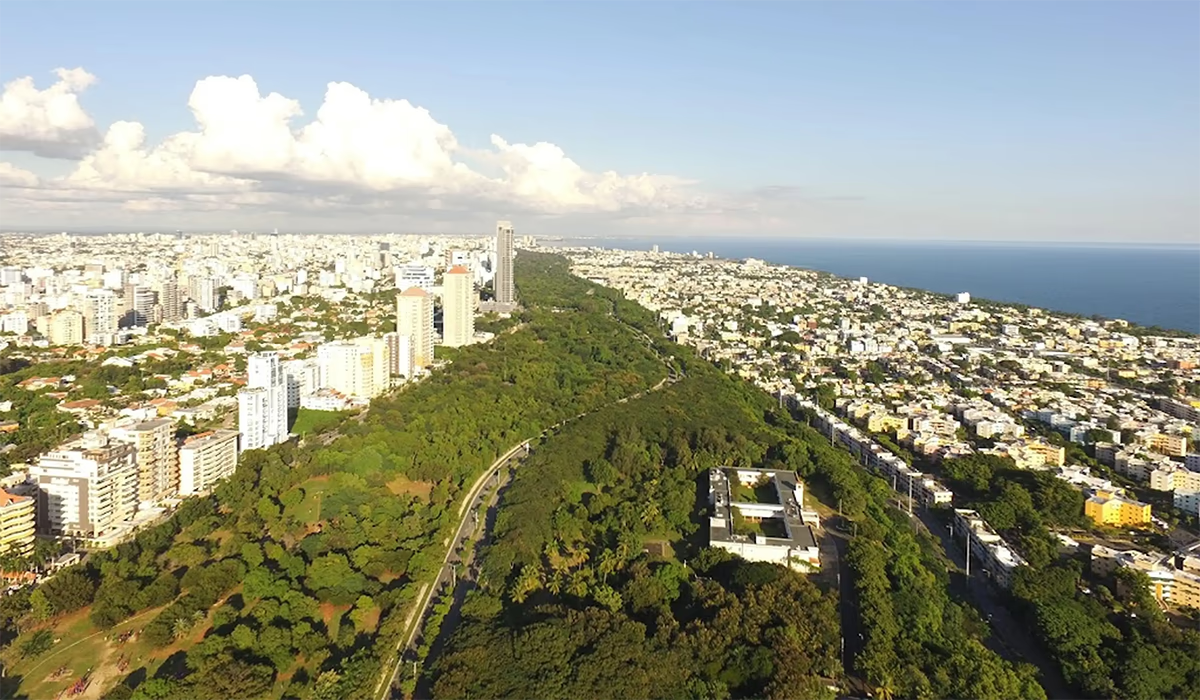
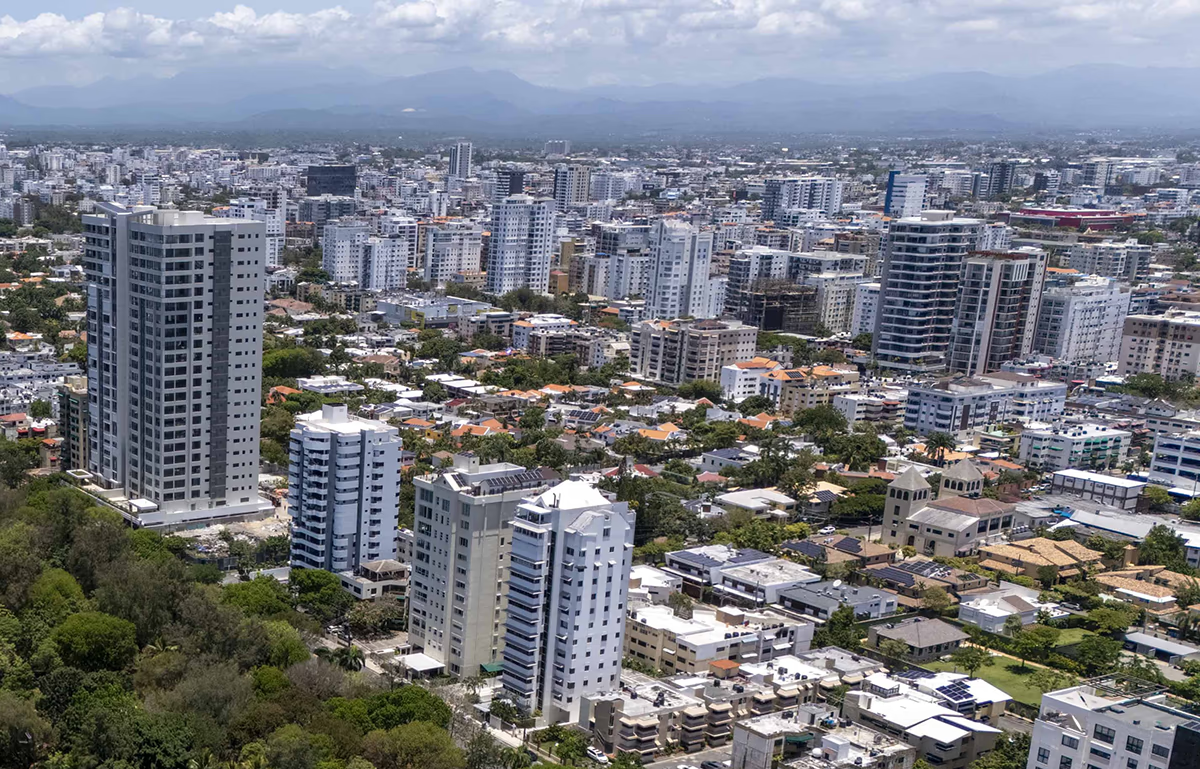
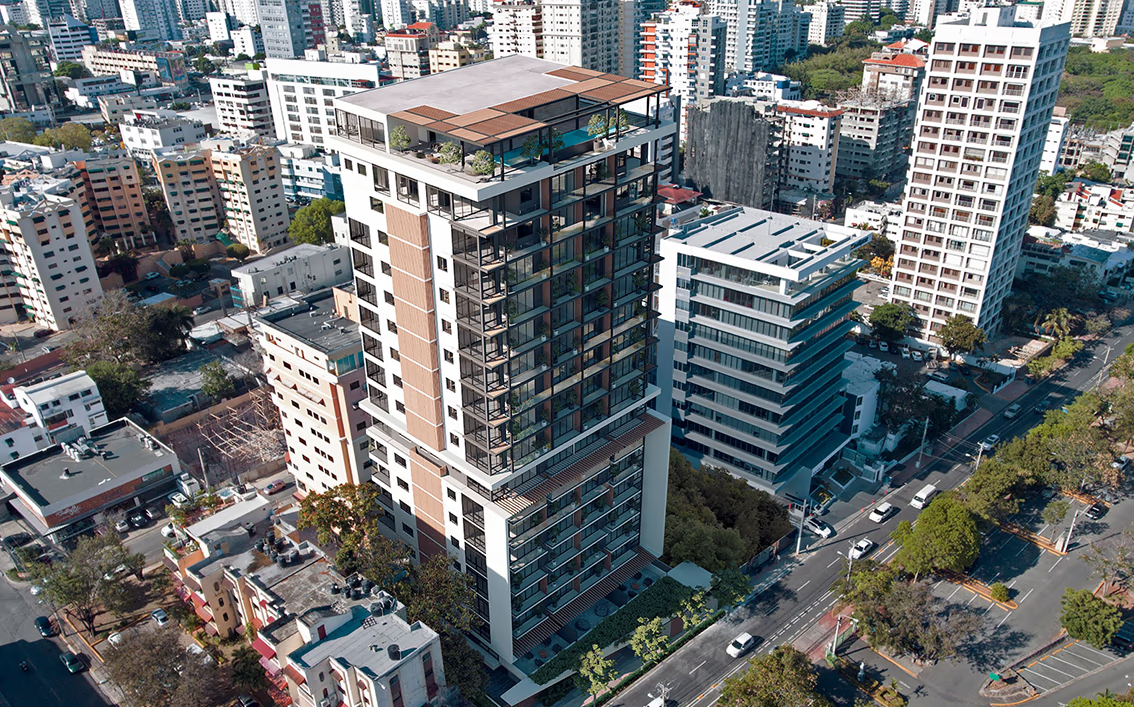
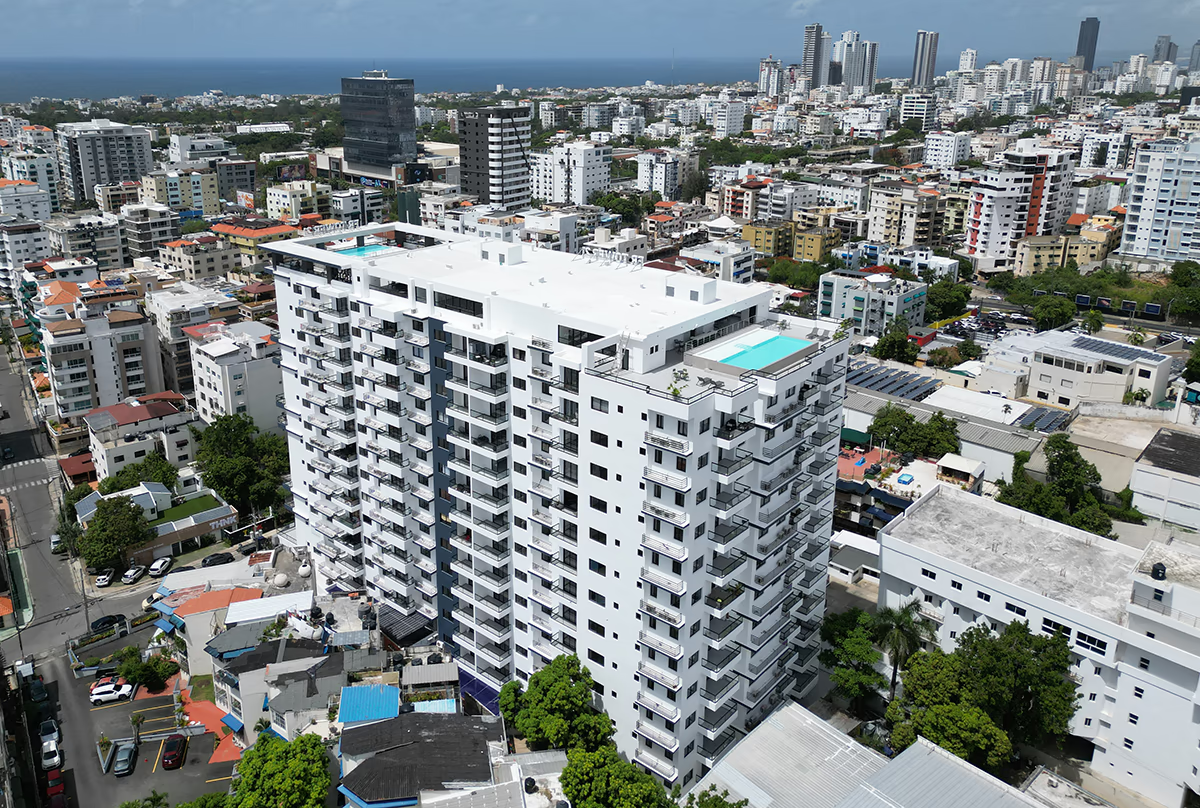
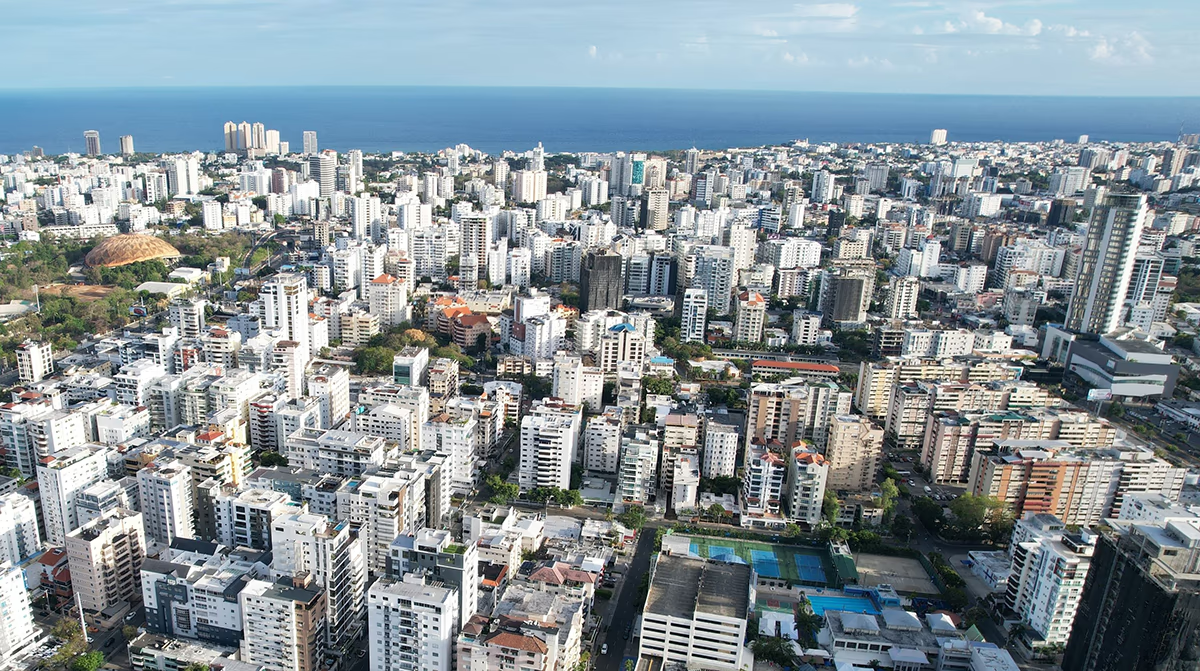
Evaristo Morales is a well-established, amenity-rich residential district in central Santo Domingo, attracting a mix of local and international buyers. The area's convenience, security, and proximity to business hubs make it a prime target for three key buyer profiles.
| Segment | Age | Budget (USD) | Preferred Locations | Key Motivations | Marketing Focus |
|---|---|---|---|---|---|
| Upper-middle-income owner-occupiers | 35‑60 | 180,000 – 350,000 | Evaristo Morales | Central location, security, amenities, modern layouts | Emphasise convenience, building security, parking, backup power, amenities, and turnkey occupancy |
| Diaspora & foreign buyers | 35‑65 | 200,000 – 450,000 | Evaristo Morales | Asset diversification, second home, long-term capital preservation | Highlight title due diligence, remote-purchase support, transparent condominium costs, rental management options, and tax compliance |
| Buy‑to‑let investors | 30‑65 | 150,000 – 400,000 | Evaristo Morales | Santo Domingo rental demand, gross rental-income potential, liquidity of one‑ and two‑bedroom units | Present rent comparables, operating expenses, vacancy assumptions, and the distinction between long‑term and short‑term tourist rentals |
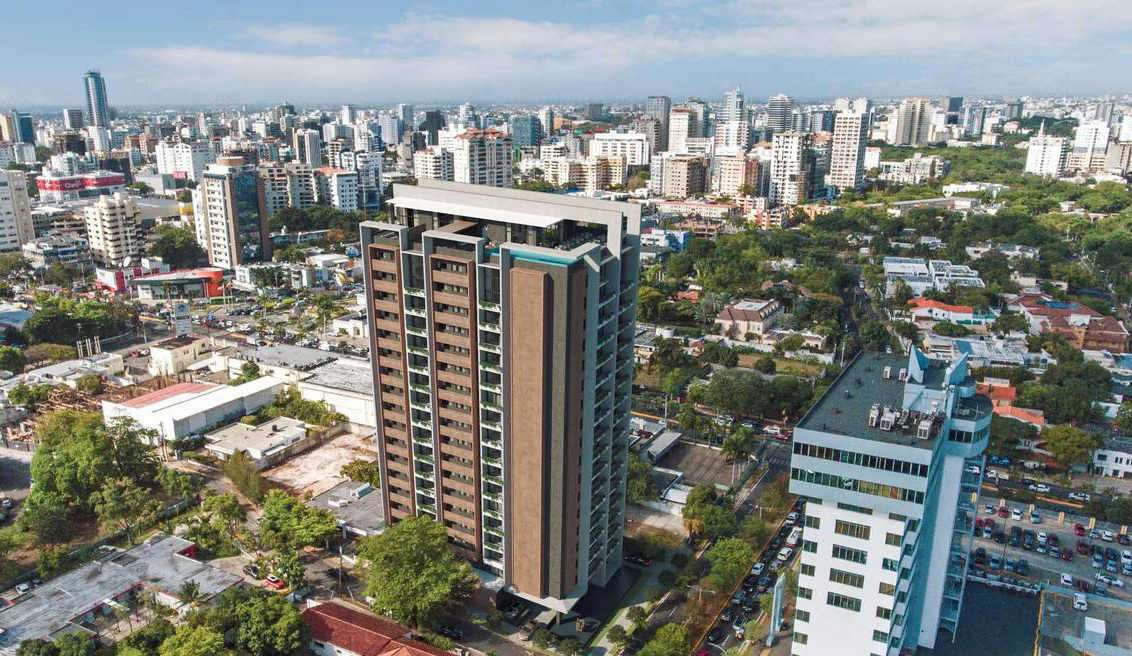
Local developers in Evaristo Morales typically focus on mid‑ to high‑rise condominium projects with modern finishes, pools, gyms, and 24‑hour security. Many offer flexible payment plans and turnkey packages to attract both owner‑occupiers and investors. Partnering with a developer that provides clear maintenance and reserve‑fund policies can add significant value when reselling.
For detailed pricing benchmarks, see the Pricing Definition section.
Tax Framework
The Dominican Republic imposes several taxes on real estate ownership and transfers. For sellers and landlords, understanding these obligations is essential to price effectively and avoid surprises.
Definition
The main taxes are the transfer tax (3% of the property value) and the annual property tax (IPI) , which is 1% on the portion of the total real‑estate holdings exceeding RD$10,695,494 (approximately US$183,200 as of August 2026). The transfer tax is payable within six months of the deed. Capital gains and rental withholding tax rates are not specified in the available data, so these should be reviewed with a local tax advisor.
Benefits for sellers and landlords
- The IPI threshold allows many smaller properties to be exempt from annual property tax.
- Transfer tax is a single, fixed rate that is easy to budget for.
- Rental income from residential leases is not subject to a withholding tax under current data; the tax treatment depends on the landlord's legal structure and residency.
- Specific exemptions exist for low‑cost housing, but these are unlikely to apply to Evaristo Morales properties.
Concrete tax calculation example
Take the listed 88 m² apartment in Evaristo Morales priced at US$253,500 (source: Encuentra24).
- Transfer tax = 3% × 253,500 = US$7,605 (paid by the buyer in practice, but often split in negotiations).
- IPI calculation:
Threshold in USD = RD$10,695,494 ÷ 58.402 ≈ US$183,200.
Taxable amount = 253,500 – 183,200 = US$70,300.
IPI = 1% × 70,300 = US$703 per year (for the purchaser, but a seller's holding period may affect proration).
This example shows that annual property tax is modest relative to the property value, making buy‑to‑hold strategies more attractive.
Requirements
- The transfer tax must be paid and the deed registered within six months of the transfer.
- IPI declarations are filed annually with the DGII; payment is due in January and July.
- Sellers must obtain a tax clearance certificate (Comprobante de No Deuda) from the DGII before closing.
For a transfer compliance checklist, refer to the Taxes and Transfers section.
Pricing Definition
Setting the right price for your Evaristo Morales property starts with understanding the local price per square metre and the factors that drive premiums. Below is a comparison of available data for Evaristo Morales and other central Santo Domingo submarkets (where specific prices are not yet verified).
| Area | Price per sqm (USD) | Source / Note |
|---|---|---|
| Evaristo Morales | 2,880.68 | Encuentra24 (single listing proxy, June 2026) |
| Piantini | N/A | Comparable submarket – data not available |
| Naco | N/A | Comparable submarket – data not available |
| Bella Vista | N/A | Comparable submarket – data not available |
| La Julia | N/A | Comparable submarket – data not available |
While comprehensive aggregate data is lacking, the available listing price of US$2,880/m² serves as a benchmark for Evaristo Morales. Premium factors that can justify a higher per‑sqm price include:
- Proximity to major business corridors and embassies – enhances convenience for executives and diplomats.
- Condominium amenities – pools, gyms, social areas, and backup power systems.
- Security – 24‑hour guarded access and CCTV.
- Parking availability – multiple spaces (the Encuentra24 listing includes three parking spots).
- Building age and maintenance – newer or well‑maintained buildings command a premium.
- Unit layout and finishes – modern open plans, high‑quality materials, and natural light.
- View and orientation – street views, city skyline, or orientation (e.g., north‑facing for natural light).
A professional appraisal should also factor in the gross rental yield of 9.08% (El Inmobiliario / Global Property Guide) as a value anchor. For a property priced at US$253,500, this implies an annual gross rental income of approximately US$23,000, which can be used to validate pricing against income‑based valuation methods.
To understand how rental yields validate pricing, see the Rental Yields section.
Selling Process
Selling a property in Evaristo Morales follows a structured path. Each step is designed to maximise value, minimise risk, and ensure a smooth transaction. Here's a step‑by‑step guide for sellers.
1. Prepare the property and documentation
Before listing, ensure the property is in show‑ready condition and that all legal documents are up‑to‑date. This includes verifying title, condominium fees, and tax obligations. A well‑prepared property attracts higher offers and shortens the time to sale.
Documents to prepare at this step:
- Title Certificate (Certificado de Título) – issued by the Registrar of Property, confirming current ownership and any liens.
- Condominium regulations and fee statements – to demonstrate monthly expenses and any pending assessments.
- Tax clearance certificate (Comprobante de No Deuda) – from the DGII, showing that property taxes are current.
- Floor plan and construction specifications – to provide to buyers and appraisers.
- Recent utility bills – to show normal operating costs.
2. Engage a licensed real estate agent or broker
Choose an agent with local expertise and a track record in Evaristo Morales. They will assist with pricing, marketing, and negotiations. Typical commissions range from 5% to 10% of the sale price, usually negotiable.
Documents to prepare at this step:
- Exclusive or open listing agreement – outlining the agency relationship, commission, and duration.
- Property disclosure form – noting any known defects, renovations, or permits.
3. Conduct a professional appraisal and market analysis
Use a certified appraiser to determine the fair market value, comparing recent sales of comparable properties in the area. The appraisal will support your asking price and provide leverage in negotiations.
Documents to prepare at this step:
- Appraisal report – detailing methodology, comps, and final valuation.
- Comparative market analysis (CMA) – from your agent, showing recent sales and active listings.
4. Market the property effectively
Develop a marketing plan that targets the buyer segments identified earlier. This includes professional photography, virtual tours, and listing on international portals. Consider creating a dedicated landing page with all relevant documents.
Documents to prepare at this step:
- Professional photos and video walkthroughs – for online listings.
- Property brochure – highlighting key features, amenities, and location benefits.
- ROI summary – for investors, showing projected rental income and expenses.
5. Receive and negotiate offers
Review all offers with your agent, considering not only price but also contingencies, financing terms, and closing timeline. Negotiate to secure the best overall terms.
Documents to prepare at this step:
- Offer letters and purchase agreements – initial contracts outlining terms.
- Counter‑offer documents – if negotiating price or conditions.
6. Conduct due diligence and inspections
Once an offer is accepted, the buyer will typically conduct a structural inspection, title review, and tax verification. Cooperate fully to avoid delays.
Documents to prepare at this step:
- Inspection reports – if any previous inspections are available, share them.
- Title and tax history – provide copies of title deeds and tax receipts.
- Condominium minutes – recent meeting minutes showing any special assessments or planned repairs.
7. Execute the final sale contract
With the buyer's due diligence satisfied, both parties sign the final purchase agreement (contrato de promesa de venta or escritura pública). This contract will include the final price, payment schedule, and closing date.
Documents to prepare at this step:
- Final purchase agreement – reviewed by both parties' lawyers.
- Power of attorney – if the seller is abroad and appoints a representative.
8. Close the transaction and transfer title
At closing, the buyer pays the balance, the seller delivers the deed, and the transfer is registered with the Registrar of Property. The transfer tax (3%) is typically paid by the buyer, but it is often split in practice. The entire process from listing to closing generally takes 30 to 90 days, depending on financing and document readiness.
Documents to prepare at this step:
- Final deed (Escritura Pública de Venta) – executed before a notary public.
- Proof of payment of transfer tax – receipt from the DGII.
- Updated tax clearance certificate – confirming all taxes are paid up to closing.
- Registration receipt – from the Registrar of Property, showing the new owner's title.
For guidance on choosing the right ownership structure, consult the Legal Structure section.
Taxes and Transfers
📌 Legal Highlight: The Dominican Republic applies a 3% transfer tax on the full property value, payable within six months of the deed. The annual property tax (IPI) is 1% on the portion exceeding RD$10,695,494 (~US$183,200). Capital gains tax rates for individuals and corporations are not specified in the available data, so consult a local tax advisor before finalising any sale to understand potential liabilities.
Understanding the tax obligations at the time of transfer is crucial for both sellers and buyers. Below is a checklist to ensure compliance and avoid penalties.
Checklist for transfer compliance
- Confirm the buyer's identity and legal capacity – ensure the buyer is legally able to purchase and has the necessary funds.
- Verify property tax status – obtain a tax clearance certificate (Comprobante de No Deuda) from the DGII to confirm that all IPI payments are current.
- Draft and sign the final deed – the Escritura Pública de Venta must be signed before a notary public, with both parties present or represented by power of attorney.
- Pay the transfer tax – the 3% tax is calculated on the declared value (usually the purchase price) and must be paid within six months of the transfer; failure to do so may incur penalties and interest.
- Register the new title – file the deed with the Registrar of Property to officially record the transfer and issue a new title certificate in the buyer's name.
Special considerations
- Capital gains – while the rate is not available, sellers should be aware that any profit from the sale may be subject to income tax; corporate sellers may have different treatment than individuals.
- Pre‑sale compliance – if the property is newly built, ensure the developer has registered the horizontal property regime and obtained all necessary permits.
- Low‑cost housing exemptions – these may apply only to properties meeting specific price ceilings; Evaristo Morales properties are unlikely to qualify without verification.
For a detailed tax calculation example, see the Tax Framework section.
Rental Yields
📌 Strategic Highlight: The gross rental yield for Santo Domingo is estimated at 9.08% (source: El Inmobiliario / Global Property Guide), based on late‑2025 data. Sellers and landlords can use this as a benchmark to price their property and attract investors. However, short‑term tourist rentals (under 90 days) are not covered by the national rental law – ensure you are fully compliant with condominium rules and local regulations if considering platforms like Airbnb.
Rental yield is a key driver for investor demand. Below is a breakdown of different investment strategies and their estimated gross returns for Evaristo Morales, derived from the available data.
| Location | Strategy | Gross ROI | Cost Management |
|---|---|---|---|
| Evaristo Morales | Long‑term residential lease | 9.08% | N/A – typical property management fees 5‑10% of rent |
| Evaristo Morales | Furnished mid‑term rental (1‑6 months) | ~9.08%* | N/A – higher turnover, higher management effort |
| Evaristo Morales | Corporate rental (to companies) | ~9.08%* | N/A – often includes utilities and maintenance in rent |
| Evaristo Morales | Short‑term tourist (under 90 days) | Varies | Subject to condominium rules; may require permits |
| Santo Domingo (average) | Mixed residential portfolio | 9.08% | N/A – source: El Inmobiliario / Global Property Guide |
*The gross yield is based on market average; actual returns will depend on vacancy rates, operating expenses, and property management efficiency. The 9.08% figure serves as a baseline for Evaristo Morales, given its central location and amenities.
For investors, this yield implies that a property priced at the Encuentra24 listing value (US$253,500) could generate approximately US$23,018 in gross annual rental income. After accounting for property tax (US$703) and a typical management fee (say 8%, ~US$1,841), the net yield drops to around 8.1%. This demonstrates the importance of cost management in optimising returns.
For marketing strategies to attract rental investors, see the International Marketing section.
International Marketing
📌 Marketing Highlight: To attract foreign and diaspora buyers, always price in USD, provide a clear ROI PDF, and include a virtual Matterport tour. Geo‑targeted ads in the US, Canada, and Europe, combined with bilingual legal support, can significantly expand your buyer pool.
Selling to international buyers requires a tailored approach. Implement these tactics to maximise exposure and close deals faster.
6+ effective marketing tactics
- Professional Matterport virtual tours – allow overseas buyers to explore the property remotely, reducing the need for in‑person visits.
- Detailed profit‑and‑loss (P&L) statements – show historical and projected rental income, expenses, and net cash flow to appeal to investors.
- USD pricing across all materials – eliminate currency conversion confusion; display all prices in US dollars.
- ROI PDF downloadable – provide a one‑page summary with key metrics: price per sqm, gross yield, net yield after taxes and fees, and appreciation potential.
- SEO‑optimised property pages and targeted ads – use keywords like 'Santo Domingo real estate', 'Evaristo Morales apartments', and 'Dominican Republic investment property' to drive organic traffic; run paid campaigns in key source markets.
- Bilingual legal and agent support – offer assistance in English and Spanish to guide buyers through the process; provide translations of contracts and due diligence documents.
- Geo‑targeting – focus marketing on regions with high diaspora concentration (US East Coast, Spain, Canada) and countries with strong investment interest in the Caribbean.
Structural guarantees – include maintenance records, insurance certificates, and recent inspection reports in your marketing package. Buyers appreciate transparency and often pay a premium for well‑documented properties.
For the full step-by-step selling process, refer to the Selling Process section.
Legal Structure
Choosing the right legal structure for ownership or investment in Evaristo Morales affects liability, taxation, and succession planning. Below is a comparison of the two most common vehicles for foreign buyers.
| Structure | Pros | Cons |
|---|---|---|
| Individual (natural person) | Simple, low setup cost; direct ownership; easier to transfer; lower ongoing compliance. | Unlimited personal liability; succession may be complex for non‑residents; may face higher personal income tax on rental income. |
| Corporate (SRL / LLC) | Limited liability; easier to transfer shares; potential tax planning opportunities; professional image for investors. | Higher setup and annual maintenance costs (legal fees, accounting, filings); must comply with corporate tax and reporting; may complicate financing. |
Costs and maintenance
- Individual – minimal annual costs; only need to pay property tax and file personal income tax (if applicable).
- Corporate – typical setup costs range from US$2,000 to US$5,000; annual maintenance (legal representation, accounting, tax filings) can be US$1,500–US$3,000 or more.
Note for developers – if you are developing multiple units, a corporate structure is almost essential to manage liability and facilitate unit sales. Always consult local legal and tax professionals to choose the structure that best fits your investment horizon and exit strategy.
For exit strategy considerations, see the Exit Planning section.
Exit Planning
A successful exit from your Evaristo Morales investment requires careful timing, understanding of market liquidity, and awareness of macroeconomic conditions. The following data-driven factors can guide your decision.
Liquidity and market conditions Evaristo Morales is a central, well-known district, which generally offers good liquidity for well-priced apartments. Days on market typically range from 30 to 90 days, depending on price and condition. To maximise your sale price, consider selling during periods of high demand, such as the first and fourth quarters, when many foreign buyers are active.
Macroeconomic indicators (2026 data now available):
- GDP growth – the International Monetary Fund projects 3.7% real GDP growth for the Dominican Republic in 2026, supporting real estate values and buyer confidence.
- Inflation – at 4.2% annually (source: Americas Quarterly), inflation remains moderate. Higher inflation may erode purchasing power but can also lead to rent increases (the law caps residential rent increases at 10% per year).
- Tourism arrivals – the country received 816,512 tourist arrivals in June 2026 alone (source: Trading Economics / Central Bank of Dominican Republic), with year-to-date stopover arrivals up 9.4% compared to 2025. While Evaristo Morales is primarily residential, strong tourism supports the broader Santo Domingo economy and rental demand.
Long-term perspective Evaristo Morales is a consolidated urban area with stable demand. However, buyers should also consider emerging areas (such as those listed in the pricing section) that may offer higher capital appreciation over the long run. A balanced exit strategy might involve holding the property for at least 5-7 years to benefit from moderate appreciation and consistent rental income, then selling when market conditions are favourable or when personal circumstances change.
Key takeaway – ensure you have a clear understanding of your tax liability (especially capital gains) before listing, and work with a local advisor to structure the sale in the most tax-efficient manner.
For current price benchmarks in the area, consult the Pricing Definition section.