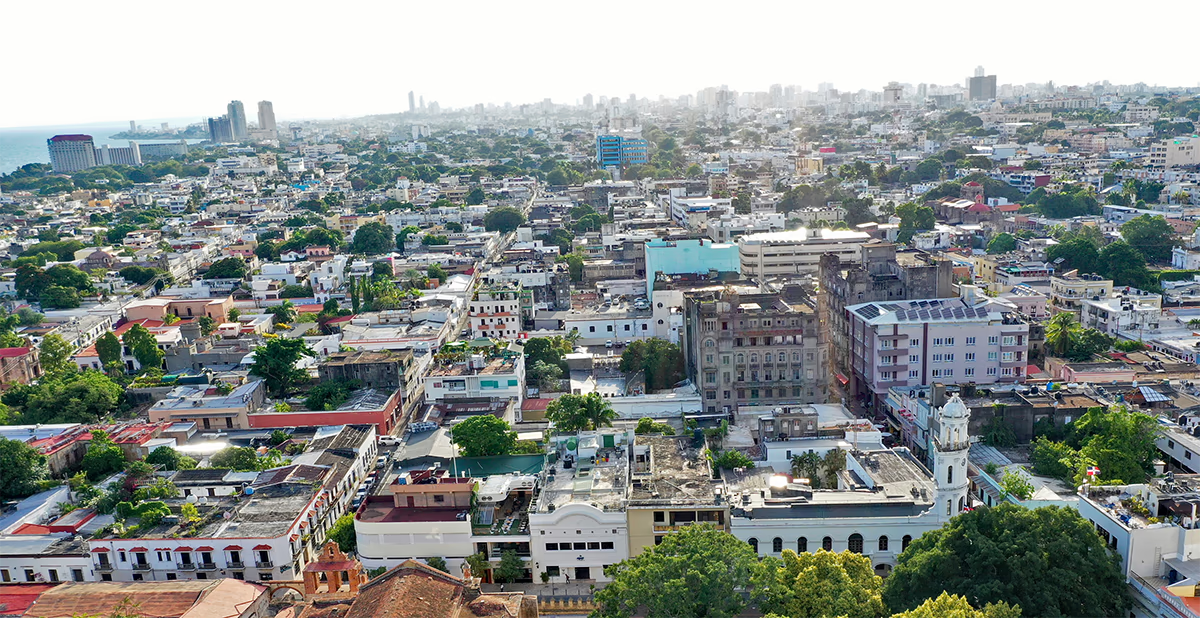
Target Market: Identifying Your Ideal Buyer
To successfully sell your property in the Zona Colonial, you must thoroughly understand the specific demographics actively acquiring real estate in this unique historic district. The appeal of the Dominican Republic's cultural heart attracts a diverse but highly specific pool of buyers. By tailoring your presentation to these distinct profiles, you can effectively highlight the exact features they find most valuable, thereby commanding a higher final sale price. Positioning your property correctly requires analyzing whether your asset is a turnkey residential home, a high-yield rental opportunity, or a historic canvas waiting for restoration.
| Segment | Age Range | Budget (USD) | Preferred Locations | Key Motivations | Marketing Focus |
|---|---|---|---|---|---|
| Restoration Investors | 35-65 | $50,000 - $400,000 | Barrio Colón, Calle El Conde | Heritage renovation, capital appreciation, architectural preservation | Highlight historic tax incentives, existing renovation permit pathways, and original architectural details. |
| Short-Term Rental Investors | 25-55 | $40,000 - $300,000 | Parque Colón, Calle El Conde | High tourist demand, turnkey operation, maximum nightly rate potential | Provide concrete occupancy rate examples, highlight easy property management options, and showcase regulatory compliance. |
| Local Upper-Middle-Class | 28-50 | $80,000 - $250,000 | Calle Hostos pockets | Central location, cultural lifestyle, long-term secure residence | Emphasize turnkey condition, secure access points, community services, and modernized internal utilities. |
When targeting boutique hotel developers, the strategy shifts significantly from residential buyers. These specialized purchasers are typically aged 30 to 60, equipped with budgets ranging from $300,000 to over $2,500,000, and they heavily favor prime areas like the Plaza de la Cultura fringe, Calle Las Damas, and Plaza España. Their primary motivations are capturing massive tourism footfall and utilizing unique colonial architecture to build a compelling hospitality brand that justifies premium nightly rates. To capture this developer audience, your offering must clearly demonstrate the structural viability for commercial conversion. Providing them with early access to zoning allowances, architectural surveys, and case studies of successfully converted neighboring properties will dramatically accelerate their decision-making process. Ensure all documentation demonstrates regulatory clearances from the National Directorate of Monumental Heritage.
Tax Regime: Leveraging Incentives for a Premium Sale
The Dominican tax framework offers robust, specialized incentives designed specifically to encourage the restoration and commercial development of historic properties within designated cultural zones. Understanding and pre-qualifying your property under these national heritage and tourism laws allows you to present a mathematically superior investment package to prospective buyers.
- Total Exemption on Transfer Taxes: Buyers are completely relieved of the standard 3% property transfer tax, significantly lowering their initial acquisition costs.
- Long-Term Property Tax Relief: Approved properties receive a total exemption from the annual Real Estate Property Tax for a period extending up to 15 years.
- Import Duty Waivers: Buyers undertaking renovations can import construction materials, high-end fixtures, and furniture entirely free of standard import duties and the standard national Value-Added Tax.
Consider a historic home in the Zona Colonial listed at $300,000 USD. Under standard conditions, a buyer would immediately pay a $9,000 USD transfer tax, plus an estimated $1,400 USD annually in property taxes (assuming the value exceeds the national exemption threshold). Over ten years, this represents a $23,000 USD tax burden. By selling a property that is pre-certified under the CONFOTUR or historic preservation regimes, you effectively hand the buyer a $23,000 USD saving. You can strategically incorporate a portion of this massive saving into a higher asking price, capturing more value from the transaction.
- Strict Zoning Location: The property must be formally located within the internationally recognized boundaries of the Zona Colonial.
- Heritage Board Approval: Any proposed or completed renovations must have documented approval from the National Directorate of Monumental Heritage.
- Tourism Development Council Certification: For maximum benefits, commercial conversion projects must be registered and approved by CONFOTUR.
Pricing Definition: Strategic Valuation in the Historic Core
Establishing the right price in the Zona Colonial requires navigating extreme hyper-local variations, where property values can fluctuate dramatically from one street to the next. A precise, data-driven approach is essential to avoid leaving money on the table while still remaining attractive to the highly educated investor pool.
| Internal Neighborhood Area | Price per SQM (USD) | Area Profile | Market Status |
|---|---|---|---|
| Parque Colón / Plaza España | $5,000 - $7,000 | Historic core with peak premium, heavy tourist footfall, luxury dining. | Luxury |
| Calle El Conde corridor | $3,500 - $5,000 | High pedestrian traffic, prime retail, excellent short-term rental performance. | Established |
| Calle Las Damas area | $3,000 - $4,500 | Historic street, cultural institutions, highly favored for boutique hotels. | Established |
| Plaza de la Cultura fringe | $2,500 - $4,000 | Close to cultural landmarks, highly attractive for hospitality projects. | Established |
| Barrio Colón (residential) | $1,200 - $2,500 | Affordable residential blocks, mixed condition, strong renovation potential. | Emerging |
| Hostos / Peripheral streets | $800 - $1,500 | Lower-priced units needing rehab, massive upside for developers. | Emerging |
| El Conde adjacent alleys | $600 - $1,200 | Small studio units, high restoration need, entry-level investment pricing. | Emerging |
Beyond basic location, seven specific premium factors heavily influence your final valuation: 1) Preserved original colonial facades and architectural details; 2) Interior courtyards that provide private, shaded outdoor space; 3) Modernized, heavy-duty plumbing and electrical infrastructure; 4) Documented approvals for future vertical expansion or roof terrace utilization; 5) Proximity to secured, off-street parking facilities; 6) Exceptional ceiling heights featuring original mahogany beams; and 7) Corner lot positioning offering dual street frontages.
Relying on emotional pricing or outdated neighborhood rumors will severely hinder your sale. Securing a professional valuation from an authorized appraiser who specializes specifically in Dominican historic properties provides a defensible, objective baseline. Furthermore, using rental yield as an anchor is highly effective; if your property generates $30,000 USD annually, pricing it at $400,000 USD offers a compelling 7.5% gross yield, which serves as a powerful, rational justification for your asking price to any commercially minded buyer.
Sales Process: Navigating the Transaction Seamlessly
Executing a property sale in the Dominican Republic generally involves real estate agent commissions ranging from 5% to 10%, with standard closing timelines taking between 30 and 90 days. Following a rigidly structured process protects your interests and guarantees a smooth transfer of funds.
1. Initial Property Audit and Preparation
Conducting a comprehensive review of your property's physical and legal status before listing prevents late-stage negotiations from falling apart. This transparency builds massive trust with foreign buyers and allows you to command your full asking price without unexpected deductions. Documents to prepare at this step:
- Title Certificate: The original, unencumbered official document proving your absolute ownership from the Title Registry.
- Cadastral Survey Plan: The verified government survey map showing the exact square meterage and property boundaries.
2. Strategic Market Valuation
Acquiring a certified appraisal provides a concrete, undeniable foundation for your listing price. This step removes emotion from the equation and equips your broker with the hard data necessary to defend the property's value against aggressive investor offers. Documents to prepare at this step:
- Certified Appraisal Report: A formal valuation document produced by a recognized local appraisal firm.
- Improvement Ledger: A detailed receipt history of all recent structural or aesthetic upgrades made to the property.
3. Marketing and International Exposure
Deploying a high-quality visual and data-driven marketing campaign pushes your property into the view of high-net-worth individuals overseas. Broadening your exposure beyond the local market creates competitive tension, often resulting in faster, higher-value offers. Documents to prepare at this step:
- Professional Photography Portfolio: High-resolution images and 3D scans highlighting the spatial flow and colonial details.
- Bilingual Property Dossier: A comprehensive PDF brochure detailing the property features in both English and Spanish.
4. Offer Review and Negotiation
Evaluating incoming offers requires looking beyond the top-line number to assess the buyer's payment structure and timeline. Skillful negotiation at this stage solidifies a highly favorable deal structure while weeding out uncommitted or underfunded prospects. Documents to prepare at this step:
- Letter of Intent (LOI): The initial written proposal from the buyer outlining their proposed purchase price and basic terms.
- Proof of Funds: Official bank statements or financial letters confirming the buyer possesses the necessary capital.
5. Signing the Promise of Sale
Formalizing the agreement through a binding contract locks the buyer in and generally secures a substantial, non-refundable deposit. This crucial legal milestone transitions the property from 'active' to 'under contract', providing you with deep financial security while the final paperwork is arranged. Documents to prepare at this step:
- Promise of Sale Agreement: A legally binding contract detailing the exact terms, deposit amounts, and closing deadlines.
- Escrow Instructions: Clear directives outlining how the deposit funds will be held by a neutral third-party attorney.
6. Due Diligence and Compliance Execution
Allowing the buyer's legal team to verify all municipal and national tax records is a standard procedure that proves the integrity of your asset. Facilitating this smoothly accelerates the closing timeline and eliminates any lingering buyer hesitation regarding hidden liabilities. Documents to prepare at this step:
- Property Tax Certificate: An official document from the national tax authority proving all property taxes are paid completely up to date.
- Utility Clearance Letters: Statements showing zero balances for water, electricity, and local municipal trash collection.
7. Finalizing the Deed of Sale
Drafting the definitive transfer document marks the culmination of the transaction, where ownership is officially prepared to change hands. Precision here guarantees that there are no post-sale legal disputes and that the terms exactly match the initial promise of sale. Documents to prepare at this step:
- Definitive Bill of Sale: The final legal deed that will be signed by both parties in front of a Notary Public.
- Seller Identification: Valid passports or national ID cards required for formal notary authentication.
8. Fund Disbursement and Handover
Executing the final signatures triggers the immediate release of the purchase funds directly into your designated accounts. Once the capital is secured, physical possession is transferred, cleanly closing out your investment cycle in the Zona Colonial. Documents to prepare at this step:
- Closing Statement: A detailed financial breakdown showing the final purchase price minus any agreed-upon prorated expenses and broker commissions.
- Physical Keys and Access Codes: All necessary items required to grant the new owner total access to the physical property.
Taxes and Transfers: Protecting Your Sale Proceeds
📌 Legal Highlight: Always use a formalized escrow account managed by a recognized Dominican law firm for the initial deposit. This protects both parties and legitimizes the transaction for international buyers.
Calculating your net profit requires a crystal-clear understanding of the Dominican tax liabilities triggered upon the sale of a property. Sellers must distinguish between individual and corporate tax structures to accurately forecast their final liquidity.
If you hold the property in your personal name, you will be subject to an individual Capital Gains Tax. This is calculated on the difference between your officially registered acquisition cost (adjusted for inflation published by the government) and your final sale price. If the property is held within a corporate structure, such as a Dominican Limited Liability Company, the profit from the sale is typically treated as standard corporate income and taxed at the prevailing corporate rate at the end of the fiscal year.
Navigating pre-sale compliance is non-negotiable. Before any title can transfer, the seller must prove immaculate standing with the national tax authority (DGII). Furthermore, leaning on the special tax regimes discussed previously gives sellers a massive advantage; properties benefiting from cultural or tourism exemptions often experience much faster transfer times due to their pre-vetted status within government ministries.
- Step 1: Obtain an updated property valuation to confirm your official tax basis.
- Step 2: Request an official Property Tax Certificate to prove property taxes are current.
- Step 3: Calculate your estimated capital gains exposure with a certified Dominican tax accountant.
- Step 4: Prepare all corporate standing documents if the property is held within a Limited Liability Company.
Rental Yields: Proving the Financial Case
For a significant portion of international buyers, the Zona Colonial is entirely an income play. To secure top-tier offers, you must present your property not just as real estate, but as a high-performing financial asset. Presenting organized, verifiable yield data removes speculation and allows buyers to justify your asking price through hard mathematics.
| Location | Primary Strategy | Projected Gross ROI | Est. Management Cost |
|---|---|---|---|
| Parque Colón Core | Premium Short-Term | 8.5% - 12.0% | 20% - 25% |
| Calle El Conde Corridor | Hybrid (Tourist/Exec) | 7.0% - 9.5% | 15% - 20% |
| Calle Las Damas Area | Luxury Boutique STR | 8.0% - 10.5% | 20% - 25% |
| Plaza de la Cultura | Mid-Term Corporate | 6.5% - 8.0% | 10% - 15% |
| Hostos (Emerging) | Budget Short-Term | 9.0% - 13.0% | 20% - 25% |
Notice the inclusion of emerging areas like the Hostos peripheral streets. While the price per square meter is lower here, the gross ROI can actually outpace the luxury core due to lower initial capital requirements.
📌 Strategic Highlight: Use dynamic pricing algorithms that adapt to local holidays, weather patterns, and flight influxes to increase short-term rental revenue by up to 18% annually.
Sellers who have historically utilized dynamic pricing and professional management will have a far more robust Profit and Loss (P&L) statement to present. As outlined in the Target Market section, demonstrating this turnkey revenue generation is the single most effective way to close a sale with yield-focused overseas investors.
International Marketing: Reaching the Global Buyer
Relying strictly on local Dominican portals severely limits your buyer pool and suppresses your ultimate sale price. The highest offers for historic assets consistently come from North American and European buyers who view Zona Colonial properties as exotic, high-yield portfolio additions. You must deploy an aggressive, borderless marketing strategy.
📌 Marketing Highlight: Highlight any active structural warranties. Foreign buyers are highly risk-averse regarding construction quality. A documented history of scheduled maintenance dramatically increases buyer confidence and closing speed.
To effectively penetrate these foreign markets, you must remove the friction of distance. Your marketing collateral must be sophisticated, transparent, and entirely digital-first.
- Immersive Matterport Tours: Allow buyers in New York or Madrid to virtually 'walk' through your property, inspecting ceiling heights and courtyard layouts without boarding a plane.
- USD-Denominated P&L Statements: Translate all historical rental income, utility costs, and management fees into US Dollars to provide immediate, recognizable financial clarity to foreign investors.
- PDF ROI Prospectus: Distribute a beautifully designed, downloadable investment deck that models future returns and highlights neighborhood appreciation trends.
- Targeted SEO & Paid Ads: Run geo-targeted digital advertising campaigns focused strictly on high-net-worth zip codes in major international financial hubs.
- Bilingual Legal Partnerships: Advertise that your transaction will be handled by a bilingual attorney, instantly lowering the anxiety of foreign buyers unfamiliar with Dominican civil law.
- Drone Contextual Footage: Utilize aerial video to clearly show your property's walking distance to major landmarks like the Alcazar of Columbus, proving the value of the micro-location.
Legal Structure: Optimizing the Asset Vehicle
The legal entity holding your property drastically affects how smoothly and quickly a sale can be executed. Savvy sellers often structure their ownership to anticipate the needs of international buyers, streamlining the eventual exit. The two dominant structures are holding the property in your personal name or within a Dominican Limited Liability Company (SRL).
| Structure | Pros | Cons |
|---|---|---|
| Individual Ownership | Zero initial setup costs; no annual corporate maintenance fees; simple personal tax filing. | Exposes owner to direct personal liability; title transfers take longer; zero corporate privacy. |
| Corporate Vehicle (SRL) | Protects personal assets from property liabilities; allows for rapid sale by simply transferring company shares; high privacy. | Setup costs range from $1,000 to $1,500 USD; requires annual accounting and tax filings (approx. $500 - $1,000 USD/year). |
For sellers targeting the boutique hotel developers mentioned earlier, having the property already enclosed within a clean, debt-free SRL is a massive selling point. Developers heavily favor purchasing the corporate shares of the SRL rather than the physical property itself. This method completely bypasses the standard property transfer tax and reduces the legal transfer timeline from months to mere weeks, creating a highly attractive, frictionless acquisition.
Exit Planning: Timing Your Sale for Maximum Liquidity
A successful real estate exit is never an accident; it is the result of careful timing aligned with macroeconomic tailwinds. Sellers must analyze both global financial conditions and hyper-local infrastructure developments to choose the exact right moment to list their property in the Zona Colonial.
Market liquidity in this historic sector is heavily tied to the completion of government-funded restoration phases. If the Ministry of Tourism is actively laying new underground fiber optics or burying power lines on your street, it is often wiser to hold the asset until the construction dust settles. The immediate aesthetic leap upon completion consistently triggers a 10% to 15% spike in buyer interest and valuation.
Furthermore, monitor macro indicators such as direct flight routes from major US and European hubs into Santo Domingo (SDQ). An increase in flight volume directly correlates with higher hotel occupancy, which subsequently drives up demand from the Short-Term Rental Investors identified earlier.
From a long-term perspective, deciding when to sell depends heavily on whether your asset sits in a consolidated area or an emerging one. Properties in consolidated zones like Plaza España offer stable, predictable pricing, making them excellent for a quick, straightforward sale if personal capital is required. Conversely, holding an asset in an emerging perimeter area like Barrio Colón requires more patience, but offers explosive equity growth potential as the perimeter of gentrification pushes outward. Tying back to the Rental Yields data, as long as your asset is cash-flowing positively, you have the ultimate luxury of waiting for the perfect market conditions to execute a highly profitable exit.