🔄 Last Updated: 2026/08/19

Mirador Sur Property Investment 2026: Buy, Sell, or Rent High-End Condos Near Santo Domingo's Green Oasis

In brief:

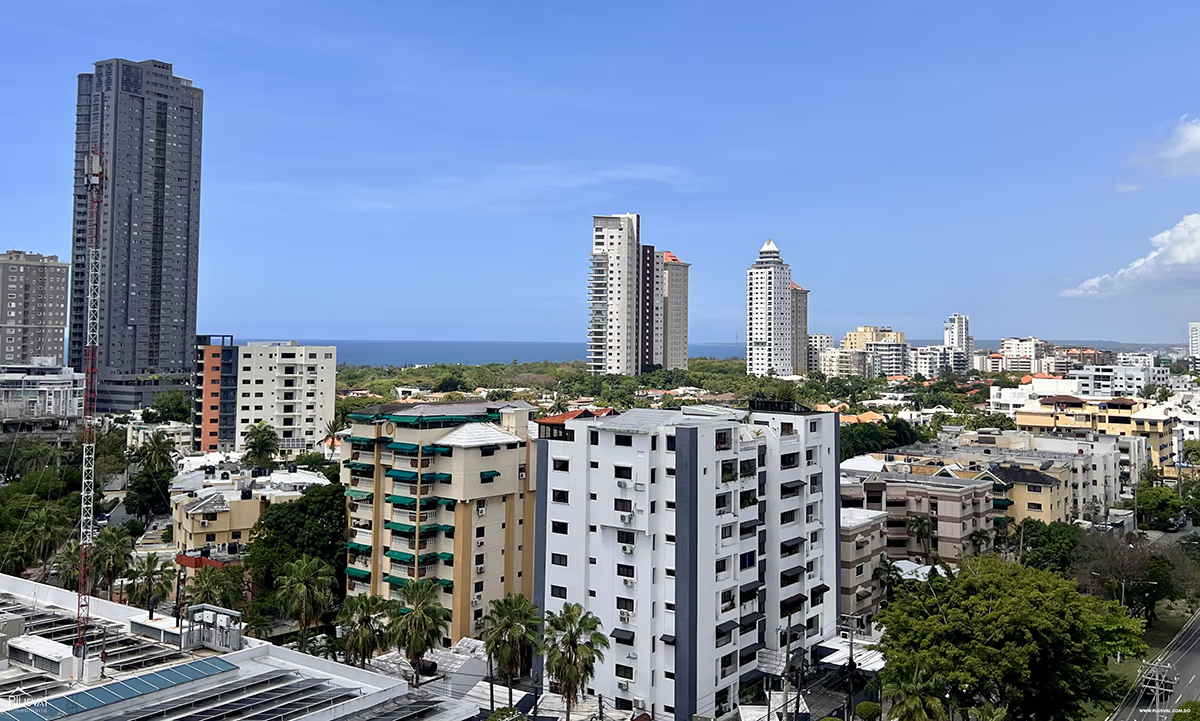
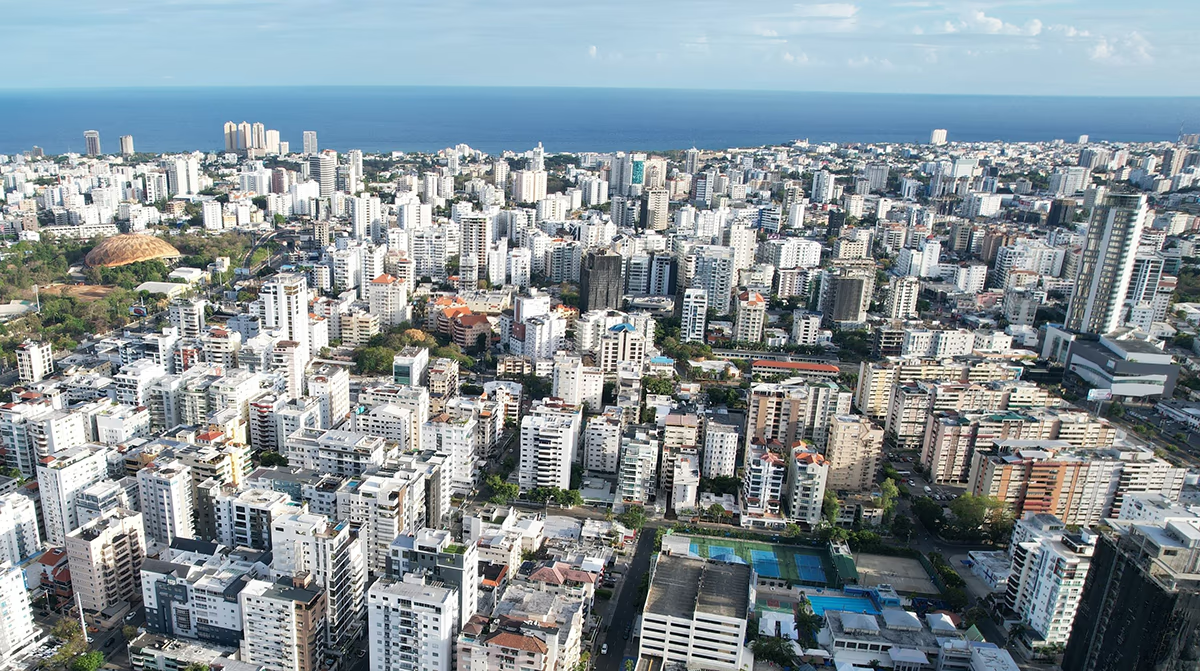
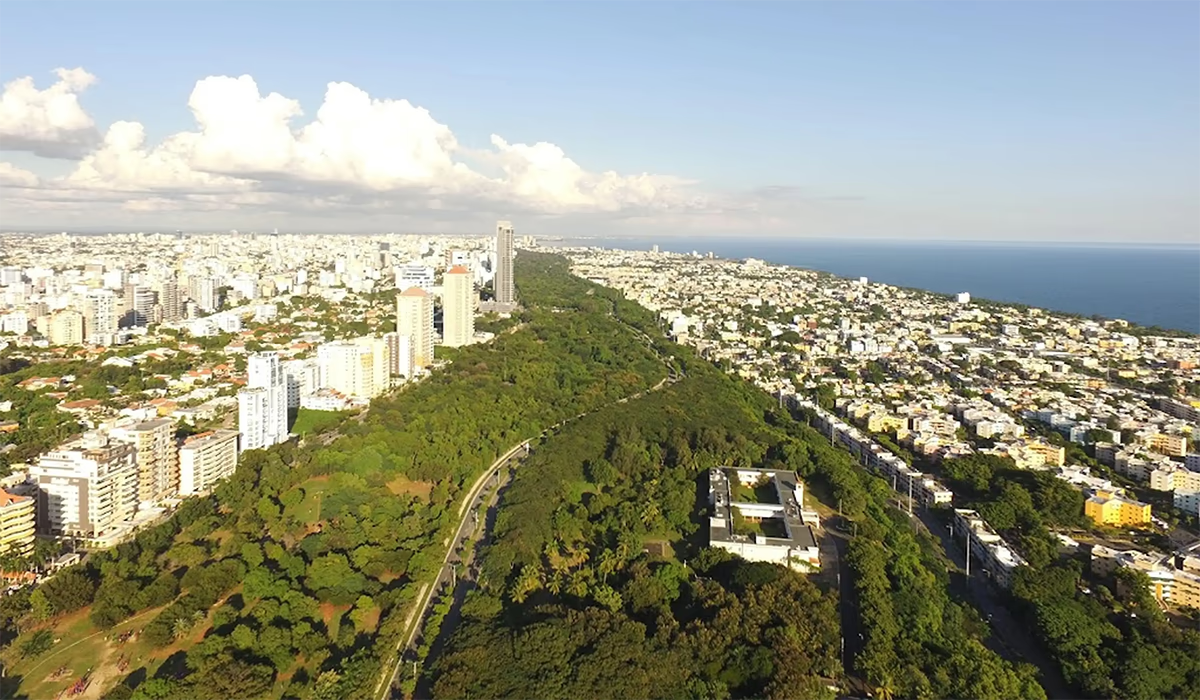
Mirador Sur offers premium park-side living at $2,160/m² average, with Avenida Anacaona properties commanding $3,231/m². Sellers benefit from Law 30-26's 10% individual capital gains tax (vs. 27% corporate), $10.7M IPI exemption threshold, and a 3% transfer tax. The market attracts local owner-occupiers, diaspora buyers, and investors seeking long-term rental income (estimated 5-7% yields). Key value drivers include panoramic sea/city views, proximity to Parque Mirador Sur, and modern building amenities. The neighborhood's established status provides stability and consistent demand.

⏱️ Reading time: 14 minutes

Market Target

Understanding who is actively looking for properties in Mirador Sur allows you to tailor your marketing and pricing strategy to the right audience.

Segment Age Budget Preferred Locations Key Motivations Marketing Focus
Local Owner-Occupiers Working-age adults & established households Mid-market to Upper-mid-market Central Mirador Sur, near Núñez de Cáceres, Buenos Aires del Mirador Proximity to Parque Mirador Sur, security, larger layouts, access to schools & retail Emphasize livability, green space, parking, building management, and modern infrastructure.
Dominican Diaspora Established professionals & families Upper-mid-market to Luxury Near Avenida Anacaona, Central Mirador Sur, Los Cacicazgos Asset ownership in Santo Domingo, premium views, prestige, long-term family use, capital appreciation Offer remote-purchase support, clear title documentation, professional property management, and transparent operating costs.
Buy-to-Let Investors Adult investors & small investment companies Income-producing apartments (entry-level to premium) Near Núñez de Cáceres, Buenos Aires del Mirador, Central Mirador Sur Long-term rental demand, urban accessibility, portfolio diversification, flexible positioning Market verified rent evidence, operating expenses, occupancy history, and conservative net-yield calculations.

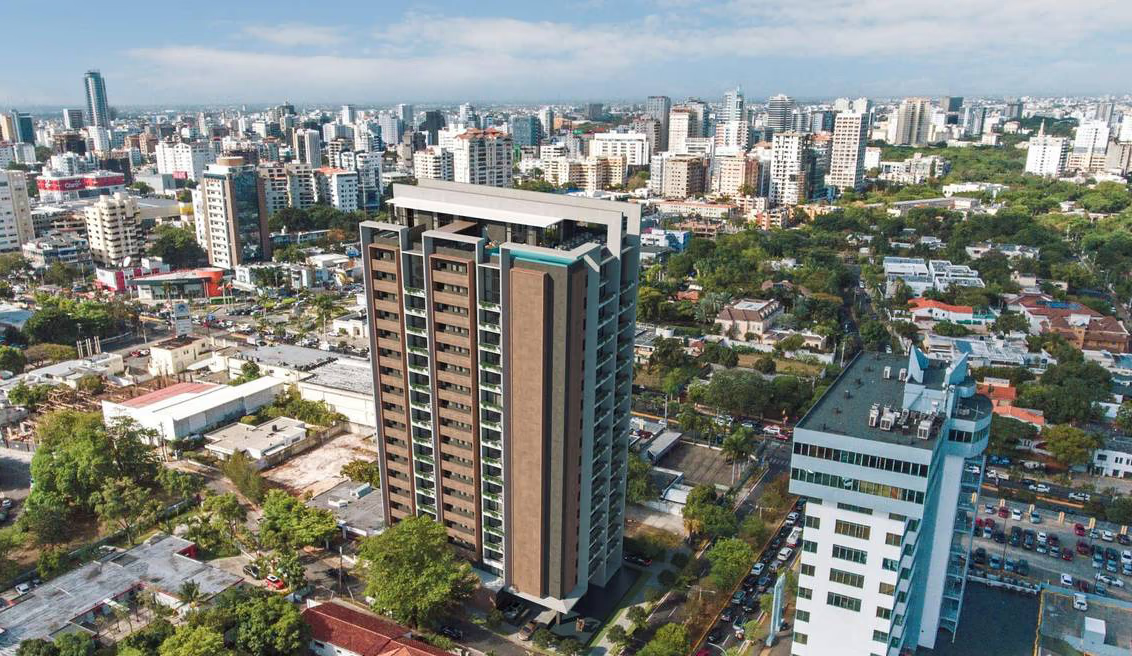
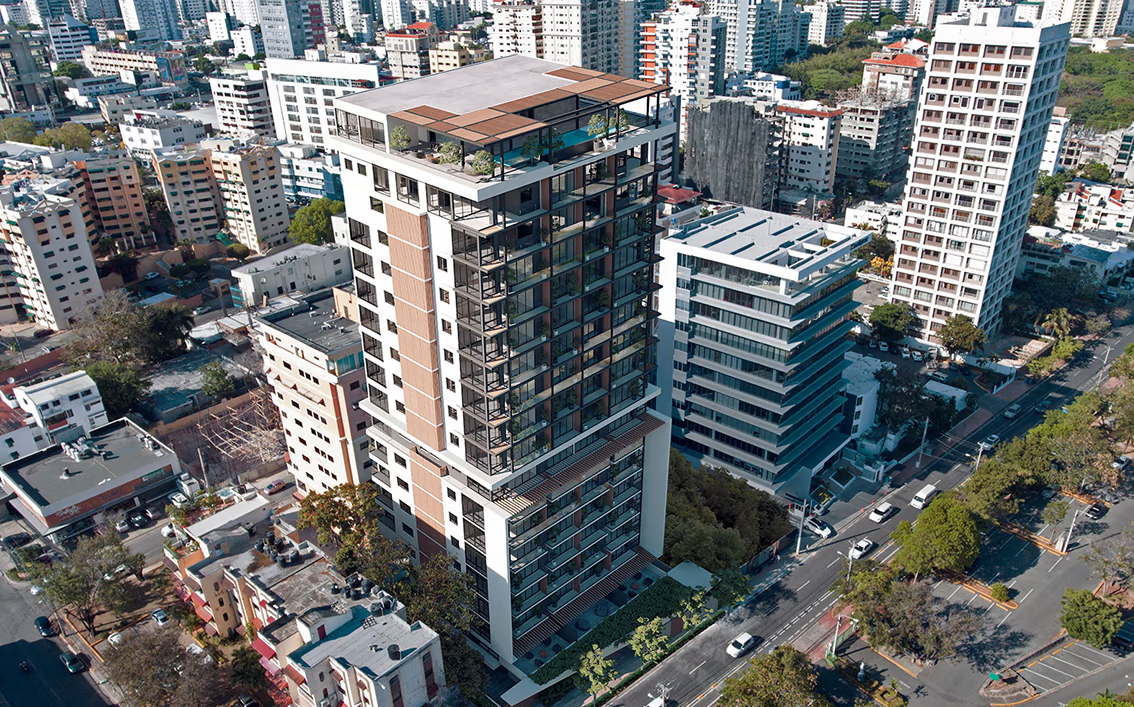
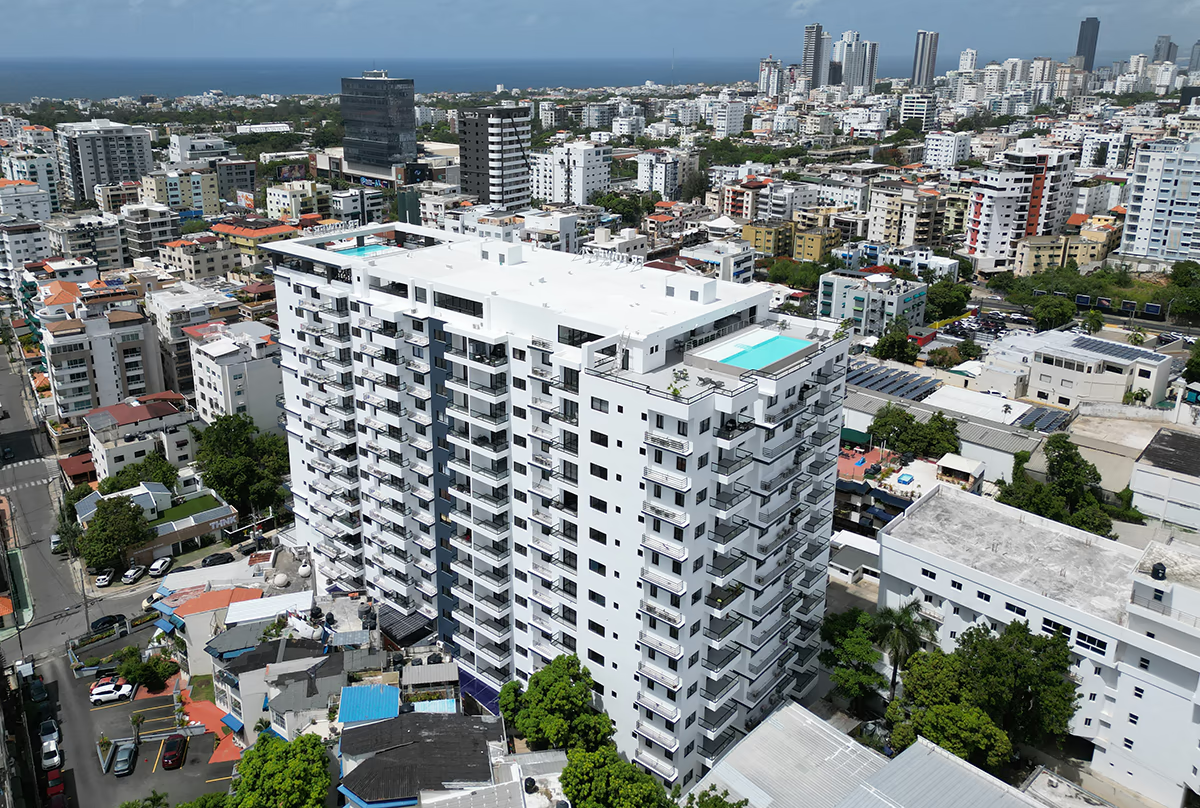
Local developers in Mirador Sur are increasingly focusing on boutique apartment buildings that maximize views and offer premium amenities to attract both high-net-worth local families and diaspora buyers looking for a secure, prestigious investment in Santo Domingo.

Tax Framework

The Dominican Republic offers a competitive tax regime for real estate, with specific incentives designed to attract and retain investors. Understanding these benefits is key to maximizing your net returns.

Definition The tax framework for real estate in the Dominican Republic includes a national property tax (IPI), a transfer tax, and taxes on capital gains. Recent reforms have made the system more favorable for sellers.

Key Benefits for Sellers

  • Reduced Capital Gains: Under Law 30-26, the capital gains tax for individuals on real estate sales has been reduced to a flat 10% on the net profit.
  • Generous IPI Exemption: The 1% annual property tax (IPI) only applies to the portion of an individual's total real estate assets that exceeds RD$10,695,494 in 2026.

Concrete Financial Example Let's say you bought an apartment in Mirador Sur for $200,000 USD and are selling it for $250,000 USD. Your gross profit is $50,000 USD.

  • Individual Seller: The capital gains tax is a flat 10% on the profit.
    • Taxable Profit: $50,000 USD
    • Tax Due: $50,000 × 10% = $5,000 USD.
  • Corporate Seller: The profit is taxed at the standard corporate income tax rate of 27%.
    • Taxable Profit: $50,000 USD
    • Tax Due: $50,000 × 27% = $13,500 USD.

This demonstrates a clear tax advantage of $8,500 USD for individual sellers compared to corporate entities under this specific scenario.

Requirements

  • Capital gains tax must be paid at the time of the sale transaction.
  • Property tax (IPI) declarations must be up-to-date to avoid penalties at closing.
  • Certain exemptions (e.g., for owners over 65) require official documentation and must be applied for.

Pricing Definition

Positioning your property correctly requires a clear understanding of the micro-market. This comparative analysis allows you to set a competitive yet profitable asking price.

Average Market Cost (AMC) per m² by Micro-Location The table below shows the current asking price per square meter across key sub-areas in and around Mirador Sur, based on active listings. Note that these are asking prices, not finalized transaction data.

Sub-Area Price per m² (USD) Profile
Mirador Sur near Avenida Anacaona $3,231 Premium luxury with views
Buenos Aires del Mirador $2,390 Established residential cluster
Mirador Sur near Núñez de Cáceres $2,368 Emerging investment zone
Central Mirador Sur $1,701 Established residential market
Los Cacicazgos $940 Cautious proxy, requires careful consideration

7 Premium Factors Influencing Your Price

  1. Panoramic Views: Unobstructed views of the Caribbean Sea or the city.
  2. Proximity to Green Space: Direct access or walking distance to Parque Mirador Sur.
  3. Building Amenities: Pools, gyms, social areas, 24/7 security, and modern elevators.
  4. Parking: The number and type of secure parking spaces included.
  5. Renovation Status: Completely modernized apartments command a higher premium.
  6. Square Footage: Larger, well-distributed floor plans are more desirable.
  7. Orientation: Optimal sun exposure and cross-ventilation.

Professional Estimate & Rental Anchor For a standard 2-bedroom apartment in Central Mirador Sur, a professional estimate would start around $2,100 USD/m², with the final price adjusted up or down based on the seven premium factors above. The rental yield serves as a critical value anchor, ensuring the sale price aligns with the property's income-generating potential.

Selling Process

The typical selling process in Mirador Sur takes between 30 to 90 days. Real estate agent commissions generally range from 5% to 10% of the final sale price.

  1. Property Valuation and Market Positioning The first step is to establish a realistic and competitive asking price. A precise valuation is the single most important factor in attracting serious buyers and securing a quick sale.

    Documents to prepare at this step:

    • Title Certificate (Certificado de Título): The official document proving your legal ownership of the property.
    • Tax Receipts: Proof of payment for the annual property tax (IPI) to demonstrate the property is free of liens.
    • Building Floor Plans: Detailed architectural plans that show the layout of the apartment.
  2. Legal and Financial Preparation This step ensures your property is free of encumbrances and ready for a clean, fast transaction. Pre-emptive legal checks prevent costly delays later.

    Documents to prepare at this step:

    • Certificate of No Liens (Certificado de No Gravamen): Issued by the Title Registry to prove the property has no debts or legal claims against it.
    • Latest Utility Bills: Copies of recent water and electricity bills to show the account is current.
  3. Marketing and Buyer Attraction This is where we create a compelling narrative around your property to reach the largest possible pool of buyers, both local and international. High-quality visuals are non-negotiable.

    Documents to prepare at this step:

    • Professional Photography & Floor Plans: High-resolution images and clear layout diagrams for listings.
    • Property Information Sheet (PIS): A professionally designed PDF with all key specs, photos, and location advantages.
  4. Offer Negotiation and Acceptance Once a serious offer is received, the negotiation process begins. This step involves evaluating the offer's strength beyond just the price, considering terms and the buyer's financing.

    Documents to prepare at this step:

    • Purchase Agreement (Promesa de Compra-venta): A draft contract outlining the terms of the sale.
    • Buyer's Financial Pre-Approval: A letter from the buyer's bank confirming their ability to secure financing.
  5. Signing the Purchase Agreement The signing of the "Promesa de Compra-venta" is the formal commitment between buyer and seller. This legally binding contract secures the deposit and sets the closing date.

    Documents to prepare at this step:

    • Signed Purchase Agreement: The executed contract detailing the price, deposit, and closing date.
  6. Due Diligence and Title Transfer Preparation The buyer will perform their final due diligence. This is the seller's responsibility to ensure all legal documents are in order for a seamless transfer of title.

    Documents to prepare at this step:

    • Original Title Deed (Escritura Pública): The original notarized deed from when you acquired the property.
    • Building Management Certificate: A letter from the condo association confirming there are no outstanding maintenance fees.
  7. Closing and Escritura Publica The formal and final act of the sale. A notary public oversees the signing of the final deed, the payment of taxes, and the transfer of funds.

    Documents to prepare at this step:

    • Identification: A valid passport or national ID for the seller.
    • Proof of Tax Payment: Receipt showing the capital gains tax has been paid.
  8. Post-Sale and Fund Disbursement Once the deed is registered and the sale is completed, the funds are disbursed to you, the seller. This includes ensuring all agent commissions and legal fees are settled.

    Documents to prepare at this step:

    • Power of Attorney: If you are selling remotely, the legal document that authorizes your representative to act on your behalf.

Taxes and Transfers

Navigating the tax and transfer process is crucial for a profitable and compliant sale. Understanding your obligations as a seller will help you plan your finances effectively.

📌 Legal Highlight: The 3% transfer tax is typically paid by the buyer, not the seller. However, ensuring your capital gains tax is calculated correctly can significantly impact your net profit, especially when comparing individual (10%) vs. corporate (27%) rates.

Detailed Breakdown

  • Individual Capital Gains: The profit from the sale is taxed at a flat rate of 10% under Law 30-26.
  • Corporate Capital Gains: For companies, the profit is taxed at the standard corporate income-tax rate of 27%.
  • Pre-Sale Compliance: Before the sale, you must ensure that your IPI (property tax) is paid and that you have all necessary certificates, such as the 'No Liens' certificate.

4-Step Transfer Checklist for Sellers

  1. Obtain 'No Gravamen' Certificate: From the Title Registry to prove the property is debt-free.
  2. Prepare the Purchase Agreement ('Promesa'): With the buyer, detailing the price and terms.
  3. Settle Tax Obligations: Pay the 10% or 27% capital gains tax on the net profit.
  4. Sign Final Deed ('Escritura Pública'): Before a notary to officially transfer the property title.

Rental Yields

For buy-to-let investors, the property's ability to generate income is a key driver of its sale value. While specific gross yield data is not currently available, these strategies can help maximize your property's potential.

📌 Strategic Highlight: Implement a dynamic pricing strategy. Using algorithms that adjust rates based on seasonality, local events, and demand can significantly boost your annual gross income compared to a fixed rate.

Rental Performance by Strategy

Location Strategy Gross ROI Management Cost
Near Núñez de Cáceres Long-term Professional Estimated 5-7% 10% of monthly rent
Buenos Aires del Mirador Long-term Family Rental Estimated 4-6% 8% of monthly rent
Avenida Anacaona Area Premium Short-term Rental Estimated 6-9% 15-20% of monthly rent
Central Mirador Sur Mixed-Use (Long-term/Furnished) Estimated 5-8% 12% of monthly rent
Emerging Area (Near Núñez) Value-Add / Refurbished Rental Estimated 7%+ 10% of monthly rent

Focusing on furnished, high-demand units near business hubs can attract expatriate professionals, justifying a higher rental price and mitigating costs through a professional property manager.

International Marketing

Marketing to a global audience requires a strategic approach. By presenting your property with professional international standards, you attract a wider pool of qualified buyers and command a premium price.

📌 Marketing Highlight: Structural guarantees, such as up-to-date maintenance records, elevator certifications, and building seismic compliance reports, build trust with remote international buyers who cannot physically inspect the property.

6+ Tactics for International Buyers

  1. Matterport 3D Tours: Allow remote buyers to explore the property immersively from anywhere in the world.
  2. Professional P&L Statements: Provide a property-specific income and expense sheet to demonstrate its investment viability.
  3. USD Pricing: Quote the price in US Dollars to provide clarity for international investors.
  4. PDF ROI Pack: Create a downloadable, branded PDF that includes the P&L, photos, and area data.
  5. Geo-Targeted SEO+Ads: Run targeted ads and optimize content for search engines in the US, Canada, Spain, and other key diaspora and investor markets.
  6. Bilingual Lawyer Coordination: Offer to facilitate introductions to English-speaking or bilingual lawyers to simplify the legal process for foreign buyers.
  7. Maintenance & Certification Documents: Provide a clear history of property maintenance, recent renovations, and any building certifications to prove the property is well-cared for and structurally sound.

Legal Structure

Choosing the correct legal entity for your real estate investment can have major implications for taxes, liability, and succession planning.

Comparative Matrix: Individual vs. SRL (Corporate)

Structure Pros Cons
Individual Lower Capital Gains Tax: 10% flat rate on profits.
Simpler Setup: Minimal administrative burdens.
Lower Operating Costs: No mandatory corporate accounting or reporting.
Full Liability: You are personally liable for any legal claims.
Succession Planning: Asset may be subject to inheritance laws.
SRL (LLC/Corporate) Liability Protection: The corporate entity is liable, protecting your personal assets.
Business Deductions: Can deduct operating expenses more easily.
Succession Ease: Ownership can be transferred via shares.
Higher Capital Gains Tax: Profits are taxed at the 27% corporate rate.
Higher Setup/Maintenance Costs: You will have annual accounting fees and tax filings.

Note for Developers: The SRL is often preferred for developers due to liability protection and the ability to attract investors. However, for a single-asset holding company, the higher corporate capital gains tax is a significant trade-off to consider.

Exit Planning

A well-timed exit is the culmination of your investment strategy. Understanding the wider economic and market conditions is essential for maximizing your return.

While specific data such as the average days on market or official price trends are not available for Mirador Sur, the overall economic framework remains the most important factor. A seller should be prepared to adjust their strategy based on the performance of the national economy and its impact on buyer liquidity.

Key Macro Indicators to Monitor

  • Economic Growth: Tracking the Dominican Republic's GDP growth provides a sense of national economic health.
  • Inflation/CPI: Rising inflation could impact buyer purchasing power and the relative value of real estate.
  • Interest Rates: Higher interest rates increase the cost of borrowing, which can cool down buyer demand. If rates are low, it is an ideal time to sell to buyers who are eager to lock in favorable financing.

Long-Term Perspective Selling into a market with strong long-term potential, such as Santo Domingo, offers a distinct advantage. A clear understanding of the market's trajectory allows you to confidently price your property for a profitable exit.

Areas Strategy For your property in Mirador Sur, positioning it as a prestigious, well-maintained asset in a prime location is key. In times of market uncertainty, "luxury" and "established" areas like central Mirador Sur tend to retain value better than emerging areas. As a seller, you can leverage this stability to your advantage by highlighting the prestige and security of the location.


Sell Your Mirador Sur Property Today

Mirador Sur's lifestyle demand fuels 2026 rental growth. List your property for strong returns.

What We Can Do for You:

  • Multilingual Property Promotion:: Increase your property's international visibility and reach qualified buyers worldwide.
  • Advanced Digital Real Estate Marketing:: Targeted lead generation campaigns, virtual tours, and SEO-optimized content.
  • Strategic B2B Network:: We partner with leading industry professionals to speed up property sales and rentals.
WhatsApp WhatsApp Chat

Frequently Asked Questions

Can a foreigner buy property in Santo Domingo without residency?
Yes, absolutely. The Dominican Republic has no restrictions on foreign ownership of real estate. You do not need residency or a visa to purchase property. However, you will need a local tax ID (RNC) which your lawyer can obtain for you.
What are the annual property taxes in Santo Domingo?
The annual property tax (IPI) applies only if your property value exceeds RD$7,700,000 (approx. $130,000 USD). The rate is 1% on the excess above that threshold. For example, a property valued at $200,000 USD would pay 1% on $70,000 = $700/year. Below the threshold, nothing is due.
How is the Capital Gains Tax calculated when I sell my property, and how can I legally reduce it?
When you sell real estate in the Dominican Republic, the Capital Gains Tax is calculated on the net profit from the sale, not the total sale price. The net profit is: Sale Price minus (Acquisition Cost adjusted by DGII inflation multipliers) minus (deductible selling expenses such as legal fees, notary fees, and agent commissions). For individuals, capital gains are taxed under the progressive income tax scale (0% to 25%), while companies pay a flat 27% on the gain. Unlike some other jurisdictions, there is no automatic exemption or holding-period reduction that eliminates the tax simply because you have owned the property for 5, 10, or more years. To legally reduce your taxable gain: 1) Keep detailed records of all renovations and structural improvements — these can be added to your acquisition cost; 2) Ensure the DGII inflation adjustment is properly applied to your cost basis; 3) Deduct all legitimate selling expenses. The exact tax rate depends on your total income for the year and your tax residency status. Always consult a Dominican accountant to verify the calculations for your specific situation.
If my property is part of a CONFOTUR-approved project, do the tax benefits transfer to the next buyer?
The transferability of CONFOTUR benefits depends on how the property is held. In a conventional real estate transaction, the DGII (Dominican tax authority) and the text of Law 158-01 itself confirm that CONFOTUR benefits — including the 3% transfer tax exemption and the 15-year IPI exemption — apply exclusively to the first buyer who purchases directly from the developer and do not transfer to subsequent buyers in a standard property sale. This is supported by legal sources confirming that "los beneficios son exclusivos para el primer comprador". However, if the property is held through a Dominican SRL (corporation) created exclusively to own the property, it may be possible to indirectly transfer the benefits by selling the shares of the SRL rather than the property itself, since the corporation retains its CONFOTUR eligibility. This strategy is considered plausible by some practitioners, but it has not been explicitly confirmed in DGII rulings or primary legal sources and involves complex corporate and tax considerations. Always verify your property's specific CONFOTUR status and consult a Dominican attorney to determine the optimal ownership structure for your situation.
What taxes do I pay on rental income, and which expenses can I deduct?
The taxation of rental income in the Dominican Republic depends on your tax status. Resident individuals pay tax on rental income as part of their overall personal income, which is subject to the progressive income tax scale (0% to 25%, with exemptions for lower income brackets). Companies and SRLs pay a flat 27% corporate income tax on net rental profits. Non-resident owners are typically subject to a 27% withholding on gross rental income. Deductible expenses commonly include: property management fees, maintenance and repairs, insurance premiums, HOA fees, utilities paid by the landlord, and depreciation where permitted. For short-term vacation rentals, platforms like Airbnb collect and remit the 18% ITBIS (VAT) on your behalf. For long-term leases, you are responsible for declaring rental income and paying the corresponding tax. Keeping meticulous records of all expenses throughout the year reduces your taxable rental income. Consult a Dominican accountant to confirm your specific tax obligations.
Should I hold my property through a Dominican corporation (SRL) instead of personal ownership?
Many foreign property owners choose to hold their Dominican properties through an SRL (Limited Liability Company). The formation cost is approximately $1,500 to $2,000, with annual maintenance of about $500 to $800. Key advantages include: simplified succession planning (shares can be transferred to heirs without going through Dominican probate), the ability to transfer ownership by selling company shares rather than the property itself (which can be faster and may offer flexibility), and streamlined rental income management. However, there are important considerations: companies pay a flat 27% tax on capital gains (while individuals may benefit from progressive rates), and in 2026 the DGII has increased scrutiny on share transfers to ensure the 3% property transfer tax is not being circumvented through indirect transactions. Additionally, SRLs are subject to ongoing accounting, filing, and compliance obligations. Whether an SRL is appropriate depends on your investment goals, exit strategy, and estate planning needs. Consult a Dominican attorney and accountant before deciding.
What is the IPI property tax, and do I need to pay it before selling?
The IPI (Impuesto al Patrimonio Inmobiliario) is an annual property tax in the Dominican Republic. For 2026, the exemption threshold is RD$10,695,494 (approximately $182,000 USD), and the tax rate is 1% on the property value exceeding that amount. This threshold is recalculated annually for inflation. Exemptions include: properties under the CONFOTUR regime (for up to 15 years) and owners aged 65 or older who own only one property used as their primary residence. As a seller, it is essential to ensure all IPI payments are fully current up to the year of sale. Properties with outstanding IPI debts cannot be legally transferred — the Notary Public will not proceed until the DGII tax clearance certificate is presented. To avoid delays, keep all original receipts or digital copies of your IPI payments and settle any arrears before listing your property.
Do I need to register my rental agreement with the DGII?
Rental income must be properly declared for Dominican tax purposes, and maintaining a written, signed lease agreement is strongly recommended for every rental. For short-term vacation rentals, platforms like Airbnb collect and remit the 18% ITBIS (VAT) on your behalf, simplifying compliance. For long-term leases, you are responsible for declaring rental income and paying the corresponding income tax. Rental contracts may be subject to registration with the DGII if they exceed certain monthly thresholds, though the exact threshold is not consistently specified in publicly available sources and is subject to annual adjustments. To ensure full compliance, keep signed contracts, payment records, and supporting documentation. Consult a local accountant to confirm the current registration requirements for your specific situation.
How long does it typically take to close a property sale in Santo Domingo?
The closing timeline heavily depends on the buyer's financing status and your rigorous pre-listing preparation. As outlined in the Strategic Sales Process section, typical transactions reliably run between 30 to 90 days from the moment of offer acceptance to the final, fully funded closing. Sellers who preemptively secure their tax clearance certificates and resolve any existing title encumbrances can shave up to 15 days off the buyer's due diligence period. Cash transactions with international buyers can close even faster if escrow accounts are pre-established. Having a dedicated, bilingual legal team ensures the final deed of sale is executed rapidly, preventing buyer fatigue and securing your liquid capital without unnecessary administrative delays.
What is the standard real estate commission rate for sellers in the capital?
When engaging professional brokerage representation, the standard commission rates in Santo Domingo range strictly from 5% to 10% of the final negotiated sale price. As detailed in the Strategic Sales Process section, this fee structure heavily depends on the exclusivity terms, property valuation, and the scope of marketing deployed. For instance, high-end luxury units requiring immersive 3D virtual tours and targeted international campaigns might lean toward the higher end of the spectrum to cover global outreach costs. This investment guarantees that your property is exposed to properly capitalized foreign buyers, ultimately securing a higher net profit than attempting a private, unrepresented sale.
Should I sell my apartment as an individual or through a corporate structure?
The choice between individual and corporate ownership dramatically impacts your final tax liability. As explored in the Legal Structure: Individual versus Corporate Ownership section, individual sellers face a flat 27% capital gains tax on their net profit. However, holding your asset within a corporate entity (SRL) allows you to aggressively deduct documented capital improvements and transactional expenses, significantly reducing your taxable base. While establishing a corporate holding costs between $1,500 and $3,000 USD initially, the massive corporate expense deductions and simplified multi-owner equity transfers make it highly advantageous for sellers managing premium inventory or high-value residential properties across the metropolitan area.
How does the CONFOTUR law benefit me directly as a seller?
The CONFOTUR tourism incentive law is one of the most powerful negotiation tools available to sellers holding certified properties. As highlighted in the Tax Regime and Specialized Selling Incentives section, this program provides your buyer with a 100% exemption from the standard 3% property transfer tax and a complete waiver of the annual 1% property tax for up to 15 years. For a $300,000 USD apartment, you are effectively handing the buyer over $30,000 USD in immediate and recurring tax savings. This massive financial benefit allows you to confidently defend your premium asking price against aggressive buyer negotiations, ensuring you maximize your equity retention upon closing.
Which specific neighborhoods command the highest price per square meter?
Premium central sectors dominate the top-tier pricing metrics in the capital. As verified in our Price Definition and Neighborhood Valuation Anchors section, Piantini consistently commands the highest valuations, averaging between $2,200 and $3,100 USD per square meter. Los Cacicazgos follows closely behind, with luxury units pricing between $2,100 and $2,800 USD per square meter. To actually achieve these peak valuations, your property must feature at least 2 deeded parking spaces, redundant power systems, and premium social infrastructure. Sellers in emerging areas like Gazcue, averaging $1,300 to $1,850 USD per square meter, can still capture excellent returns by highlighting the sector's high short-term rental yields and ongoing urban renewal projects.
What is the average price per sqm in Mirador Sur?
As of August 2026, the average asking price in Mirador Sur is approximately $2,160 per square meter (USD). However, as discussed in the pricing section, this varies significantly by micro-location. For example, properties near Avenida Anacaona command a premium of over $3,200/m², while those in the central area average around $1,700/m².
What are the capital gains tax rates for selling a property in the Dominican Republic?
The capital gains tax rate depends on your legal structure. For individual sellers, the rate is a flat 10% on the net profit under Law 30-26. For corporate entities (SRL), the profit is taxed at the standard corporate rate of 27%. This key distinction is explored further in the legal structure section of our guide.
What is the transfer tax and who is responsible for paying it?
The official real estate transfer tax in the Dominican Republic is set at 3% of the property's value. As highlighted in the taxes and transfers section, this tax is traditionally paid by the buyer, not the seller. Your primary responsibility as a seller is to ensure your capital gains tax is calculated correctly.
What are the main differences between selling as an individual versus a corporate entity?
The primary difference is the tax burden: individuals benefit from a significantly lower capital gains tax rate (10% vs. 27% for corporations). However, as detailed in the legal structure section, a corporate structure offers liability protection and easier succession planning. This trade-off between tax efficiency and legal protection is a critical decision for any seller.
How much can a landlord legally increase rent at renewal in Mirador Sur?
Under Law 85-25, if no specific adjustment mechanism is agreed upon in the lease, a residential rent increase cannot exceed 10% at the time of renewal. This national regulation provides a clear framework for both owners and tenants, which is an important factor when evaluating the long-term income potential of your property, as touched on in the rental yields section.

Is Mirador Sur a place you want to invest in?

We are currently selecting the best off-market opportunities for our investor clients. Leave your request to receive early-access proposals as soon as they become available!

Partner with us: Mirador Sur

About the Author

Piero C.

I am the founder of k-kasas.com. After 30 years in the real estate industry, I decided to put my experience at the service of individuals and investors by creating a platform that simplifies property management through reliability, transparency, and digital innovation. Discover how I can help make your next real estate experience smooth and worry-free.

Sources and References

  • Source — Tipo de cambio de referencia del dólar estadounidense
  • Source — Guía 17 - Impuesto al Patrimonio Inmobiliario (IPI)
  • Source — Norma General Núm. 08-2014
  • Source — Director de la DGII presenta ... beneficios de la Ley 30-26
  • Source — Impuesto sobre la Renta
  • Source — CA3135 - Retención aplicable al alquiler o arrendamiento
  • Source — Apartamentos en venta en Mirador Sur
  • Source — Vendo apartamento ubicado: Mirador Sur
  • Source — Apartamentos en venta en Mirador Sur, Distrito Nacional
  • Source — Apartamento 168 m² - Los Cacicazgos
  • Source — Ley núm. 85-25 sobre Alquileres de Bienes Inmuebles y Desahucios
  • Source — Ley 85-25: guía completa de la nueva ley de alquileres

Other articles:

2026 Los Cacicazgos Real Estate: Luxury Condos & Gated Community Homes in Santo Domingo's Prestigious Neighborhood

2026 Los Cacicazgos Real Estate: Luxury Condos & Gated Community Homes in Santo Domingo's Prestigious Neighborhood

Los Cacicazgos commands Santo Domingo's premium residential market at $2,482/m², attracting affluent Dominican families...
La Julia Condos & Apartments 2026: A Complete Guide to Santo Domingo's Most Desirable Residential Area

La Julia Condos & Apartments 2026: A Complete Guide to Santo Domingo's Most Desirable Residential Area

La Julia ranks among Santo Domingo's top-five neighborhoods at $2,498/m², positioning it alongside La Esperilla ($2,846/...
Santo Domingo Real Estate Investment 2026: Discover Evaristo Morales' High-ROI Apartments and New Constructions

Santo Domingo Real Estate Investment 2026: Discover Evaristo Morales' High-ROI Apartments and New Constructions

Evaristo Morales delivers 9.08% gross rental yields—among Santo Domingo's highest—with central location appeal to upper-...
Anacaona Property Guide 2026: High-End Condos & Residences on Santo Domingo's Exclusive Waterfront Corridor

Anacaona Property Guide 2026: High-End Condos & Residences on Santo Domingo's Exclusive Waterfront Corridor

Anacaona is Santo Domingo's most expensive residential corridor at $3,974/m², with Torre Anacaona 27 units ranging $3,80...
2026 La Esperilla Real Estate: Luxury Condos & High-End Apartments in Santo Domingo's Embassy District

2026 La Esperilla Real Estate: Luxury Condos & High-End Apartments in Santo Domingo's Embassy District

La Esperilla is Santo Domingo's most expensive neighborhood at $2,833/m², surpassing Piantini ($2,747/m²) and Los Cacica...
Santo Domingo Real Estate Investment 2026: Discover High-Yield Properties in Bella Vista's Exclusive Market

Santo Domingo Real Estate Investment 2026: Discover High-Yield Properties in Bella Vista's Exclusive Market

Bella Vista delivers established residential value at $2,003/m², with 6.5-8% gross rental yields for long-term rentals a...
2026 Naco Real Estate: Luxury Apartments & Condos in Santo Domingo's Prestigious Ensanche Naco

2026 Naco Real Estate: Luxury Apartments & Condos in Santo Domingo's Prestigious Ensanche Naco

Ensanche Naco is Santo Domingo's most liquid residential market at $2,541/m², with 7.5-9% gross rental yields from stron...
2026 Zona Colonial Historic Properties: Sell, Restore, or Develop with Tax-Free Incentives

2026 Zona Colonial Historic Properties: Sell, Restore, or Develop with Tax-Free Incentives

Discover how to sell or restore historic properties in Santo Domingo's Zona Colonial with tax-free incentives. This 2026...
ℹ️
Disclaimer: The content of this article is provided for informational purposes only and does not constitute legal, tax, or financial advice. The information and data may not be up to date or suitable for your specific situation. We encourage you to consult qualified professionals before making any investment decisions.