Market target
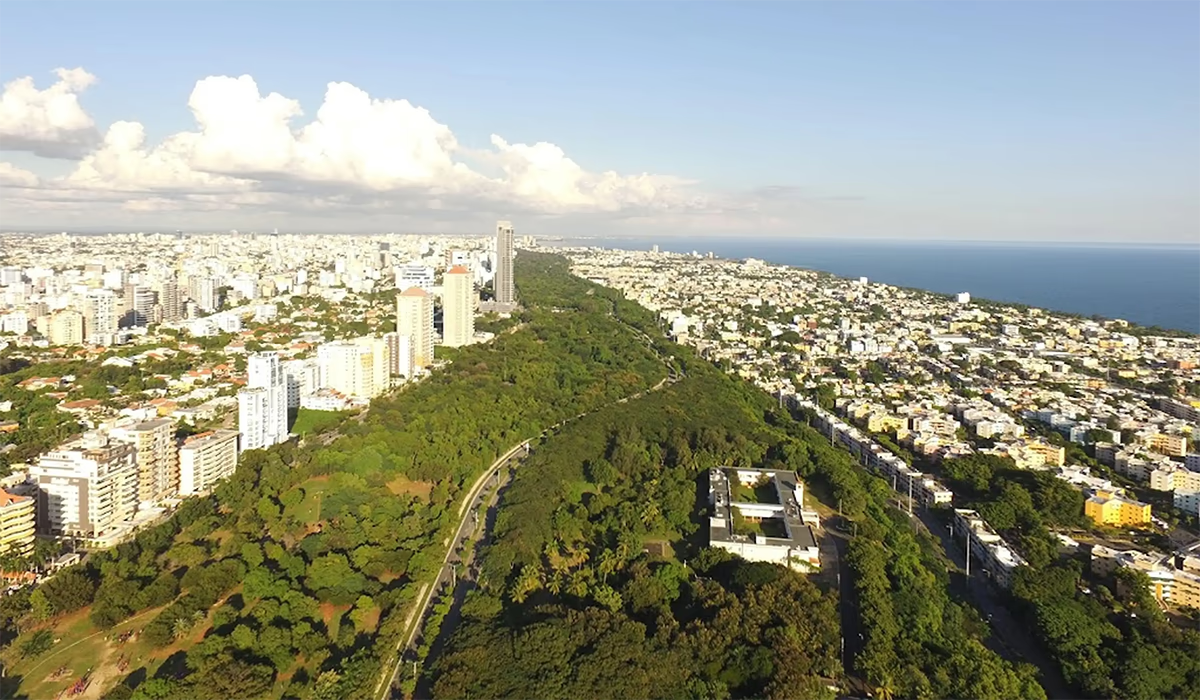
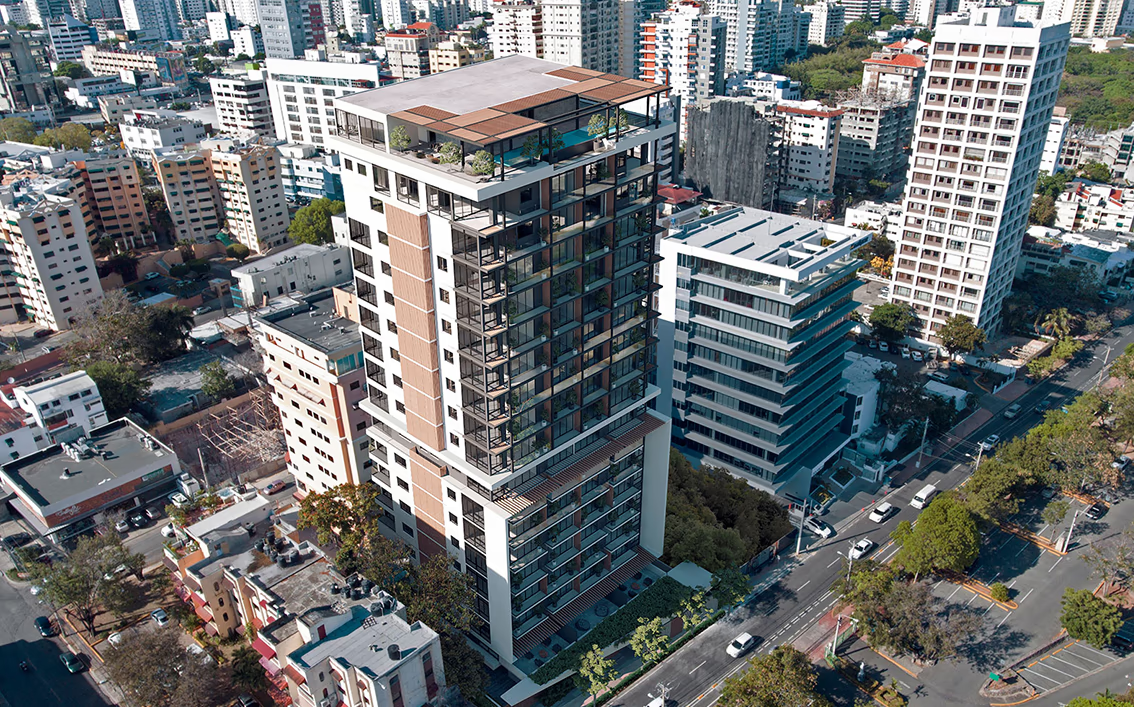
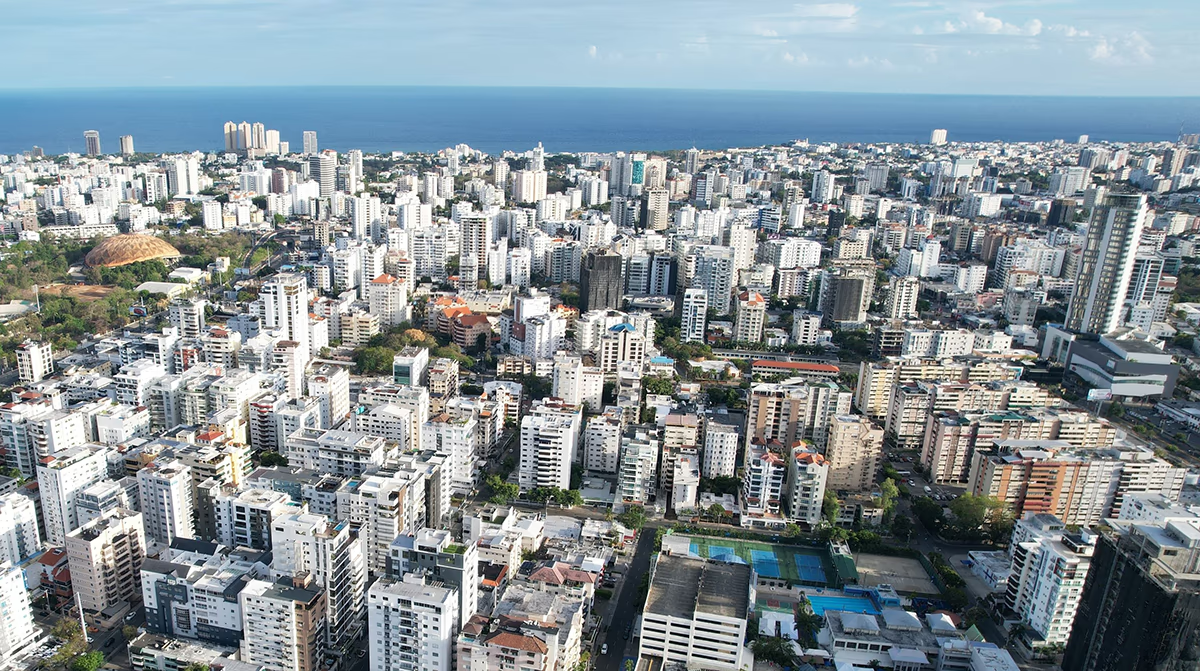
Los Cacicazgos attracts three primary buyer profiles. The table below outlines their characteristics and the most effective marketing approach for each.
| Segment | Age | Budget | Preferred Locations | Key Motivations | Marketing Focus |
|---|---|---|---|---|---|
| Affluent Dominican Families | 35-60 | US$300,000–US$700,000 | Los Cacicazgos, Bella Vista | Large apartments, security, prestige, proximity to Mirador Sur Park, family-oriented urban living | Emphasize space, privacy, established infrastructure, green surroundings, schools, and proximity to major Santo Domingo amenities. |
| International Luxury Buyers | 40-70 | US$400,000–US$1,500,000+ | Los Cacicazgos, Piantini, La Esperilla | Premium urban address, modern construction, lifestyle convenience, capital preservation | Present turnkey residences, concierge-style services, views, parking, backup power, high-quality finishes, and professional property management. |
| Buy-to-Let Investors | 30-65 | US$200,000–US$500,000 | Los Cacicazgos, Ensanche Naco, Bella Vista | Santo Domingo rental demand, gross rental income, diversification, potential resale liquidity | Use transparent rental comparables, conservative occupancy assumptions, operating-cost analysis, tax treatment, and long-term vs. short-term rental scenarios. |
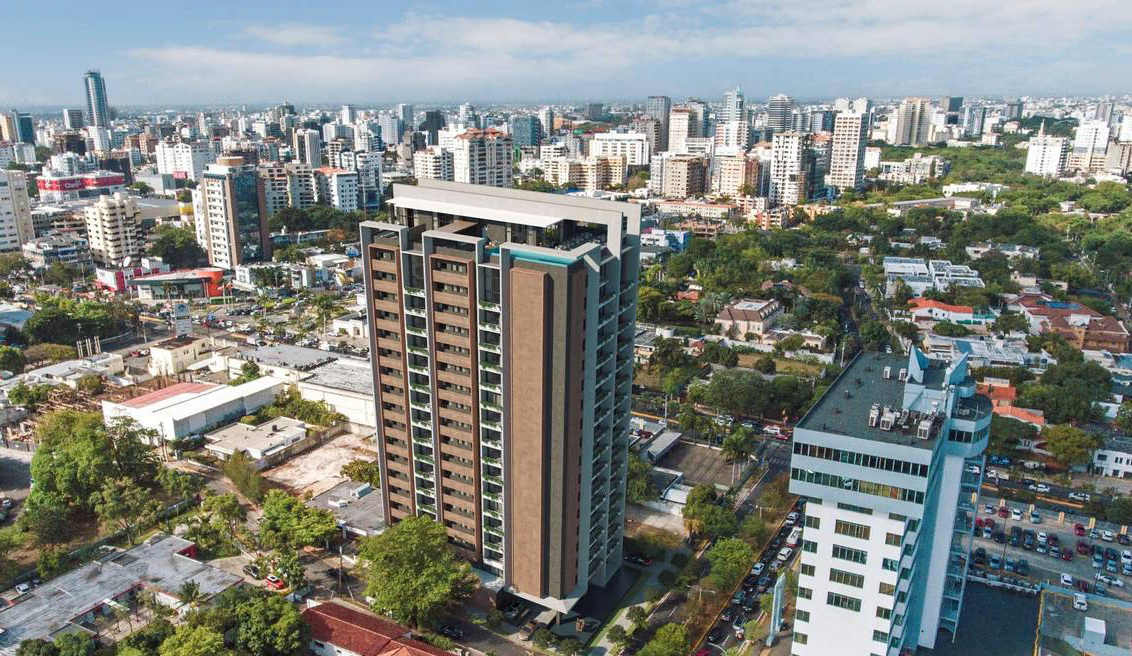
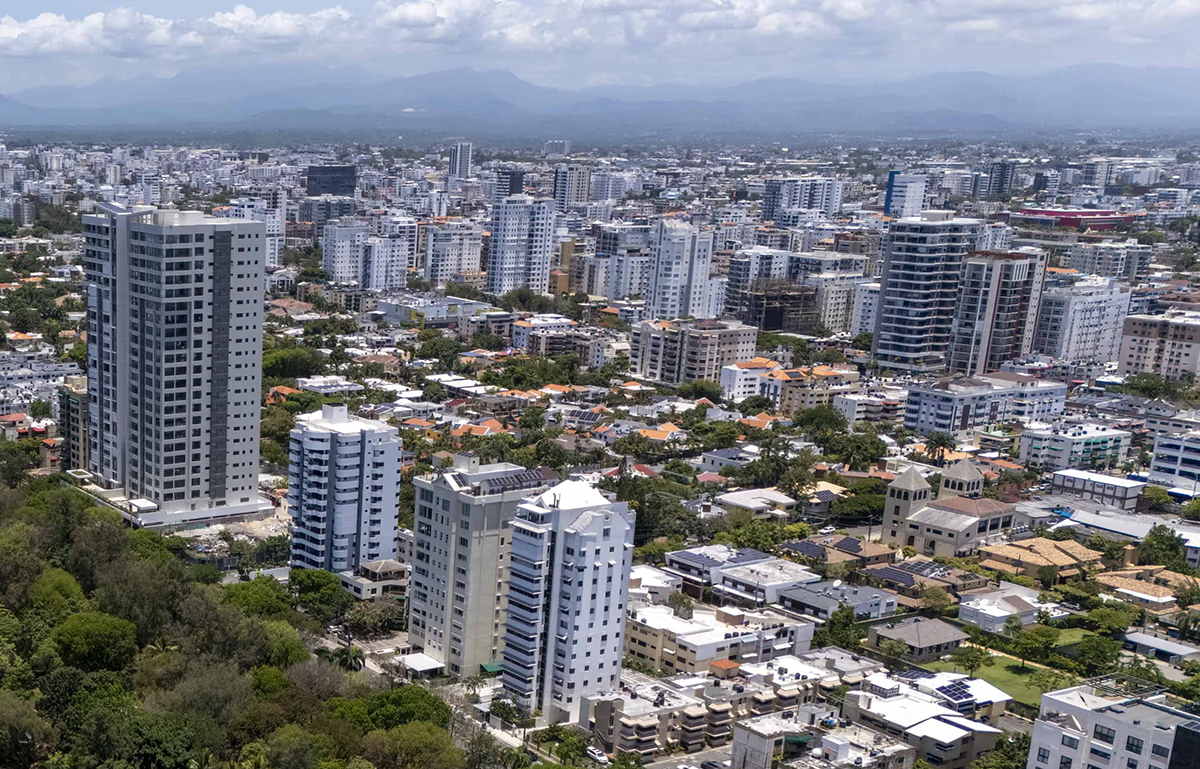
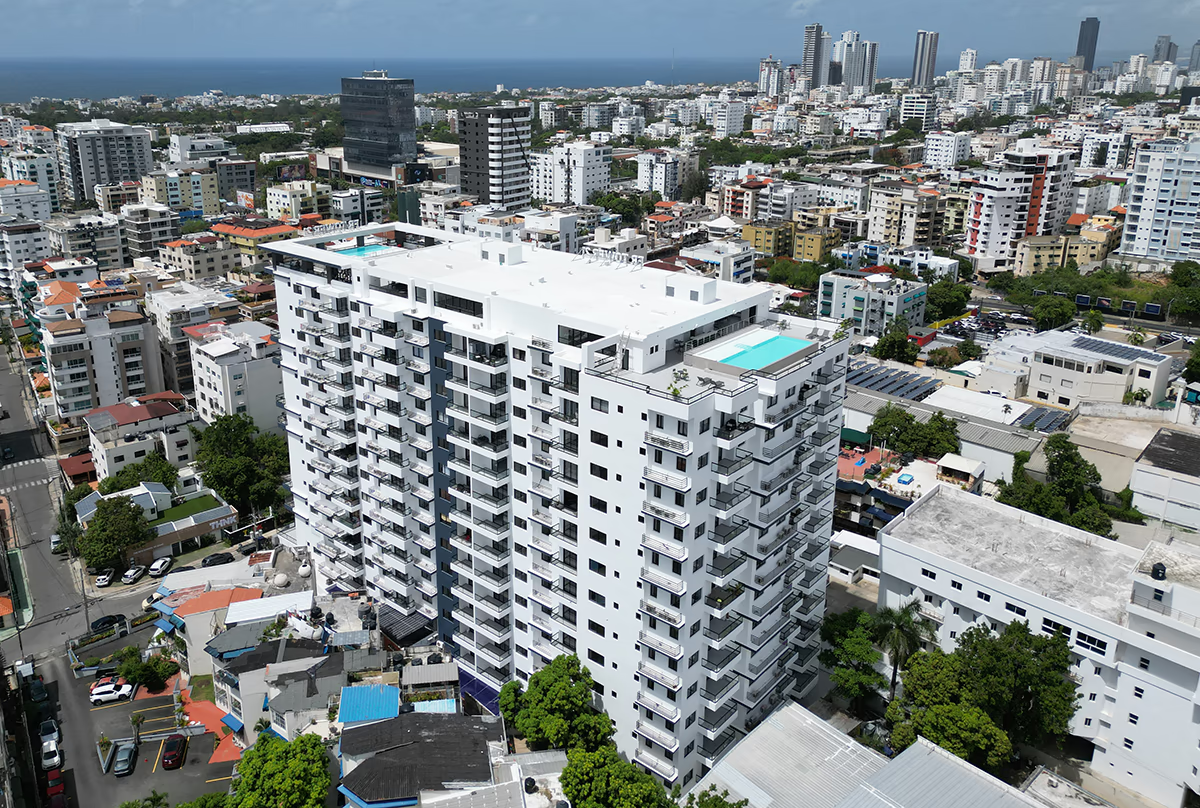
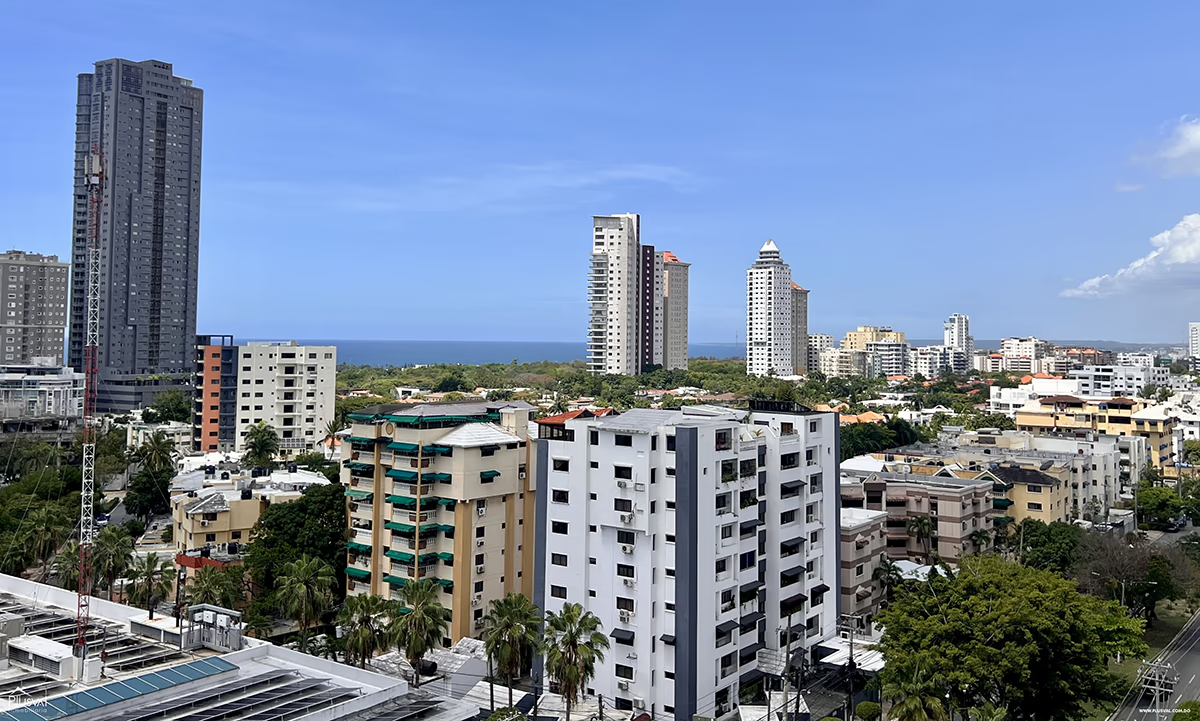
Local developers continue to focus on premium residential projects in the area, often targeting families and investors seeking high-quality construction and modern amenities. The established reputation of Los Cacicazgos makes it a key market for developers who specialize in mid-to-high-rise apartment buildings with strong architectural and security features.
Tax Framework
The Dominican Republic offers a clear tax framework for property ownership. Understanding the benefits and requirements is essential for any seller advising potential buyers.
Definition: The tax system for real estate includes a transfer tax, an annual property tax, and capital gains tax on any profit from a sale. These taxes apply nationally and are relevant to any transaction in Los Cacicazgos.
Benefits for Buyers:
- No local or municipal transfer taxes beyond the national 3% rate.
- A generous property tax exemption threshold, currently RD$10,695,494 per year.
- The potential for significant tax exemptions through CONFOTUR-certified projects, which may include relief from transfer and property taxes.
Concrete Financial Example: Consider a property in Los Cacicazgos with a taxable value of US$500,000 (approximately RD$29,201,000 at the current exchange rate of RD$58.402 per US$1).
- Transfer Tax (Buyer pays): 3% of the property value.
- Calculation: US$500,000 × 0.03 = US$15,000 (≈ RD$876,030).
- Property Tax (Annual): 1% on the value exceeding the exemption threshold.
- Calculation:
- Taxable amount: RD$29,201,000 (total value) – RD$10,695,494 (exemption) = RD$18,505,506.
- Annual tax: RD$18,505,506 × 0.01 = RD$185,055.06 (≈ US$3,168.65).
- Calculation:
- Capital Gains Tax (Seller pays): 27% on the net profit. If the investor bought the property for US$400,000 and sells it for US$500,000, the gain is US$100,000.
- Calculation: US$100,000 × 0.27 = US$27,000.
This demonstrates that a buyer, after the initial transfer tax, faces a manageable annual property tax liability, with clear and significant costs for a seller to factor into their exit strategy. These figures are based on official DGII regulations.
Requirements:
- All property taxes must be up to date for a sale to proceed.
- The property must be registered with the DGII to calculate the property tax (IPI).
- Any special tax incentive, such as CONFOTUR, requires specific certification and eligibility confirmation with the DGII and a qualified Dominican legal professional. Sellers should be prepared to provide these documents to serious buyers.
Pricing Definition
Setting the right price is crucial for a successful sale. The table below provides benchmark asking prices per square meter in USD for Los Cacicazgos and comparable areas in Santo Domingo.
Average Market Price per m² (AMC) Benchmark:
| Area | Status | Price per m² (USD) | Profile |
|---|---|---|---|
| Los Cacicazgos | Luxury | $2,482.79 | Established premium and family-oriented sector, known for spacious residences, lower density, and proximity to Mirador Sur Park. |
| Piantini | Luxury | $2,951.58 | Adjacent premium benchmark with strong demand from affluent residents, expatriates, and corporate tenants. |
| La Esperilla | Luxury | $2,652.97 | Premium central neighborhood with high-value apartments and strong expatriate and professional demand. |
| Ensanche Naco | Established | $2,549.70 | Established high-value apartment market with retail, offices, restaurants, and broad rental demand. |
| Bella Vista | Established | $2,291.45 | Established residential sector offering a lower entry point while retaining strong central-city accessibility. |
7 Premium Factors that Influence Pricing:
- Size and Layout: Larger apartments (e.g., 150+ m²) command a premium, particularly with family-oriented floor plans.
- Building Quality & Finishes: Newer constructions with high-quality materials, modern finishes, and efficient layouts are more valuable.
- Exclusive Amenities: Concierge services, private gyms, rooftop pools, and backup power generators significantly increase a property's appeal and price.
- Views and Orientation: Properties facing Mirador Sur Park or offering a city view will typically sell for more than interior units.
- Security and Parking: In a city setting, secure parking and 24-hour security are non-negotiable features that add substantial value.
- Location within the Sector: Properties on quieter streets, close to the park, or near major thoroughfares are often priced higher.
- Condition and Maintenance: A well-maintained property that is move-in ready will attract a premium over one that requires renovation.
Professional Estimate & Value Anchors: Your property's price should be anchored by two factors: the direct AMC benchmark for Los Cacicazgos ($2,482.79/m²) and its potential to generate income. For instance, a 150 m² apartment valued at the benchmark price ($372,418.50) should be marketed with a professional estimate that accounts for its specific premium factors. The rental yield potential, detailed in the next section, acts as a critical value anchor, substantiating the price through its income-generating capability.
Selling Process
Successfully selling a property in Los Cacicazgos involves a clear, structured process. Each step is designed to maximize your property's value and ensure a smooth transaction.
Step 1: Valuation and Strategy A precise valuation is the cornerstone of a successful sale. This step is about more than just setting a price; it's about positioning your property strategically in the market to attract the right buyer quickly and for the best possible return.
Documents to prepare at this step:
- Property Title: The official document proving ownership, known as the Certificado de Título.
- Recent Tax Receipts: Proof that all annual property taxes (IPI) are current.
- Building Plans: A copy of the construction plans to provide to potential buyers and appraisers.
- Recent Utility Bills: Copies of recent electricity and water bills for accurate costing.
Step 2: Legal and Tax Compliance Check Before listing, ensure all your legal and tax affairs are in order. This step is crucial to prevent delays or failed negotiations later. It builds buyer confidence and demonstrates your professionalism.
Documents to prepare at this step:
- Certificate of No Tax Debt: Obtained from the DGII to confirm there are no outstanding liabilities.
- Title Registration: The property must be correctly registered with the Title Registry (Registro de Títulos).
- Property Tax Calculation: A clear understanding and document showing how the IPI is calculated for your property.
- Corporate Docs (if applicable): If the property is owned by a company, ensure its registration is current and in good standing.
Step 3: Preparation and Styling First impressions are everything. This step involves preparing the property for the market, which may include minor repairs, painting, and professional staging. A well-presented property sells faster and for a higher price.
Documents to prepare at this step:
- Maintenance Records: A log of all recent maintenance and improvements, such as a new roof or AC system.
- Staging Plan: A proposal for how the property will be furnished and decorated for showings.
- Photography Brief: A clear plan for professional photography and videography.
Step 4: Marketing and Listing Your property needs to be seen by the right people. This step includes creating a comprehensive marketing plan, which involves professional photography, a compelling description, and listing the property on high-traffic portals, both local and international.
Documents to prepare at this step:
- Professional Photos: A set of high-quality, professionally-edited photos of the property.
- Property Flyer: A concise one-page summary of the property's key features and price.
- Virtual Tour (Matterport): A 3D virtual tour to allow remote buyers to experience the space.
Step 5: Showings and Negotiation Once the property is listed, qualified buyers will want to view it. This step is about managing viewings effectively and being prepared to negotiate the best possible terms for you, the seller.
Documents to prepare at this step:
- Showing Checklist: A document confirming key features and utilities are in working order before each showing.
- Buyer's Pre-Approval: Request proof of funds or a mortgage pre-approval letter from any serious buyer before negotiation begins.
- Proposed Purchase Agreement: A draft of the contract terms you are willing to accept.
Step 6: Purchase Agreement and Deposit Once you've accepted an offer, a formal purchase agreement is drafted. This is a binding contract that outlines all terms of the sale, including the price, deposit amount, and closing date. A deposit (typically 10%) is paid as a sign of good faith.
Documents to prepare at this step:
- Signed Purchase Agreement: A finalized and signed copy of the contract.
- Deposit Receipt: A receipt confirming the deposit has been placed in escrow.
- Bank Details: Provide your bank details for the final settlement.
Step 7: Due Diligence The buyer's attorney will conduct a due diligence check to ensure the property is free of any liens, debts, or legal issues. Your cooperation is vital to quickly resolve any questions that arise, ensuring a smooth path to closing.
Documents to prepare at this step:
- Title Search: A comprehensive search report from the Registro de Títulos.
- Paid Tax Receipts: The most recent paid property tax receipt.
- No Debt Certificates: Up-to-date certificates from all utility and municipal authorities.
- Lease Agreements (if applicable): Copies of any active tenant leases.
Step 8: Closing and Handover The final step is the closing meeting. This is where the balance of the purchase price is transferred, and legal ownership of the property is transferred to the buyer. The transfer tax is paid, and the new title is registered.
Documents to prepare at this step:
- Closing Statement: A final accounting of all financial transactions in the sale.
- Property Keys: All keys, access cards, and remote controls for the property.
- Handover Certificates: If applicable, a signed document certifying the property's condition at the time of handover.
Commission: Typical real estate commissions in the Dominican Republic range from 5% to 10% of the final sale price. Timeline: The entire selling process, from listing to closing, typically takes between 30 and 90 days, depending on the complexity of the transaction and buyer financing.
Taxes and Transfers
📌 Legal Highlight: Understanding the tax implications of your sale is critical. For properties held in a Dominican company, the 27% capital gains tax applies to corporate profits, but a carefully structured transaction might allow for certain deductions. Always engage a Dominican tax attorney to structure the sale to optimize your net returns. Pre-sale compliance is your strongest negotiation tool.
Understanding the Tax Landscape for a Sale:
- Individual vs. Corporate Capital Gains: The 27% capital gains tax applies equally to individuals and corporations. For a seller, this means careful consideration of the sale structure. A corporate sale may involve selling the shares of the company rather than the property itself, which could have different tax implications.
- Pre-Sale Compliance: Before any sale can close, all local and national taxes must be current. The DGII will not allow the transfer of property if there are outstanding tax debts. Sellers should obtain a 'No Tax Debt' certificate as early as possible in the process.
- Advantages of Special Regimes: While the standard transfer tax is 3%, properties that are part of a CONFOTUR-certified project may be exempt from this tax. If your property is part of such a project, this can be a significant selling point, potentially saving the buyer thousands of dollars, making your property far more attractive.
Checklist for a Smooth Transfer:
- Obtain 'No Tax Debt' certificate: This is your proof that all national taxes are paid.
- Confirm property tax (IPI) is current: Ensure your 1% annual property tax has been paid for the current year.
- Prepare for the Transfer Tax (3%): This is typically paid by the buyer, but it must be accounted for in the transaction.
- Draft the Deed of Sale: A formal document drafted by a lawyer, which is then registered with the Registro de Títulos.
Rental Yields
📌 Strategic Highlight: The rental market in Los Cacicazgos is not monolithic. For sellers, presenting a property to potential investors requires a nuanced strategy. A premium property with high-end finishes might achieve a lower gross yield but attract a more stable, long-term family tenant. Conversely, a well-located property suitable for short-term rentals could see higher gross returns, albeit with higher management costs and vacancy risk.
Comparative Rental Yield Analysis:
| Location | Strategy | Gross ROI | Management Cost |
|---|---|---|---|
| Los Cacicazgos (Premium) | Long-term family rental | 8.0% - 10.0% | 5% - 8% of monthly rent |
| Los Cacicazgos (Standard) | Long-term family rental | 9.0% - 11.0% | 5% - 8% of monthly rent |
| Piantini | Long-term corporate rental | 8.5% - 10.5% | 6% - 10% of monthly rent |
| Bella Vista | Long-term rental | 9.5% - 11.5% | 5% - 8% of monthly rent |
| Ensanche Naco | Short-term (Airbnb/VRBO) | 10.0% - 13.0% | 15% - 25% of monthly revenue |
Note: The Santo Domingo combined gross rental yield is 9.08% (Source: Global Property Guide), serving as a baseline for the city. For a seller, the key is to demonstrate how your property, based on its specific location and features, fits into or exceeds this bracket. For instance, while Los Cacicazgos may not have dedicated short-term data, its established, family-oriented profile suggests a stable, long-term rental strategy often yields a consistent 9%+ gross return, with significantly lower operating costs than short-term options.
Pricing Dynamics and Algorithms: In today's market, dynamic pricing is becoming more common. For short-term rentals, algorithms adjust nightly rates based on demand, seasonality, and local events. For sellers, highlighting that a property is 'algorithm-ready'—meaning it has reliable Wi-Fi, a smart lock, and a professional management system—can be a significant selling point for investors looking to maximize returns. Showcasing a potential P&L (Profit & Loss) statement with projections based on current occupancy data from nearby comparable areas is a powerful tool in your sales arsenal.
International Marketing
📌 Marketing Highlight: For a seller, international marketing is about more than just listing a property. It's about building trust with a buyer who may never have visited the property in person. A comprehensive marketing strategy that includes structural guarantees, such as a full inspection report, a history of maintenance, and any relevant certifications (e.g., for seismic or hurricane resistance), will reassure a remote buyer and significantly enhance your property's appeal.
To sell a property in Los Cacicazgos to international buyers, a sophisticated, multi-channel approach is essential. Here are six key tactics:
- Matterport 3D Virtual Tours: Allow remote buyers to explore the property in detail from anywhere in the world. This is often a deciding factor for international clients who cannot travel immediately.
- Professional Profit & Loss (P&L) Statements: Provide a clear financial snapshot of the property's potential rental income and operating costs. This turns a luxury purchase into a tangible investment opportunity.
- Pricing in USD: All marketing materials and conversations should be in US Dollars. This simplifies the decision-making process for American and other international investors.
- Comprehensive PDF ROI Brochures: Create a downloadable PDF that combines the property's beauty, its financial potential, and the lifestyle benefits of Los Cacicazgos. This serves as a powerful tool for buyers and their advisors.
- Geo-Targeted SEO and Paid Ads: Use targeted online campaigns to reach potential buyers in key source markets like the US, Canada, and Europe. Ads should highlight specific buyer motivations (e.g., families, retirees, investors).
- Bilingual Lawyer Referrals: Provide international buyers with access to a network of bilingual lawyers. This removes a significant barrier to entry and builds trust by facilitating a smooth legal process.
Geo-Targeting: For Los Cacicazgos, geo-targeted marketing should focus on:
- USA: Major metropolitan areas with large Dominican diaspora and high-net-worth families.
- Europe: Spain and Italy, where buyers may be looking for a second home in a climate-friendly, culturally rich destination.
- Canada: High-net-worth individuals seeking a secure and stable real estate market.
Legal Structure
Deciding how to hold title to a property is a critical decision for any buyer. As a seller, understanding these structures helps you advise your clients and present your property's sale in the most favorable light. The most common structures for owning property in the Dominican Republic are individual ownership and a Dominican company (often structured as an SRL, or Limited Liability Company).
Comparative Legal Structures:
| Structure | Pros | Cons |
|---|---|---|
| Individual Ownership | Simple setup, lower initial cost, clear tax treatment for individuals, straightforward for a primary residence. | Unlimited personal liability, difficult to transfer partial ownership, capital gains tax is applied directly to the individual. |
| Dominican SRL (LLC/Corporate) | Limited liability for owners, easier to transfer shares (vs. property), potentially more flexible for business and rental income, can be used for tax planning. | Higher setup and ongoing maintenance costs (annual fees, accounting, legal), must comply with corporate reporting and tax laws, capital gains tax applies to the company's profit. |
Setup Costs: A Dominican SRL requires a formal registration, drafting of bylaws, and initial legal fees which can range from US$2,000 to US$5,000 or more. Annual maintenance costs include accounting, filing fees, and potentially a nominal corporate tax.
Note for Developers and Sellers: For international buyers considering a property as an investment, the SRL structure is often preferred. As a seller, you can add value by helping to explain these options, though you should always advise potential buyers to seek legal counsel. Your property can be marketed as a business-ready investment, making it more attractive to buyers who are looking for a flexible and protected legal structure.
Exit Planning
A successful exit strategy requires careful planning and an understanding of current market conditions. For a seller in Los Cacicazgos, this involves analyzing liquidity, market trends, and macroeconomic indicators to time the sale optimally.
Liquidity and Market Conditions: The Los Cacicazgos market tends to have good liquidity for well-priced, premium properties. However, sellers should be prepared for a sales cycle that can take 30 to 90 days. The market is sensitive to supply; if there are many comparable properties available, sellers may need to be more aggressive with pricing or differentiate their property with unique features or flexible terms.
Macroeconomic Indicators: The Dominican Republic's economic backdrop supports real estate demand in Los Cacicazgos:
- Economic Growth (GDP): National GDP growth is projected at 4.5% for 2026 (IMF WEO April 2026), a key indicator of overall economic health supporting real estate demand.
- Inflation: The national inflation rate stands at 4.2% (IMF, Americas Quarterly 2026), directly impacting construction costs and the overall cost of living, which influences rental yields and property values.
- Tourism Arrivals: The country received a record 1,219,606 visitors in January 2026 alone (+5.5% YoY), with stopover arrivals up 9.4% in the first two months of 2026. This robust tourism flow underpins the broader economy and supports investor confidence.
- Interest Rates: National interest rates affect the cost of borrowing for buyers and can impact the flow of investment into real estate.
Long-Term Perspective: Emerging vs. Consolidated Areas: Los Cacicazgos is a consolidated area. This means it offers stability, predictability, and a proven track record of value. While emerging areas may offer higher growth potential, they come with higher risk. For a seller, the value proposition of Los Cacicazgos is its maturity: it is a known, trusted, and highly desirable address. This makes it a safe haven for capital and a reliable asset, particularly attractive to buyers who are looking for a premium property with minimal market surprises.