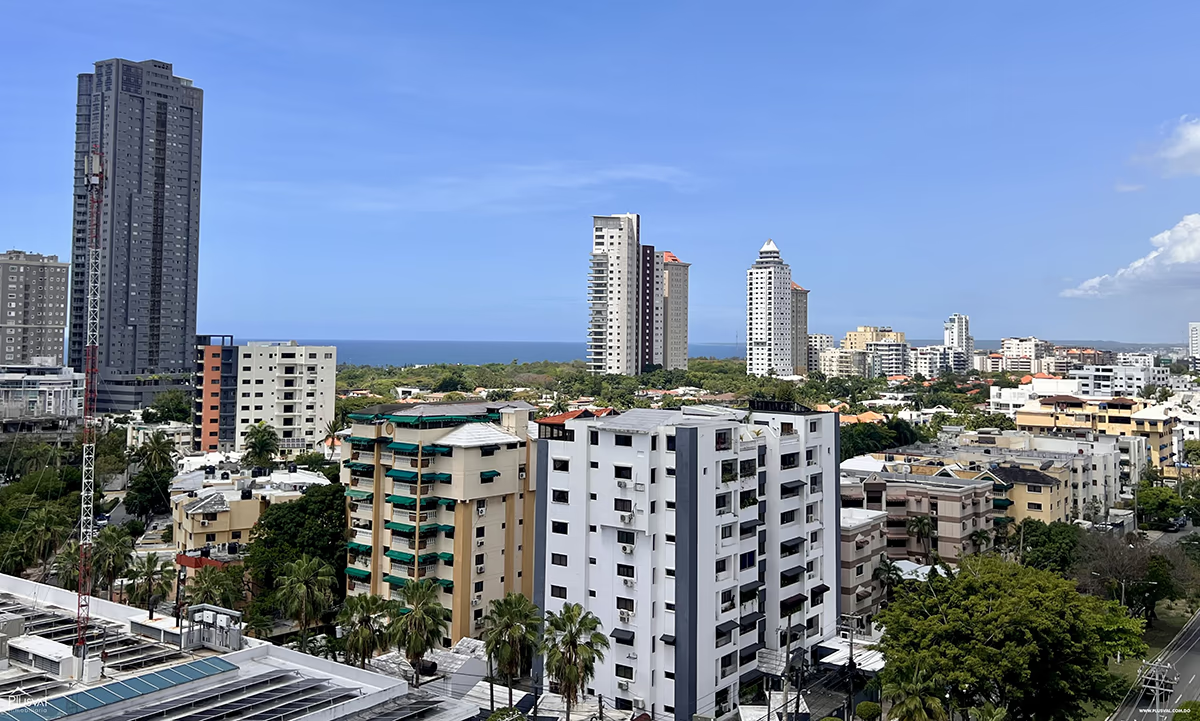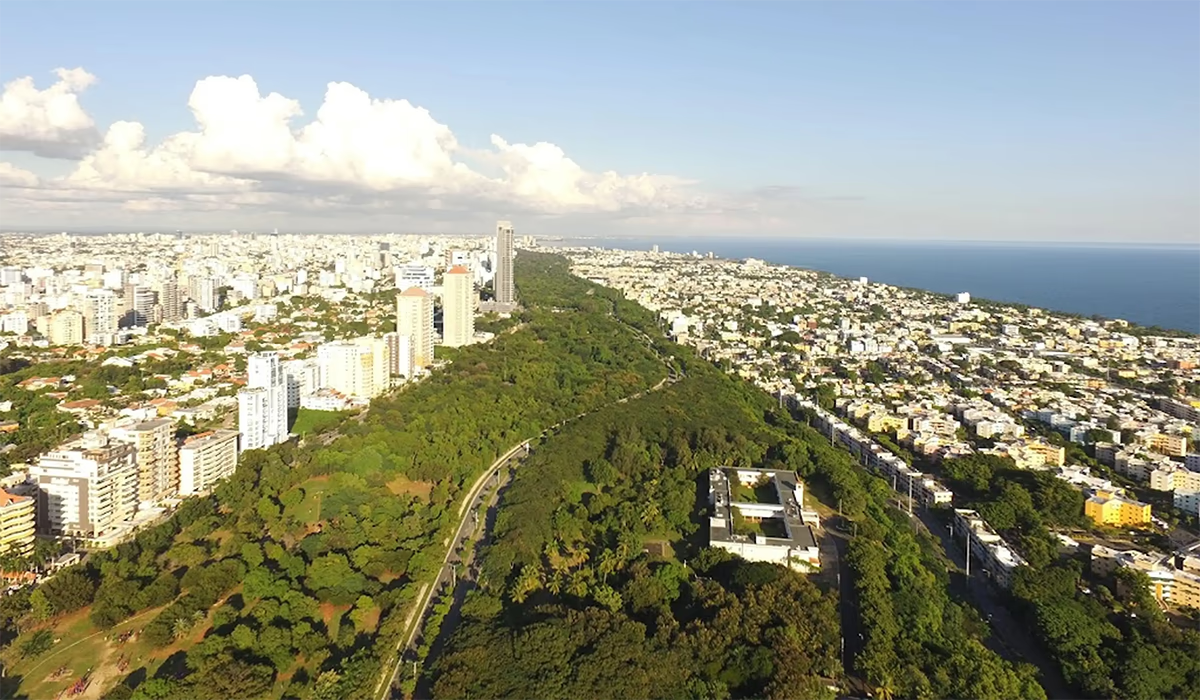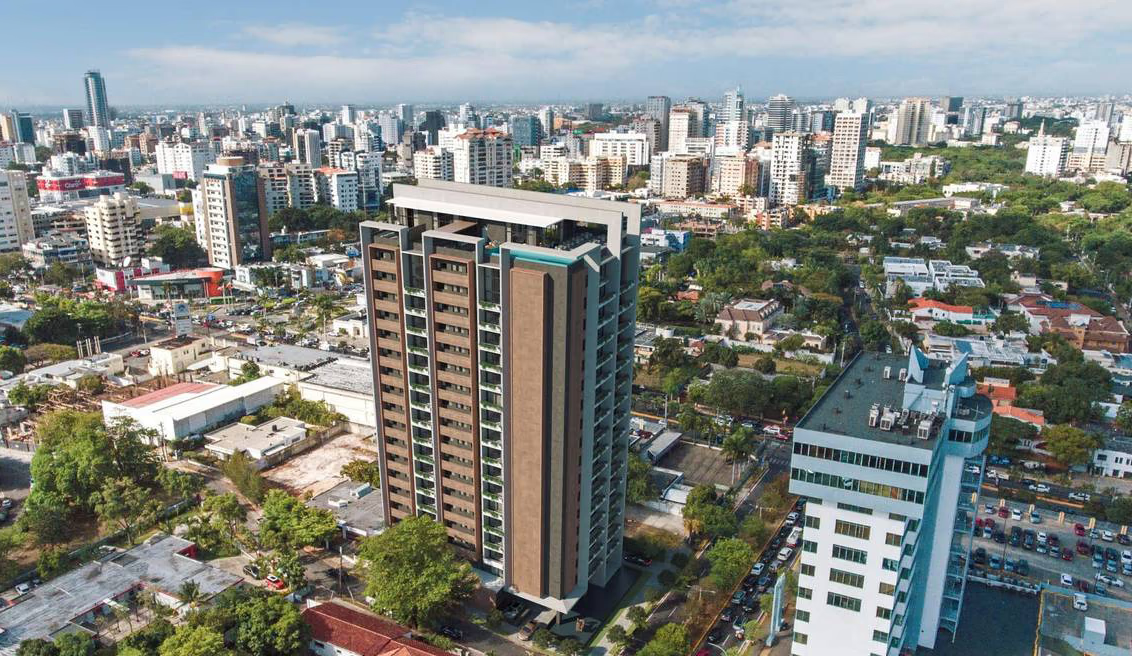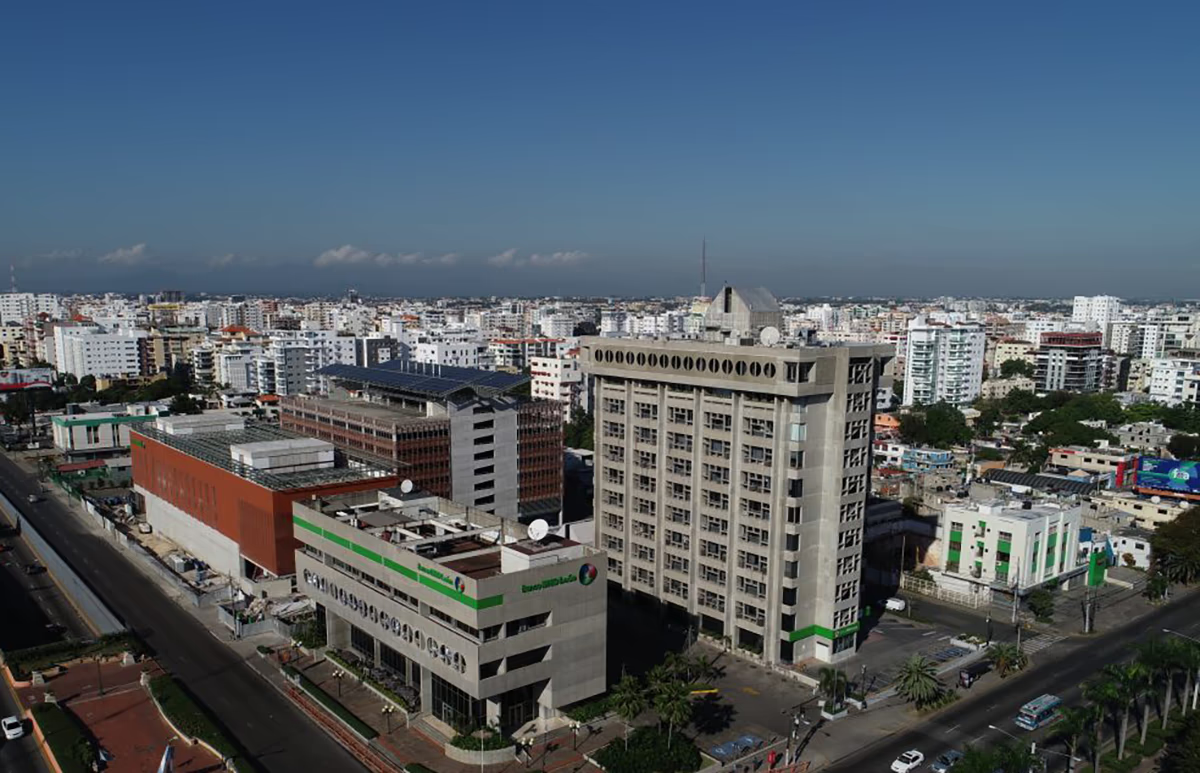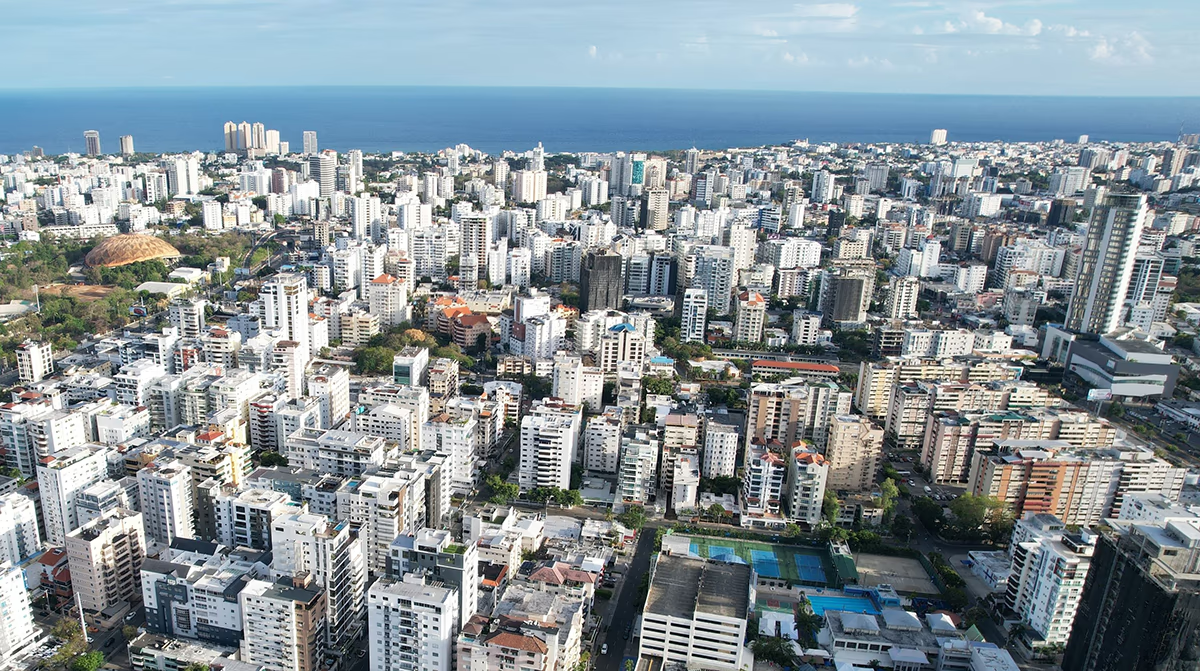
Market target
Position your property in Ensanche Naco to attract the right buyers by understanding the three core segments driving demand in Santo Domingo's most liquid residential market.
| Segment | Age | Budget | Locations | Motivations | Marketing Focus |
|---|---|---|---|---|---|
| Corporate Expatriates | 30-50 | $200K-$400K | Naco, Piantini, Bella Vista | Proximity to business districts, high-quality amenities, walkable lifestyle | Central location with dense commercial hubs, high residential liquidity, and steady corporate tenant demand. |
| Yield-Focused Investors | 35-60 | $150K-$350K | Naco, Evaristo Morales, Bella Vista | 7.5-9% gross rental yields, year-round urban demand, tax incentives | Highest residential yields in the DR with net returns 5.5-7%, hybrid mid-term rental strategies, and stable occupancy. |
| Luxury Buyers | 45-65 | $400K-$1M+ | Piantini, La Esperilla, Naco | Premium towers and amenities, status address, capital appreciation | Piantini and Naco command RD$120K-160K/sqm, with luxury towers offering hurricane-resistant windows, high-end finishes, and strong appreciation. |
Local developers focus on mixed-use high-rises in Naco and Piantini, catering to the premium segment with modern amenities and hurricane-resistant construction. Smaller, boutique firms are increasingly active in emerging areas like Evaristo Morales, offering value-oriented projects with high rental potential.
Tax Framework
The Dominican Republic offers a competitive tax framework for real estate investors, particularly with recent reforms. Understanding these rules is crucial to maximizing your net returns from a sale in Naco.
Definition: The tax system for property sales includes a transfer tax, potential capital gains tax, and an annual property tax. However, significant exemptions and reduced rates are available, especially for individuals and under special incentive regimes.
Benefits:
- Reduced Capital Gains: Individuals pay a final 10% tax on capital gains (Law 30-26, June 2026), significantly lower than the corporate rate of 27%.
- Exemptions: No capital gains tax if you are over 65 or if you reinvest the proceeds in a primary residence within 6 months.
- CONFOTUR Incentives: Properties in certified tourism zones can qualify for a 15-year exemption from the annual property tax (IPI).
- Annual IPI Exemption: Properties valued below RD$10,695,494 (~$182K USD) are exempt from the 1% annual property tax.
Numerical Example: Let's calculate the capital gains tax saving for an individual seller versus a corporate seller.
- Property: A 100 sqm apartment in Naco at $2,541/sqm = $254,100.
- Original Purchase Price: Assume the property was purchased for $200,000.
- Capital Gain: $254,100 - $200,000 = $54,100.
- Tax as an Individual (10%): $54,100 × 0.10 = $5,410.
- Tax as a Corporation (27%): $54,100 × 0.27 = $14,607.
- Total Tax Savings: $14,607 - $5,410 = $9,197 in your pocket by structuring the sale as an individual. If you reinvest this $54,100 gain into a new primary residence within six months, your tax liability drops to $0.
Requirements:
- To qualify for the 10% individual rate, the property must be held in your personal name, not a corporate entity.
- For the reinvestment exemption, you must provide proof of the new purchase within six months.
- For the over-65 exemption, you must present valid identification.
- The annual IPI (1%) is paid to the DGII (Dirección General de Impuestos Internos) for properties valued above the threshold.
Pricing Definition
Setting the right price is critical to attracting serious buyers and achieving a quick sale. In Naco, pricing is driven by location, building quality, and rental yield potential.
Average Market Comparables (AMC) – Ensanche Naco & Surrounding Areas
| Area | Type | Price per sqm (DOP) | Price per sqm (USD) |
|---|---|---|---|
| Piantini | Luxury | 172,377 | $2,941 |
| La Esperilla | Luxury | 154,939 | $2,644 |
| Ciudad Universitaria | Established | 149,762 | $2,556 |
| Ensanche Naco | Established | 148,926 | $2,541 |
| Gascue | Emerging | 145,139 | $2,477 |
| Bella Vista | Established | 130,000 | $2,218 |
| Evaristo Morales | Emerging | 125,000 | $2,133 |
Premium Factors that Influence Your Property's Price:
- Location within Naco: Proximity to Winston Churchill Avenue and major commercial hubs significantly increases value.
- Building Age & Condition: Newer buildings with modern finishes command a premium over older properties.
- Amenities: Access to a pool, gym, 24/7 security, and a generator are highly valued.
- Floor Level & Views: Higher floors with panoramic city or mountain views justify a higher price per sqm.
- Parking: The number of dedicated parking spaces included is a key differentiator.
- Hurricane-Resistant Features: Impact-resistant windows and reinforced construction are major selling points.
- Rental Yield: A property that can generate a 7.5-9% gross rental yield provides a strong value anchor, justifying the asking price as an investment.
A professional appraisal from a local expert is essential, but the rental yield remains a key anchor. A property priced at $275,000, generating $22,000/year in gross rent (8% yield), offers a clear income-based justification for the price, making it easier to market to investors.
Selling Process
Selling a property in Naco is a structured process. By following these steps, you can ensure a smooth transaction, minimize your tax burden, and maximize your final sale price.
1. Valuation & Market Analysis Understanding the true market value of your property is the foundation of a successful sale. This step ensures you set a competitive price that attracts serious buyers without leaving money on the table. It involves analyzing recent sales of comparable properties (AMC) in Naco and nearby areas like Piantini and Bella Vista.
Documents to prepare at this step:
- Title Certificate (Certificado de Título): To confirm legal ownership and property boundaries.
- Property Tax Receipt (Comprobante de Pago de IPI): To show that all property taxes are current.
- List of Recent Sales: A summary of comparable property sales in your area to justify your asking price.
2. Legal Readiness & Compliance A property with clean legal standing is far more attractive. This step involves resolving any potential issues with the title, ensuring the property's registered area matches the actual area, and verifying that all taxes and municipal fees are paid.
Documents to prepare at this step:
- Certificate of No Liens (Certificado de Gravámenes): Issued by the DGII to prove the property is free of liens or mortgages.
- Builder's Certificate (Certificado de Construcción): Confirms the building was completed legally and meets codes.
- Municipal Tax Receipt (Tasa Municipal): Proof of payment of local property taxes.
3. Property Preparation & Staging First impressions matter. Staging your property, both physically and digitally, can significantly increase its appeal and perceived value. This includes making necessary repairs, de-cluttering, and investing in professional photography.
Documents to prepare at this step:
- Maintenance Records: To show the property has been well-maintained.
- Utility Bills: To provide proof of costs and service connections.
- Unit/Apartment Layout & Floor Plan: To help buyers visualize the space.
4. Marketing & Listing Strategy Leverage a multi-channel international marketing strategy to reach both local and foreign buyers. This involves creating a high-quality listing on local and international portals, targeting the specific buyer segments we identified (Corporate Expatriates, Yield-Focused Investors, Luxury Buyers).
Documents to prepare at this step:
- Professional Photography & Virtual Tour: High-resolution photos and a Matterport 3D tour are essential.
- Property Information Sheet (Brochure): A beautifully designed PDF summarizing all key features, priced in USD.
- Investment ROI Report: A clear P&L statement projecting rental income and potential returns.
5. Offer Management & Showings This is where you engage directly with potential buyers. Be prepared to host multiple showings and manage incoming offers. Your agent will pre-screen buyers to ensure they are financially qualified and serious.
Documents to prepare at this step:
- Buyer's Financial Pre-Approval: A letter from their bank confirming financing.
- Offer Form: A standard Dominican Republic offer form to make all offers formal.
- Seller's Disclosure Statement: A document outlining any known defects or issues with the property.
6. Negotiation & Purchase Agreement Once you receive an offer, you'll enter into negotiations. Your agent will help you evaluate the offer not only on price but also on terms, contingencies, and the buyer's financing. Once a deal is reached, a formal purchase agreement (Promesa de Compraventa) is signed.
Documents to prepare at this step:
- Draft Purchase Agreement (Promesa de Compraventa): To be reviewed by your lawyer and the buyer's lawyer.
- Comparative Market Analysis (CMA): To support your negotiation position.
- List of Included Items: A detailed list of what fixtures, appliances, and furniture are included in the sale.
7. Due Diligence & Inspections The buyer will conduct their final due diligence. This includes a property inspection, a review of all legal documents, and finalizing their financing. Your cooperation during this phase is crucial to keep the deal on track.
Documents to prepare at this step:
- Final Inspection Report: Allowing the buyer's inspector to access the property.
- Title & Legal Documents: Providing full, updated copies of all legal paperwork.
- Building Certificate (Certificado de Habitabilidad): To confirm the property is safe and legal to occupy.
8. Closing & Funds Transfer The final step is the closing, where all documents are signed, and the funds are transferred. A local notary (Notario Público) will oversee the final deed transfer, and you will provide the buyer with a clear title. This typically involves a transfer tax of 3% for the buyer.
Documents to prepare at this step:
- Final Deed (Escritura de Venta): The official transfer document.
- Tax ID (RNC) for both parties: Required for the transaction.
- Proof of Payment of Capital Gains Tax: To show you have settled your tax obligations.
- Final Title Certificate: Issued in the buyer's name, confirming the transfer.
Commissions & Timeline:
- Agent commissions typically range from 5-10% of the sale price.
- The entire process, from listing to closing, takes approximately 30 to 90 days.
Taxes and Transfers
📌 Legal Highlight: The 2026 tax reform (Law 30-26) is a game-changer for individual sellers. With a 10% final capital gains tax for individuals versus 27% for corporations, and potential exemptions for reinvestment or sellers over 65, your legal structure and timing are paramount to maximizing net proceeds.
Understanding your tax obligations is non-negotiable for a profitable and compliant property sale. The Dominican Republic has clear tax rules and a streamlined transfer process for real estate.
Capital Gains Tax:
- Individual Sellers (Law 30-26): A final 10% tax on the net capital gain. This is a significant advantage over the corporate rate.
- Corporate Sellers: Subject to the standard corporate income tax rate of 27% on capital gains, as there is no special reduced rate for corporations.
- Exemptions: The capital gains tax is reduced to 0% if you are over 65 years of age or if you reinvest the proceeds from the sale into the purchase of a new primary residence within six (6) months.
Pre-Sale Compliance: Before you can complete a sale, you must ensure all your taxes are in order:
- Property Tax (IPI): The 1% annual tax must be paid up to date. Properties below the RD$10,695,494 (~$182K USD) threshold are exempt.
- Transfer Tax: This 3% tax is typically paid by the buyer.
- Municipal Taxes: Ensure all local municipal fees and taxes are current.
Special Regime Advantages: Properties that qualify for the CONFOTUR incentive (Law 158-01) benefit from a 15-year exemption from the IPI. This significantly reduces the carrying cost of the property and can make it more attractive to buyers who will continue to benefit from the remaining tax break, often allowing for a higher sale price.
4-Step Seller's Checklist for a Smooth Transfer:
- Calculate Your ITBIS (Tax on Transfer): The buyer pays 3% transfer tax, but you must calculate it as part of the final closing costs.
- Confirm Your IPI Status: Verify that your property is exempt or that all annual payments are up-to-date.
- Claim Your Capital Gains Exemption: If applicable, prepare documentation to support your over-65 status or the six-month reinvestment plan to lower your tax liability to 0%.
- Obtain Your Tax Compliance Certificate (Certificado de No Gravamen): This essential document from the DGII confirms the property is free of liens and that the seller is current on their tax obligations, a non-negotiable requirement for closing.
Rental Yields
📌 Strategic Highlight: To maximize your property's appeal to investors, adopt a dynamic pricing strategy. This involves using data analytics and booking algorithms to adjust rates for short-term rentals, or shifting to mid-term corporate leases (3-12 months) to reduce turnover and management overhead while achieving premium rental income.
Naco offers some of the highest and most stable residential rental yields in the Dominican Republic. This makes it a prime target for investors, which directly supports strong property values and quick sales for sellers who can demonstrate a property's income potential.
The 7.5-9% gross rental yields in Naco are driven by consistent demand from corporate expatriates and a limited supply of high-quality rental units.
| Location | Rental Strategy | Gross ROI | Management Cost |
|---|---|---|---|
| Ensanche Naco | Long-term corporate | 7.5 - 9% | Moderate (5-10%) |
| Ensanche Naco | Hybrid Mid-term | 7.5 - 9% | Moderate |
| Bella Vista | Long-term residential | 6.5 - 8% | Moderate |
| Evaristo Morales | Long-term residential | 8 - 9.5% | Moderate |
| Piantini | Luxury Long-term | 6 - 7.5% | Moderate to High |
Managing Costs for Maximum Profit:
- Property Tax (IPI): 1% annually for properties above the exemption threshold, which can be a significant cost. For a property in Naco, this could represent 1% of the property's value.
- Maintenance & HOA Fees: Typically cover building maintenance, security, and amenities. These fees can range from $150 to $400+ per month depending on the building.
- Property Management Fees: Expect to pay 5-10% of gross rental income for a full-service management company, a worthwhile expense for absentee owners.
Emerging Area Potential: Evaristo Morales offers yields that can exceed 9%, making it an attractive investment for buyers seeking higher returns. Its emerging status suggests good potential for capital appreciation as it becomes more established.
International Marketing
📌 Marketing Highlight: In a market where foreign buyers are active, structural guarantees are a powerful differentiator. Provide a complete history of maintenance, a professional structural report, and a clear record of all hurricane-resistant features and material certifications. This transparency builds trust and justifies your premium asking price, especially for absentee investors.
To attract the right buyers and achieve the best possible price for your Naco property, you must deploy a sophisticated international marketing strategy. The goal is to reach high-net-worth individuals, corporate expatriates, and global investors wherever they are.
6+ Tactics for a Winning Global Campaign:
-
Immersive 3D Tours: Use Matterport or similar 3D scanning technology to create a virtual walkthrough. This allows international buyers to view the property in detail from anywhere in the world, saving time and filtering for serious, qualified buyers. This is non-negotiable in today's luxury market.
-
Investment P&L Statements: For yield-focused investors, a clear, professional Profit & Loss statement projecting net returns is more valuable than a simple fact sheet. Show the 7.5-9% gross yield and the 5.5-7% net yield after costs.
-
USD Pricing: Always price the property in both DOP and USD. With an average Naco price of $2,541/sqm, USD pricing aligns with the expectations of foreign investors and simplifies their financial modeling.
-
Professional PDF Investor Reports: Design a high-quality, downloadable PDF that acts as an investor pitch deck. Include high-resolution photos, floor plans, the property's ROI potential, the neighborhood's profile, and local market data.
-
Geo-Targeted Digital Marketing: Focus your advertising spend on key markets such as the US, Canada, and Europe, which are the primary sources for foreign buyers in the DR. Use SEO-optimized content and social media ads (Facebook, Instagram) to target these demographics.
-
Bilingual Legal & Sales Support: Ensure all your marketing materials and the sales process are available in both English and Spanish. This removes a significant barrier for international buyers and demonstrates professionalism.
-
Listing on International Portals: Ensure the property is listed on major real estate portals that have high international traffic, such as Global Property Guide, TheLatinvestor, and other regional platforms.
Legal Structure
The legal structure you choose for owning your property has a profound impact on your tax liability, asset protection, and the ease of sale. It is a critical decision for any seller in Naco. Foreign buyers can freely own property in the DR, but the vehicle for that ownership matters.
Individual vs. SRL (Corporate) Ownership
| Structure | Pros | Cons |
|---|---|---|
| Individual | Lower Tax: Final 10% capital gains tax. Simple: Straightforward legal structure. Exemptions: Qualifies for age and reinvestment exemptions. Direct Ownership: No corporate reporting requirements. |
Limited Liability: Personal assets are not protected from liabilities or lawsuits related to the property. Privacy: Ownership information is public record. Inheritance: May be more complex for inheritance planning. |
| SRL (Corporate) | Limited Liability: Protects personal assets from corporate liabilities. Privacy: Corporate ownership provides an added layer of privacy. Professional: Preferred by some institutional investors. Estate Planning: Can simplify succession and estate planning. |
Higher Tax: Subject to 27% capital gains tax on property sales. Higher Costs: Setup costs (approximately $2,000-$3,500 USD) and annual maintenance fees (accounting, legal, tax returns). Complexity: More administrative and filing requirements. |
Caveat for Developers: Developers and professional property investors often use a corporate structure for liability protection, despite the higher tax burden. The 27% capital gains tax is a significant cost, so you must factor this into your investment model. If you are selling a single, personal investment property, the individual structure is almost always more tax-efficient.
Exit Planning
A successful exit is not just about selling; it's about maximizing your return by timing the market, understanding your liquidity needs, and choosing the right moment to sell. For a seller in Naco, this requires a strategic view of local and national economic indicators.
Liquidity: Naco is one of Santo Domingo's most liquid residential markets, meaning there are typically more buyers and a stable transaction volume. This reduces the risk of your property sitting on the market for an extended period.
Market Conditions: Current data from the Dominican Republic's real estate sector suggests a robust and growing market. Investors can expect property values to continue their upward trend, supported by a strong national economy and growing foreign interest.
Key Macro Indicators to Watch (from final_json):
- Economic Growth: The DR economy grew at 4.1% in Q1 2026, with a forecast of 4.0-5.0% for the full year. This healthy GDP growth supports strong property values.
- Inflation: The inflation rate is forecast at 4.5% for end-2026. While this erodes purchasing power, it also typically drives up real estate values, making the market a good hedge.
- Price Appreciation: National property prices have already grown by 7.74% YoY, providing a clear upward trend for sellers to capitalize on.
- Tourism: A record 11.6 million visitors in 2025, followed by a record Q1 in 2026, continues to fuel the national economy and indirectly drives demand for urban real estate.
Long-Term Perspective: For investors, the long-term outlook for Naco and the broader Santo Domingo area remains positive. The combination of a strong economy, a growing middle class, and consistent demand from expatriates and businesses suggests continued price appreciation.
- Consolidated Areas: Naco and Piantini are established, stable markets with lower volatility. They are ideal for investors seeking security and consistent returns.
- Emerging Areas: Locations like Evaristo Morales offer higher growth potential, which could lead to greater returns on exit, but may involve slightly higher risk. By carefully choosing your location within the market, you can align your exit strategy with your risk tolerance and investment timeline.