Target Market and Buyer Demographics in Santo Domingo
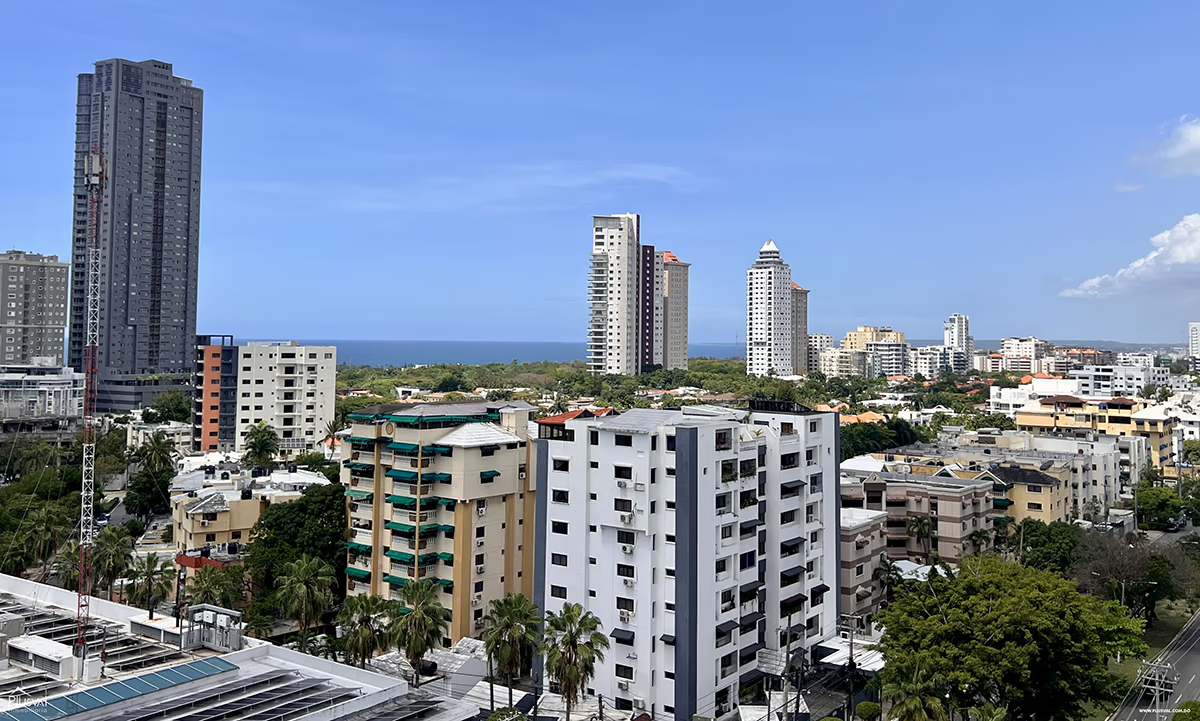
To successfully sell your residential property in Santo Domingo and secure the maximum possible valuation, you must thoroughly understand who is buying and what specifically drives their purchasing decisions. The local metropolitan market is highly segmented, driven by distinct buyer pools that demand specific architectural features, exact locations, and specialized building amenities. Positioning your property to align perfectly with these exact buyer profiles will drastically reduce your time on the market and significantly strengthen your leverage during price negotiations. Understanding these demographics allows you to market the lifestyle and financial benefits they seek, rather than merely listing the physical attributes of the apartment.
Core Buyer Segments in Santo Domingo
| Segment | Age Range | Budget (USD) | Preferred Locations | Key Motivations | Marketing Focus |
|---|---|---|---|---|---|
| Young Professionals | 28–40 | $120,000 – $220,000 | Piantini, Naco, Bella Vista | Central urban access, modern luxury amenities, strong resale potential | Highlight high walkability, integrated smart home features, co-working spaces, and proximity to central business districts. |
| Upper-Middle Families | 35–55 | $180,000 – $400,000 | Bella Vista, Naco, Piantini, Los Cacicazgos | Advanced security, spacious layouts, proximity to elite international schools, long-term stability | Emphasize total square footage, secure multi-car parking availability, family-friendly floor plans, and pristine neighborhood safety records. |
| Yield-Focused Investors | 30–60 | $100,000 – $300,000 | Piantini, Naco, Bella Vista, Gazcue | Reliable rental income, capital preservation, high occupancy demand, exit potential | Focus on gross rental yield projections, turn-key furniture packages, short-term rental compliance, and low building maintenance costs. |
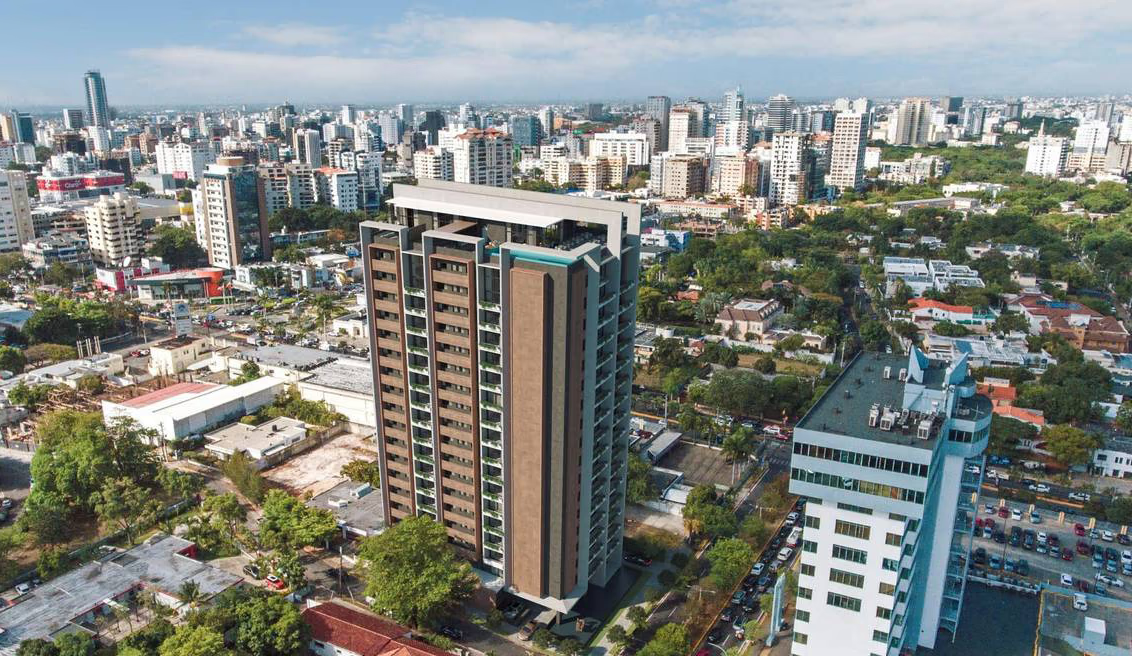
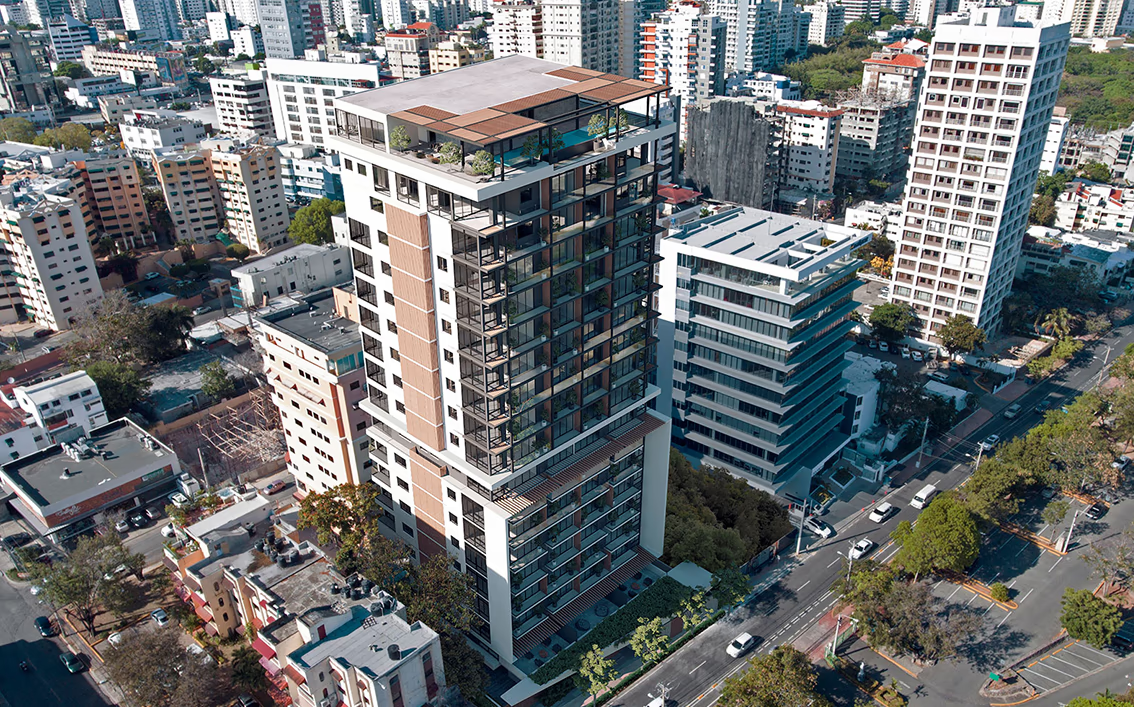
For real estate developers and multi-unit sellers, capitalizing on Santo Domingo’s increasing urban density requires pre-positioning inventory to meet these exact buyer expectations well before launching a sales campaign. High-density residential developments in prime central sectors experience the fastest absorption rates when units are configured specifically for remote professionals and turn-key investors. Tailoring your floor plans to include dedicated workspaces, private balconies, and energy-efficient climate control systems allows developers to command a significant price premium over legacy buildings in the immediate vicinity. When selling, you are not just offering concrete and glass; you are offering a optimized residential solution tailored to the exact socioeconomic trajectory of the buyer.
Tax Regime and Specialized Selling Incentives
The national tourism development tax regime provides specialized exemptions designed to stimulate foreign and domestic property investment across approved urban and coastal zones. By certifying a residential project under this framework, sellers can offer buyers massive upfront and recurring tax waivers, thereby increasing the buyer's purchasing power and allowing the seller to maintain a premium asking price without resistance.
- Total Transfer Tax Exemption: Buyers are completely relieved from paying the standard three percent property transfer tax upon title conveyance.
- Long-Term Property Tax Exemption: Buyers receive a total waiver of the annual one percent national property tax for a period of up to fifteen years.
- Corporate Revenue Exemptions: Developers receive complete waivers on corporate income taxes related to the specific approved residential project.
To illustrate the immense closing power of this regime, consider a scenario where you are selling a modern luxury apartment for $300,000. Under standard conditions, your buyer would immediately owe $9,000 in transfer taxes, plus an ongoing annual property tax of approximately $1,400 on the value exceeding the national exemption threshold. By selling a certified property, you save the buyer $9,000 at the closing table and over $21,000 in recurring taxes over the next fifteen years. This $30,000 aggregate financial benefit serves as a decisive negotiation tool, easily justifying your top-tier asking price and preventing downward price pressure.
- Official Program Certification: You must hold the original, unexpired government resolution document validating the property's inclusion in the tax incentive program.
- Compliance Clearance: The property must have a flawless compliance record with the national revenue agency, showing zero outstanding localized municipal fines or debts.
- Clear Title Registration: The property must possess an unencumbered, pristine title fully registered with the national title registry, free of any legacy disputes.
Price Definition and Neighborhood Valuation Anchors
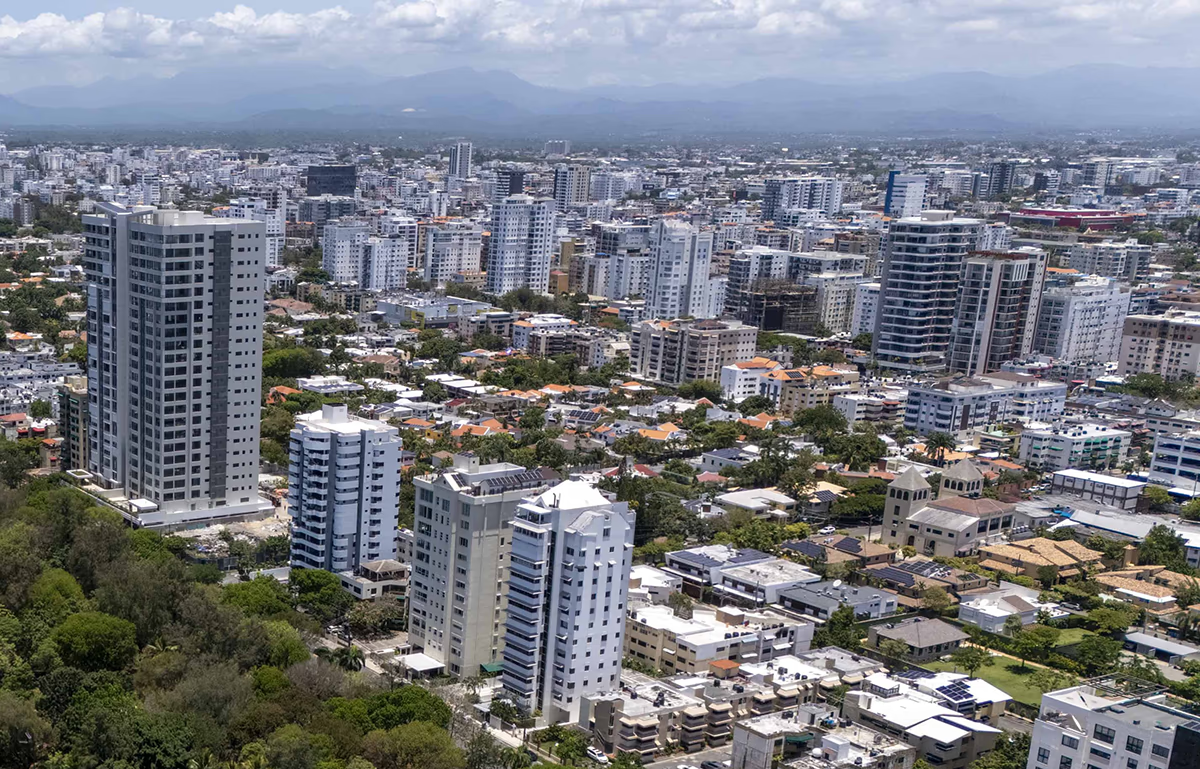
Establishing an optimal pricing strategy requires a rigorous evaluation of the specific micro-markets within Santo Domingo's urban core. Pricing per square meter fluctuates dramatically based on hyper-local street access, the age of the building, and the operational efficiency of the building management. A poorly priced property will either languish on the market and become stigmatized, or sell too quickly, leaving your hard-earned equity on the table.
Core Neighborhood Valuation Metrics
| Neighborhood Area | Market Status | Average Price per Square Meter (USD) | Dominant Property Profile |
|---|---|---|---|
| Piantini | Luxury | $2,200 – $3,100 | Premium high-rise luxury condominiums with heavy short-term rental activity. |
| Naco | Established | $1,950 – $2,600 | Mixed-use high-rises, dense commercial hubs, and high residential liquidity. |
| Bella Vista | Established | $1,800 – $2,400 | Modern mid-to-high rise apartments with immense family buyer demand. |
| Los Cacicazgos | Luxury | $2,100 – $2,800 | High-end spacious apartments and luxury residences near major green zones. |
| Evaristo Morales | Established | $1,750 – $2,300 | Dense residential apartment sector offering broad appeal to local buyers. |
| Mirador Sur | Established | $1,850 – $2,500 | Sought-after residential pockets boasting premium park views and high livability. |
| Gazcue | Emerging | $1,300 – $1,850 | Historic central area experiencing highly selective redevelopment opportunities. |
| Bella Vista Norte | Established | $1,700 – $2,200 | Family-oriented residential extensions of the broader established market. |
To confidently demand and secure a valuation at the absolute top of these pricing ranges, your property must demonstrate clear superiority across the following seven premium factors:
- Redundant Power Systems: The building must feature full-capacity automated generators that seamlessly cover all private and common area electrical loads without interruption.
- Optimal Parking Ratios: The unit must include at least two covered, deeply secure, and legally deeded parking spaces, which is critical in high-density urban zones.
- Advanced Vertical Transport: Towers exceeding six stories require modern, dual high-speed elevator banks with intelligent dispatching to prevent tenant bottlenecks.
- Comprehensive Social Infrastructure: Premium valuations demand rooftop infinity pools, fully equipped commercial-grade fitness centers, and professionally designed social lounges.
- Impenetrable Security Protocols: The property must utilize twenty-four-hour guarded access control, biometric resident entry systems, and total perimeter camera coverage.
- Environmental Insulation: High-value units feature double-glazed acoustic windows and thermally insulated perimeter walls to drastically mitigate tropical heat and urban noise.
- Professional Administration: The building must be managed by a verified third-party facility management corporation with completely transparent, audited maintenance accounts.
A professional valuation must combine a direct comparative market analysis of recently closed transactions with an income capitalization approach for rented units. Using established gross rental yield metrics as your primary pricing anchor ensures your asking price matches the rigorous financial expectations of capitalized, yield-focused investors.
The Strategic Sales Process
Executing a flawless property sale in Santo Domingo requires navigating a structured sequence of legal and administrative stages. Following this proven, sequential methodology ensures deal stability, fiercely protects your financial equity, and dramatically accelerates the final closing timeline.
1. Pre-Listing Valuation and Legal Audit
Establishing a highly accurate market valuation and preemptively auditing your title for absolute cleanliness prevents disastrous pricing missteps and avoids deal-breaking delays during the buyer's legal due diligence phase. Taking these steps early allows you to control the narrative and project total confidence to potential buyers.
Documents to prepare at this step:
- Title Certificate: The official original ownership document issued by the national registry confirming your absolute legal right to sell.
- Cadastral Survey Map: The official government-approved plot map that visibly confirms the exact architectural boundaries and dimensions of the property.
2. Marketing Launch and Representation Agreement
Engaging elite professional representation and deploying high-impact digital marketing materials maximizes your property's exposure across targeted, high-net-worth buyer channels. This curated visibility guarantees that you only deal with highly qualified, deeply capitalized prospects rather than casual observers.
Documents to prepare at this step:
- Exclusive Listing Agreement: The formal binding contract establishing exact brokerage commission terms and outlining the comprehensive marketing commitment.
- Property Fact Sheet: A detailed document meticulously outlining monthly maintenance fees, historical utility costs, complete inventory lists, and architectural floor plans.
3. Offer Negotiation and Formal Acceptance
Securing a formal, written offer with absolutely clear financial terms locks in the buyer's psychological commitment and sets the rigid framework for the binding purchase contract. This eliminates ambiguity and prevents the buyer from attempting to renegotiate standard terms later in the process.
Documents to prepare at this step:
- Written Purchase Offer: A formal preliminary document clearly outlining the agreed total price, the exact payment schedule, and the strict deadline for the final closing.
4. Drafting and Execution of Option to Purchase
Signing the binding legal promise to sell securely locks the transaction in place and secures the buyer's substantial initial financial deposit, allowing you to confidently remove the property from the open market. This step legally forces the buyer to perform or risk forfeiting their deposit entirely.
Documents to prepare at this step:
- Promise of Sale Contract: A strict legal agreement executed before a registered notary detailing all transaction clauses, penalties, and performance timelines.
- Identification Documents: Highly legible copies of valid passports or national identity cards for all individuals or corporate officers involved in the transaction.
5. Buyer Due Diligence and Escrow Deposit
While the buyer's legal team meticulously verifies the title's integrity and your tax compliance, the substantial initial security deposit is safely secured in a neutral escrow account. This stage validates your upfront preparation, allowing the deal to sail smoothly toward the final signature.
Documents to prepare at this step:
- Tax Clearance Certificate: An official government confirmation proving absolutely zero outstanding property taxes are owed on the specific unit.
- Mortgage Release Certificate: Formal banking documentation confirming that any existing historical liens or active mortgages are fully paid and legally discharged.
6. Execution of Final Deed of Sale
Signing the definitive final contract formally initiates the transfer of absolute legal ownership simultaneously with your receipt of the final, cleared purchase funds. This is the critical moment where your physical asset is securely converted into liquid capital.
Documents to prepare at this step:
- Final Purchase Contract: The definitively executed and professionally notarized final sale contract, perfectly prepared for immediate government tax submission.
- Management Zero-Debt Certificate: An official letter from the building administration verifying that all monthly maintenance fees and special assessments are paid in full.
7. Tax Payment and Title Transfer Submission
The buyer pays the applicable transfer taxes and submits the flawless documentation package to the government registry to legally issue the new title certificate. While this is primarily the buyer's responsibility, your proactive provision of perfect documentation guarantees this step happens instantly.
Documents to prepare at this step:
- Government Tax Receipt: Official proof of payment for the national property transfer tax, required to unlock the registry process.
- Registry Submission File: The complete, heavily notarized documentation package physically submitted to the national title registry office.
8. Transaction Settlement and Property Handover
The final disbursement of all escrowed funds directly to your accounts occurs concurrently with the physical handover of keys and the formal transfer of all utility accounts. This structured finality completely severs your liability and successfully concludes your investment cycle.
Documents to prepare at this step:
- Physical Handover Protocol: A mutually signed document confirming the pristine physical condition of the unit and the exact number of keys transferred.
- Utility Transfer Authorizations: Pre-signed meter transfer forms for electricity and water services, protecting you from any future billing liabilities.
Standard real estate brokerage commissions in this market range strictly from five percent to ten percent depending on the property type, total valuation, and exclusivity terms. Typical transaction timeframes reliably run between thirty to ninety days from the moment of offer acceptance to the final, fully funded closing.
Taxes, Transfers, and Capital Gains Optimization
📌 Legal Highlight: Always use a formalized escrow account managed by a recognized Dominican law firm for the initial deposit. This protects both parties and legitimizes the transaction for international buyers.
Navigating the complex realities of real estate taxation requires a crystalline understanding of how individual versus corporate legal structures impact your final net profit. Sellers must aggressively audit their tax position well before listing to prevent catastrophic delays or unexpected liabilities during the buyer's due diligence process.
Capital Gains Tax: Individual versus Corporate Entities
The national capital gains tax applies directly to the net profit realized upon the sale of the real estate asset. This is calculated as the precise difference between your officially adjusted acquisition cost, which the government indexes for historical inflation, and the final recorded sale price.
- Individual Sellers: Realized capital gains are taxed at a rigid flat rate of twenty-seven percent on the net profit. However, if the property is formally registered as your primary, principal personal residence with heavily documented historical tenure, you may qualify for lucrative primary residence exemptions, subject to strict government validation.
- Corporate Sellers: Capital gains realized by a registered limited liability company are factored directly into the overall net corporate income and are subjected to the standard corporate income tax rate of twenty-seven percent. Operating through a corporate holding structure uniquely allows you to aggressively deduct documented capital improvements, asset depreciation schedules, and all transaction expenses against your total taxable income, significantly lowering your effective tax burden.
The Strategic Pre-Sale Compliance Protocol
To absolutely guarantee a seamless, rapid legal closing without last-minute financial surprises, elite sellers must meticulously execute a four-step compliance check before even photographing the property:
- Verify Title Cleanliness: Obtain a completely fresh status certificate from the national registry to definitively prove no unexpected historical liens, forgotten mortgages, or pending legal disputes affect the property.
- Clear All Government Obligations: Secure an official tax clearance certificate showing that all annual national property taxes are flawlessly settled up to the current fiscal minute.
- Audit Condominium Standing: Demand a formal, signed letter from the building's management corporation confirming zero outstanding monthly maintenance balances, zero pending special assessments, and zero active building disputes involving your unit.
- Structure International Capital Channels: Pre-establish compliant, heavily vetted banking pathways to safely receive massive international wire transfers in US Dollars, easily satisfying all strict anti-money laundering compliance mandates without holding up your funds.
Rental Yields and Investment Performance Anchors
Santo Domingo offers exceptionally strong, highly resilient rental yields driven by an influx of corporate travel, expanding medical tourism, and rapidly growing local tenant demand. Optimizing your property's current operational model directly impacts its perceived market valuation when you position it for sale to yield-focused, highly capitalized investors.
Rental Yield and Performance Matrix
| Location | Optimal Strategy | Projected Gross ROI | Estimated Management Cost |
|---|---|---|---|
| Piantini | Short-Term Corporate | 8.5% – 11.0% | 15% – 20% |
| Naco | Hybrid Mid-Term | 7.5% – 9.0% | 10% – 12% |
| Bella Vista | Long-Term Residential | 6.5% – 8.0% | 8% – 10% |
| Evaristo Morales | Short-Term Executive | 7.0% – 9.0% | 12% – 15% |
| Gazcue | Short-Term Tourism | 9.0% – 12.0% | 18% – 22% |
📌 Strategic Highlight: Use dynamic pricing algorithms that adapt to local holidays, weather patterns, and flight influxes to increase short-term rental revenue by up to 18% annually.
Properties located in rapidly emerging central areas like Gazcue consistently deliver elevated gross returns on investment due to their considerably lower entry prices per square meter and intense tourism demand. However, aggressively managing short-term rentals in these emerging sectors requires significantly higher operational oversight and heavier maintenance budgets compared to the highly established corporate hubs like Piantini or Naco. Highlighting a well-managed yield history in any of these neighborhoods serves as the ultimate proof of concept for your buyer.
International Marketing and Cross-Border Buyer Acquisition
Selling premium, high-end properties in Santo Domingo mandates a sophisticated, highly targeted outreach strategy directed at international buyers, heavily capitalized foreign investors, and the affluent diaspora based in North America and Western Europe. Executing a relentless, multi-channel digital strategy ensures maximum visibility and creates highly profitable bidding tension among cross-border buyers.
Essential Tactics for International Buyer Reach
- Immersive Spatial Walkthroughs: Provide stunning, ultra-high-definition three-dimensional virtual tours that allow foreign buyers to physically navigate and measure the property remotely with absolute confidence.
- Audited Financial Statements: Present flawlessly clear income statements detailing historical gross rental revenues, exact monthly occupancy rates, and all operational expenses to instantly validate your asking price.
- Fixed Currency Structuring: Market, quote, and negotiate your property pricing strictly in US Dollars to entirely eliminate volatile currency exchange risks for your foreign buyer.
- Comprehensive Investment Prospectuses: Produce exceptionally high-quality digital investment guides featuring meticulous yield calculations, neighborhood economic growth metrics, and upcoming local infrastructure plans.
- Precision Geo-Targeting: Deploy highly aggressive, mathematically targeted search engine and social media campaigns focused exclusively on high-net-worth zip codes in major feeder markets like New York, Miami, and Toronto.
- Bilingual Transaction Support: Retain an elite, fully bilingual legal counsel and sophisticated real estate advisory team to ensure perfectly clear, frictionless communication throughout the entire transaction lifecycle.
📌 Marketing Highlight: Highlight any active structural warranties. Foreign buyers are highly risk-averse regarding construction quality. A documented history of scheduled maintenance dramatically increases buyer confidence and closing speed.
Legal Structure: Individual versus Corporate Ownership
Choosing the precisely correct legal holding structure directly dictates your operational simplicity, absolute liability protection, and final tax burden when holding or selling property. Structuring your asset correctly from the beginning drastically simplifies your eventual exit strategy.
Ownership Structure Comparative Analysis
| Structure Type | Strategic Advantages (Pros) | Operational Disadvantages (Cons) |
|---|---|---|
| Individual Ownership | Direct personal control over the asset; incredibly simple legal setup requires zero legal advisors; completely eliminates ongoing corporate maintenance fees; allows for highly streamlined, rapid personal sale execution. | Massive personal asset exposure to property liabilities; direct personal tax liability on all capital gains; subjects the asset to highly complex, time-consuming international estate and inheritance probate processes. |
| Corporate Entity | Absolute limited liability shielding personal wealth; incredibly simplified multi-owner equity transfers via simple share sales; massive corporate expense deductions against taxable income; highly efficient, seamless estate planning and succession without probate. | Substantial initial corporate setup costs reaching thousands of dollars; heavy ongoing annual accounting requirements; strict annual corporate tax maintenance fees; requires constant legal oversight to maintain compliance. |
For major developers and institutional sellers managing massive, multi-unit residential projects, utilizing specialized corporate holding entities is not optional; it is an absolute operational necessity. Holding assets inside a corporate wrapper allows developers to effortlessly execute corporate share transfers to bulk buyers without enduring the punishing delays and heavy taxes of re-registering individual property titles for every single equity transition.
Exit Planning, Market Timing, and Long-Term Strategy
Maximizing your final sales proceeds requires a cold, highly strategic exit plan that aligns perfectly with the broader macroeconomic real estate cycles in the country. Successfully timing your market exit depends entirely on relentlessly monitoring key economic indicators, analyzing local construction supply pipelines, and accurately reading shifting buyer sentiment.
Achieving true exit liquidity means selling when the market is desperate for your specific property type. You must monitor local inventory supply with extreme precision. If you observe a massive surge in massive new construction starts in your immediate neighborhood, selling before those competing units flood the market protects your pricing power and prevents your unit from becoming stale inventory. Furthermore, understanding macroeconomic conditions is vital; strong foreign direct investment, a highly stable local currency exchange rate, and highly favorable central bank interest rates naturally drive massive buyer demand. When capital is cheap, buyers pay premiums.
Finally, closely track major public infrastructure developments. The announcement of new transit lines, massive road expansions, or elite commercial developments within walking distance of your property creates natural, highly profitable pricing peaks. These moments are ideal for harvesting your accumulated capital gains. Sellers holding assets in heavily consolidated, premium sectors like Piantini benefit from deep, reliable market liquidity and minimal price volatility, ensuring predictable, rapid closing times. Conversely, those holding properties in emerging sectors like Gazcue must time their exits to coincide perfectly with the maturation of surrounding urban renewal projects. Aligning your exact property exit strategy with these intense micro-market dynamics guarantees maximum net capital recovery when you finally decide to sell.